Quick Answer: Tree canopy management focuses on correcting weight imbalance and structural stress, not just trimming branches. When weight is uneven or carried too far toward the ends of limbs, it increases leverage and raises the risk of limb failure, especially during storms.
Many trees that fail during storms do not show obvious warning signs at first glance. The issue is often hidden in how the canopy carries weight. In areas like Marietta and Atlanta, where storms and saturated soil are common, that imbalance can become a real risk to homes and property.
A tree may have been recently trimmed, but if the structure was not addressed, the underlying problem can remain. The appearance improves, but the stress points stay in place.
What Is Tree Canopy Management Beyond Basic Trimming?
Tree canopy management is the process of shaping a tree based on how weight is distributed across its structure. It goes beyond appearance and focuses on stability, load balance, and long-term growth.
Trimming vs Pruning vs Canopy Management
Trimming typically removes visible overgrowth. Pruning targets specific branches for health, structure, or clearance. Canopy management looks at the entire tree and how each cut affects overall balance.
This distinction matters. A tree can be trimmed regularly and still develop structural problems if weight distribution is ignored.
Why Basic Trimming Isn’t Enough
Standard trimming often removes what is easy to reach or visibly overgrown. It may leave heavier limbs untouched or shift weight into fewer branches.
Over time, new growth can concentrate at the ends of limbs. That increases end weight and adds stress where branches connect to the trunk. Many branch failures start in these overloaded areas.
If you’re unsure whether your tree has been trimmed correctly, reviewing signs your tree needs trimming can help you spot early warning signs.
How Tree Canopy Structure Affects Safety
A tree canopy behaves like a load-bearing system. Every branch contributes to how weight is carried and how the tree responds to wind and rain.
Weight Distribution and Limb Stress
Branches that extend far from the trunk with heavy growth at the ends create leverage. That leverage puts added stress on the connection point, which is a common area for limb failure.
In many trees, the base of the branch appears strong, but the weight is concentrated farther out. Under pressure from wind or rain, that imbalance can become a breaking point.
Wind Resistance and Storm Vulnerability
A dense or uneven canopy can catch wind instead of allowing it to pass through more freely. This increases pressure across the tree.
That added pressure can lead to:
- Greater strain on major limbs
- Twisting force at branch connections
- Higher likelihood of limb failure during storms
For more context on how local conditions affect trees, see how weather in Atlanta affects tree health year-round.
Common Failure Points in Unbalanced Trees
When a canopy is unbalanced, failures often occur in predictable areas:
- Long limbs with heavy ends
- Weak or narrow branch connections
- Trunks with multiple competing leaders
Left unaddressed, these weak points can increase the chance of damage to nearby structures.
Signs Your Tree Has a Dangerous Canopy Imbalance
Many canopy issues can be spotted from the ground once you know what to look for.
One-Sided or Leaning Canopy
A canopy that is heavier on one side shifts the tree’s center of gravity. This may connect to broader stability concerns, as explained in why a tree starts leaning and what to do next.
Overextended Branches with Heavy Ends
Branches that stretch far outward with thick growth at the tips place more stress on their attachment points.
Dense Outer Growth with Sparse Interior
When growth is concentrated on the outside, airflow is reduced and weight is pushed outward, increasing wind resistance.
Multiple Competing Leaders
Trees with more than one main leader often develop internal stress where those leaders meet. These areas are more likely to split under load.
This is where structural problems start to build. What begins as uneven growth can develop into stress that does not correct itself.
The Science Behind Proper Canopy Shaping
Effective canopy management redistributes weight while maintaining the tree’s natural structure.
Crown Thinning vs Crown Reduction
Crown thinning removes selected interior branches to reduce density and improve airflow. Crown reduction shortens specific limbs to decrease overall weight.
Each method serves a different purpose. Using the wrong approach can shift weight in the wrong direction or lead to unstable regrowth.
Managing Dominant Leaders and Competing Branches
Healthy trees usually develop a clear structure with one dominant leader. When multiple leaders compete, stress concentrates at their connection points.
This is a common issue in trees that were not guided early. Over time, those competing structures become more prone to splitting.
Reducing Load Without Harming the Tree
The goal is to remove weight where it creates the most stress while keeping the tree stable and able to grow properly.
Poorly placed cuts can trigger fast regrowth in the same problem areas. That brings the imbalance back, sometimes more aggressively.
Why Improper Trimming Can Make Trees More Dangerous
Not all trimming improves safety. In some cases, it creates new structural issues.
Over-Thinning and Weak Regrowth
Removing too much interior growth can shift energy to the outer edges. This leads to heavier growth at the ends of branches, increasing stress.
Tree Topping and Structural Damage
Topping removes large portions of the canopy and often leads to fast, unstable regrowth. The new branches frequently have weaker attachment points.
Hidden Long-Term Risks
A tree may look clean right after trimming, then develop heavier, less stable growth within a relatively short period.
Many of these issues come from cuts that ignore structure. Resources like common tree trimming mistakes to avoid in Atlanta show how easily this happens.
When to Consider Professional Tree Canopy Management
Some situations call for more than routine trimming.
Trees Near Homes, Driveways, or Structures
When a tree is close to your home, any imbalance can increase risk to the property below.
Before Storm Season or Severe Weather Patterns
Many failures happen under stress from wind and rain. Addressing structural issues ahead of time helps lower that risk.
After Visible Imbalance or Rapid Growth
If a tree has grown unevenly or quickly, the weight distribution may have shifted and should be evaluated.
If you’re noticing any of the following, it may be time to take action:
- Large limbs extending over your roof or driveway
- A canopy that is clearly heavier on one side
- Branches with thick growth concentrated at the ends
- Fast, uneven regrowth after previous trimming
These signs suggest weight may be carried in the wrong places. At that stage, trimming alone is often not enough.
How Professional Tree Services Approach Canopy Management
Proper canopy management follows a structured process, not a quick trim.
Step-by-Step Canopy Evaluation
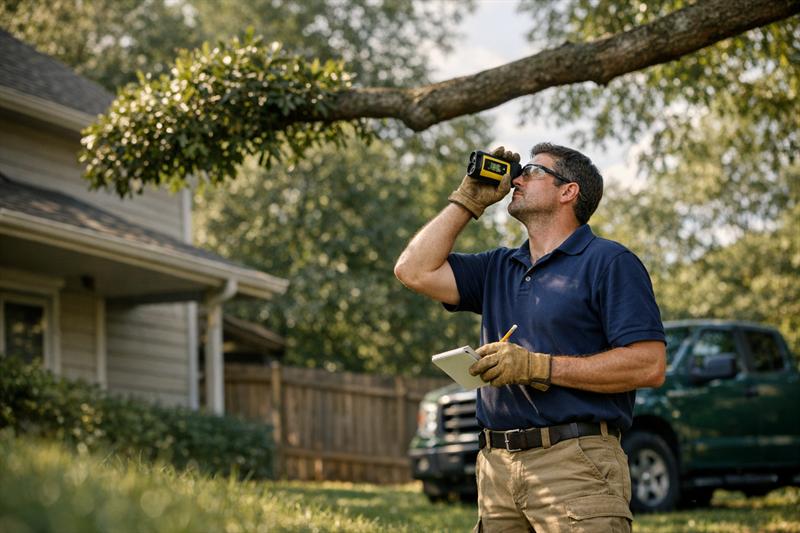
The first step is identifying where weight is concentrated and where stress is building. This helps determine what needs to be adjusted.
Real-Time Decision Making During Trimming
Each cut changes how the tree carries weight. Adjustments are made throughout the process to maintain balance as the work progresses.
Clear Communication and Job Updates
At One, Two, Tree, homeowners are shown what is being removed and why. That clarity helps you understand how the work is intended to improve the tree’s structure and reduce strain.
To see what a full service visit involves, review what is included in a professional tree service visit.
Key Takeaways
- Tree canopy management focuses on structure and weight distribution
- Imbalance increases stress on branches and raises failure risk
- Basic trimming does not address underlying structural problems
- Improper cuts often lead to faster, weaker regrowth
- Professional evaluation helps identify and correct hidden risks
Conclusion
Tree canopy problems start with imbalance and build over time. When weight is concentrated at the ends of limbs or uneven across the tree, stress increases at key connection points. That stress can eventually lead to breakage, often during storms when the tree is under the most pressure.
What makes this challenging is that the tree can still look healthy. By the time a limb fails, the underlying issue has often been developing for years.
One, Two, Tree approaches canopy management by focusing on structure first. The goal is to correct how the tree carries weight, reduce stress points, and help prevent problems before they turn into property damage.
If your tree shows signs of imbalance or overgrowth, the next step is a professional evaluation. Addressing the structure early is often far more practical than dealing with storm damage later.
Frequently Asked Questions
What is tree canopy management?
Tree canopy management is the process of shaping a tree based on how weight is distributed across its structure. It focuses on reducing stress and improving stability, not just removing growth. If a tree looks uneven or overextended, a structural evaluation is usually the next step.
How do you balance a tree canopy?
A canopy is balanced by reducing weight in areas that create leverage and redistributing that load across the tree. This often involves crown thinning or crown reduction. Without that approach, the underlying imbalance usually remains.
Does trimming a tree make it safer?
Trimming improves safety only when it addresses structure. Removing visible growth without correcting weight distribution can leave higher-risk limbs in place. A canopy-focused approach is usually more effective.
What is the difference between pruning and canopy management?
Pruning focuses on individual branches, while canopy management looks at the entire structure. It considers how each cut affects balance and load. For trees near homes, this broader approach is often important.
How do I know if my tree is at risk of falling?
Common signs include uneven canopies, long heavy limbs, and visible lean. Trees often fail where weight is concentrated or where connections are weak. A professional inspection can help clarify the level of risk.
When is the best time to manage a tree canopy?
The best time is before heavy growth or storm season increases stress on the tree. Addressing structure early helps prevent more serious issues. Waiting often leads to more complex work later.