Quick Answer: A tree inspection before buying a house can help uncover risks such as unstable trees, root-related pressure around foundations, and overhanging limbs that a standard home inspection may not cover. If these issues are missed, they can turn into expensive repairs or safety concerns after closing.
Why Trees Matter More Than You Think During a Home Purchase
Most buyers focus on the house itself: the roof, foundation, and plumbing. Trees often get treated as background landscaping, and that is where important problems can get overlooked.
A property can look clean and well-kept while the trees around it are already affecting the structure. Limbs may extend over the roof, roots may be growing toward the foundation, or a tree may have structural weakness that is not obvious at first glance.
These issues are not just cosmetic. Over time, they can lead to real costs, maintenance demands, and safety concerns.
Trees near a home can influence:
- Storm-related exposure to the structure
- Soil movement around the foundation
- Ongoing maintenance needs
- Insurance concerns tied to visible hazards
One of the easiest mistakes to make is assuming a tree is safe because it looks healthy. Some tree failures start with weaknesses that are not easy to spot during a basic walkthrough.
What a Standard Home Inspection Misses About Trees
Home inspections are designed to evaluate the structure and systems of the house, not the surrounding trees. In most cases, tree condition falls outside that scope.
An inspector may note a low-hanging branch or a clearly dead tree, but they are typically not evaluating structural integrity, root spread, or how a tree may affect the property over time.
This is where gaps can show up:
- Roots extending beneath foundations, driveways, or other hardscape
- Internal decay that is not visible from the outside
- Canopy imbalance that increases the chance of limb or whole-tree failure
- Subtle leaning that may point to instability
These are early warning signs that are easy to miss without a closer look.
For a more complete evaluation, a professional tree risk assessment focuses specifically on these conditions and how they may affect the property.
When this step is skipped, buyers may move forward without a clear picture of what is developing around the home.
Tree Inspection Checklist for Homebuyers
This checklist can help you spot issues during a walkthrough. It does not replace a professional assessment, but it can help you recognize where risk may be developing.
Tree Health and Structural Integrity
Start with the overall condition of the tree.
- Dead branches or a thinning canopy
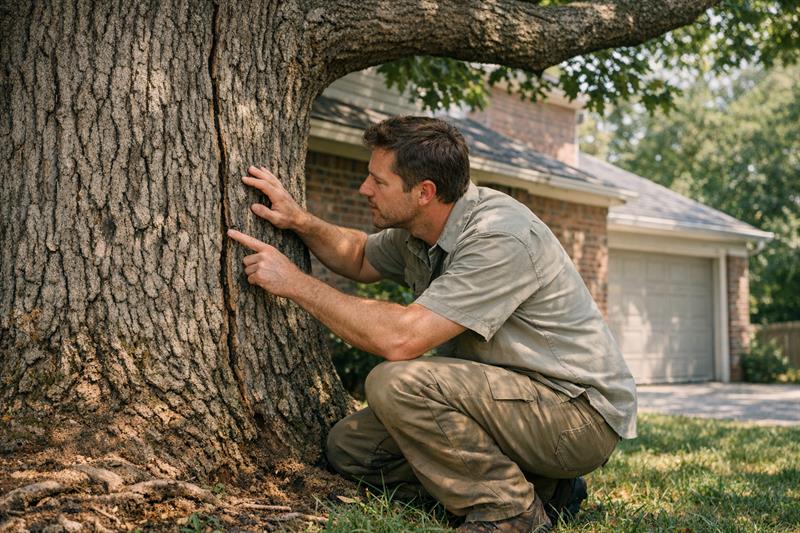
- Cracks or splits in the trunk
- Hollow areas or missing bark
- A noticeable lean
If you notice several of these signs on the same tree, it may be compromised and worth a closer evaluation.
Distance From the House and Structures
Distance is one of the most important factors, and one of the most overlooked.
A tree can appear healthy and still create long-term issues simply because of where it is located. Branches extend outward, and roots often spread well beyond the trunk.
Trees placed too close to a structure can gradually interfere with roofs, siding, gutters, fences, hardscape, and underground systems. Over time, that interaction can lead to damage or ongoing maintenance.
For a deeper look at how placement affects risk, see how tree placement near your house impacts safety and property value.
Root Systems and Foundation Risk
Root systems operate below the surface, which makes them easy to overlook during a showing.
When a large tree sits close to the house, its roots may already be affecting the soil around the foundation. In some situations, that can contribute to gradual movement that shows up as cracks, shifting, or uneven settling.
Look for:
- Cracks in concrete or foundation walls
- Raised or exposed roots
- Uneven or lifted ground near the base
If these signs are present, the tree and nearby structures may already be interacting in a way that deserves closer review.
To understand how this can develop, review how tree roots can damage your foundation.
Overhanging Limbs and Fall Zones
Branches over the roof, driveway, or power lines are direct risk points.
Limbs that seem manageable in calm weather can fail under wind, heavy rain, or added weight and cause immediate damage.
If large limbs are positioned over the home or other frequently used areas, the exposure is already there and may increase as the tree grows or becomes more unbalanced.
Signs of Disease or Decay
Disease and decay can weaken a tree from the inside out.
- Fungal growth at the base
- Peeling or missing bark
- Clusters of dead or brittle branches
- Unusual color changes in leaves or wood
A tree may look stable from a distance but show several warning signs up close. When that happens, its structure may be weaker than it appears.
Soil Conditions and Drainage Impact
The condition of the soil affects how well a tree is anchored.
- Erosion around the root zone
- Standing water after rain
- Loose or shifting soil
When soil loses stability, root support can weaken. That can increase the chance of leaning or failure, especially during severe weather.
Red Flags That Should Delay or Change Your Offer
Some findings are manageable with routine work. Others deserve immediate attention before you move forward.
- Trees leaning toward the home
- Large dead or declining trees near structures
- Multiple trees showing structural issues
- Roots already affecting foundations, walkways, or driveways
If more than one of these is present, it often means tree work may be needed soon after purchase. That can affect cost, timing, and planning.
If you notice any of the following during a walkthrough, it is worth slowing down and taking a closer look:
- A large tree close to the foundation
- Visible cracks, lean, or dead limbs
- Branches extending directly over the roof or utility lines
- Uneven or shifting soil at the base
These conditions are good reasons to get a professional evaluation before moving forward.
When to Bring in a Professional Tree Risk Assessment
If anything raises concern during your walkthrough, that is usually the point to bring in a professional assessment.
At One, Two, Tree, this is a point in the buying process where many buyers realize the home inspection did not fully address the trees on the property.
A proper evaluation focuses on:
- The structural condition of each tree
- Root interaction with nearby structures
- The likelihood of failure under stress
- Practical next steps based on current conditions
Waiting until after closing can make the timeline more difficult and reduce your options for planning repairs or negotiating work.
How Tree Issues Can Affect Insurance and Property Value
Trees can influence how a property is viewed from both a risk and value standpoint.
Insurance providers consider visible hazards near structures. In some cases, a tree with obvious risk factors may affect underwriting, requested corrections, or how a future claim is reviewed.
From a buyer’s perspective, visible tree risk can reduce confidence in the property. That may show up in negotiations, delayed closings, or requests for corrective work.
When the issue goes unaddressed, it often becomes part of the property’s ongoing cost and responsibility.
Planning Ahead: Tree Maintenance After You Buy
Every property with trees needs consistent maintenance, even if no major issues are present at the time of purchase.
Small problems are easy to ignore at first, but they tend to become more expensive and disruptive over time.
The pattern often looks like this:
- Initial overgrowth
- Added weight and imbalance
- Increased structural strain
- Branch failure or eventual removal
Understanding how tree services work can help you plan for what may be involved and when action makes sense.
Key Takeaways
- Trees are an important but often overlooked part of property risk
- Standard home inspections do not fully assess tree condition or safety
- Proximity, roots, and structural condition are key factors to review
- Visible warning signs can point to larger underlying issues
- Early evaluation can help prevent costly surprises after closing
Conclusion
Tree-related risks are easy to miss during a home purchase, but once you own the property, they become your responsibility.
If they are not addressed early, they can lead to property damage, safety concerns, and urgent expenses that are harder to manage.
At One, Two, Tree, we regularly hear from buyers who move forward without a clear understanding of tree conditions and then face immediate decisions once problems become more visible.
Evaluating trees before closing gives you a clearer picture of what may need attention. If you are seeing warning signs, the next step is to get a professional assessment so you can make a more informed decision.
FAQ
Do you need a tree inspection before buying a house?
No, it is not required, but it is often a smart step when trees are close to structures. A home inspection usually does not fully assess tree-related risk, so a separate evaluation can help you understand potential issues before closing.
What tree problems should you look for when buying property?
Pay attention to dead or leaning trees, root activity near the foundation, and large overhanging limbs. These are common signs that a tree may need closer review or future maintenance.
Can tree roots damage a home’s foundation?
Yes. In some situations, roots can affect soil movement around a foundation, which may contribute to cracking or shifting over time.
Are tree issues covered in a home inspection?
Usually not in detail. Home inspections focus on the building itself, while tree condition and risk often require a separate evaluation.
Should you remove trees before buying a house?
Not in every case. Some trees are stable and add value to a property, while others may create risk. The key is understanding the condition and location of each tree before deciding what work is needed.
How much does a tree inspection cost before closing?
Costs vary based on the number of trees, property layout, and the level of evaluation needed. Addressing concerns before closing is often easier than dealing with urgent issues after purchase.