
Quick Answer: A tree usually starts leaning because its root system is no longer holding it securely in place. Common causes include saturated soil, root damage, or recent storm stress, and each can affect the tree’s stability.
If a tree in your yard was not leaning before and now is, that change matters. In Marietta and Atlanta, heavy rain and storms can shift soil and stress root systems. Trees do not usually start leaning without an underlying cause, and once movement begins, the problem can worsen if it is not addressed.
A Leaning Tree Isn’t Always Normal — Here’s How to Tell
Not every leaning tree is immediately dangerous, but the cause of the lean affects the level of risk. The most important question is simple: has it always leaned, or is this new?
Natural Lean vs Sudden Lean
Some trees grow at an angle as they reach for sunlight. In those cases, the root system often develops around that position.
A sudden lean is different. When a tree shifts after a storm or heavy rain, it can mean the roots or surrounding soil have been disturbed.
Why Recent Changes Matter More Than Angle
A small lean that appeared recently can be more concerning than a larger lean that has been stable for years. Many homeowners focus on how far the tree is leaning instead of when the change happened.
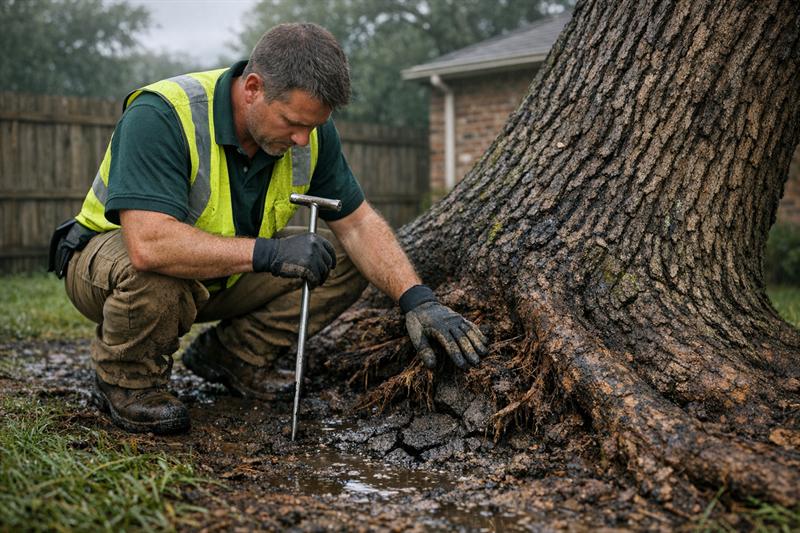
If the soil looks lifted or cracked on one side, that can point to root movement. Once that starts, the tree may become less stable over time.
For a practical way to check for warning signs, a tree risk assessment checklist can help you know what to look for.
The Most Common Causes of a Leaning Tree
Leaning is not the problem itself. It is a visible sign that something below ground or within the tree’s structure has changed.
Root Damage or Root Rot
When roots are damaged or begin to decay, the tree loses some of its ability to stay anchored. This can develop quietly, especially in areas with excess moisture.
By the time a lean appears, the root system may already be weakened.
Soil Saturation and Erosion
Heavy rain softens the soil and reduces its grip on the roots. In clay-heavy areas around Atlanta, this effect can be more noticeable.
Once the soil loosens, the weight of the tree can cause it to shift.
Storm and Wind Stress
Strong wind puts pressure on the canopy, and that force transfers to the base of the tree. After storms, some trees show slight lifting or tilting.
Even if the change looks minor, it can mean the root system has been stressed.
Uneven Canopy Weight
When one side of a tree carries more weight, it creates a steady pull. Over time, that imbalance can contribute to leaning, especially if the roots or soil are already compromised.
This often develops gradually and then becomes noticeable all at once.
Construction or Ground Disturbance
Cutting or disturbing roots during construction can reduce stability. The tree may look fine at first, then begin leaning later as the root system responds.
Understanding how much space tree roots need helps explain why even small disruptions can lead to larger structural problems.
When a Leaning Tree Becomes Dangerous
A leaning tree becomes more concerning when the structure is actively weakening. Signs around the base and the direction of the lean can help show how urgent the situation may be.
Warning Signs the Tree Could Fall
- Soil cracking or lifting around the base
- Exposed or shifting roots
- A noticeable increase in lean over a short time
- Dead or falling branches
- Fungal growth near the base of the trunk
These signs can indicate the tree is losing stability. In some cases, failure happens during the next period of high wind or saturated soil.
How Direction of Lean Affects Risk
A tree leaning toward a house, driveway, or power line carries higher risk because of what it could strike.
If the tree leans into open space, there may be more time to assess the situation, but the underlying issue still needs attention.
Why Trees Often Fail at the Root Plate
Many leaning trees fail at the base rather than snapping in the middle. The root system gives way, and the entire tree tips.
This is common after extended rain. As the soil weakens, the roots lose support and the tree may shift further.
Can a Leaning Tree Be Fixed — Or Does It Need Removal?
The right approach depends on what caused the lean and how far the problem has progressed.
When a Tree May Be Saved
If the lean is slight and the root system is still stable, corrective measures may help. This is more likely with younger trees or very early movement.
When Removal Is Typically Recommended
If the lean is increasing, the roots are shifting, or there are signs of decay, removal is often the safer and more predictable option.
What starts as a manageable issue can become more urgent if the tree continues to move.
Why DIY Fixes Can Increase Risk
Trying to pull or stake a mature tree back into place does not address what is happening underground.
The tree may look more upright temporarily, but the root problem can remain. For a closer look at the risks, see professional vs DIY tree service.
What to Do If You Notice Your Tree Leaning
Once you notice a change, the goal is to reduce risk and understand what is happening before it gets worse.
Immediate Steps to Take
- Keep people and vehicles away from the area
- Avoid standing under the tree
- Check for soil movement or exposed roots
- Watch for continued shifting over time
What an Arborist Will Assess
A proper evaluation looks at root stability, soil condition, and how the tree is responding to stress. The focus is on what is happening below the surface, not just the visible lean.
How Professional Evaluation Reduces Uncertainty
This replaces guesswork with a clearer explanation of the situation. You get a better sense of whether the tree can be monitored, corrected, or should be removed.
If you’re seeing any of the following, it’s time to act:
- The tree started leaning after a storm
- The ground is lifting or cracking at the base
- The tree is leaning toward your home or driveway
- The lean is getting worse
These are strong signs that the tree may be becoming unstable. Waiting can increase risk and reduce your options.
How Professional Tree Services Handle Leaning Trees
Leaning trees should be handled through careful evaluation, not guesswork.
Inspection and Risk Assessment Process
The process starts with a close look at the base, roots, and surrounding soil. Each factor is considered together to better understand how stable the tree is.
Clear Communication and Next Steps
One, Two, Tree explains what is happening in plain terms and outlines the next steps. That includes timing, scope, and what to expect during the work.
Safe Removal vs Stabilization Options
If stabilization is realistic, that option should be discussed clearly. If removal is the safer path, the work can be planned to reduce impact on the surrounding property.
Conclusion
A leaning tree is a sign that something has changed beneath the surface. In many cases, it points to weakening support rather than a harmless change in appearance.
If ignored, the tree may continue shifting, especially during storms or heavy rain. That is when a manageable situation can become more serious.
One, Two, Tree helps homeowners understand what is happening and what to do next with clear, practical guidance. If your tree has started leaning or shows signs of instability, getting it checked now is a smart way to avoid a bigger problem later.
Key Takeaways
- A leaning tree often points to root or soil instability
- Recent movement matters more than how far the tree leans
- Storms and saturated soil are common triggers
- Cracked soil and exposed roots can signal increased risk
- Delaying action can lead to a more urgent situation
- A professional evaluation can help clarify the next step
Frequently Asked Questions
Is a leaning tree always dangerous?
No, but a recent or worsening lean often signals instability. Trees that shift suddenly are more likely to fail under stress. If the lean is new, it should be checked.
Can a tree recover from leaning?
In some cases, yes. Minor leaning with stable roots may be corrected, but once roots are compromised, recovery becomes less likely. An inspection can help determine the next step.
How much lean is too much for a tree?
There is no fixed angle that applies to every tree. A small, recent lean is often more concerning than a long-standing one. The timing of the change matters most.
Should I stake a leaning tree myself?
For mature trees, this is generally not effective. It does not address root instability and can create a false sense of security. A proper evaluation usually leads to a safer plan.
What causes a tree to suddenly lean after rain?
Saturated soil reduces support around the roots, which can allow them to shift. That is why leaning often appears after extended rainfall.
When should I call a tree service for a leaning tree?
If the lean is new, increasing, or directed toward a structure, it is time to call. These are clear signs the tree needs a closer look.