
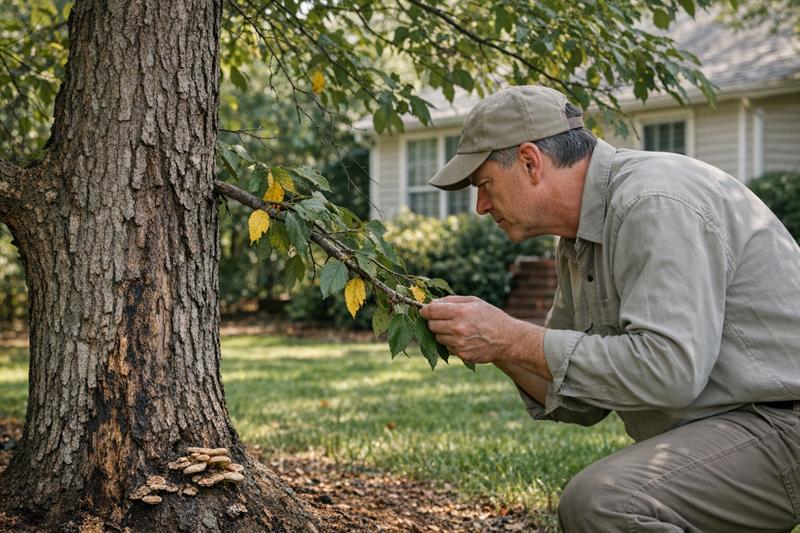
Quick Answer: A professional tree service visit usually includes a structured look at tree health, structural stability, and potential risk around your property, followed by practical recommendations for trimming, removal, or monitoring. Many homeowners expect a quick estimate, but when the visit is too brief, important issues can be missed.
Why Understanding the Tree Inspection Process Matters
Most people call a tree service when something feels off. A tree is leaning, dropping limbs, or just doesn’t look right. What happens during that first visit helps determine the right next step.
A quick surface-level inspection can miss structural problems, hidden decline, or site conditions that affect stability. That can lead to incomplete work, recurring issues, or a problem that becomes more serious during the next storm.
A thorough inspection gives you clarity. You understand what’s happening, what needs attention now, and what can likely wait. That makes it easier to make a confident decision instead of reacting later.
If you’re already seeing warning signs, it helps to understand common signs a tree is dangerous before the situation gets worse.
What Happens During a Tree Service Inspection?
A professional inspection should follow a clear process rather than a quick opinion. Each step helps shape recommendations based on tree condition, safety concerns, and how the tree affects the surrounding property.
Initial Property Walkthrough
- Walk the property to understand the site, not just the most obvious tree
- Identify areas near the home, driveway, patio, or walkways
- Check proximity to power lines, fences, and neighboring structures
- Look at slope, drainage, and visible soil conditions
This step is easy to skip in a rushed visit, but the surrounding environment matters. Looking at one tree in isolation can miss factors that contribute to instability or future damage.
Tree Health and Structural Assessment
- Leaf loss, discoloration, or thinning canopy
- Dead branches or uneven growth
- Cracks, cavities, or weak branch connections
- Root exposure, heaving soil, or signs of movement
Some trees look fine from a distance but show stress up close. Catching those signs early can help you plan the right work before the condition worsens. You can see how these issues develop in early signs of tree disease and why timing matters.
Safety and Risk Evaluation
- Leaning trunks or shifting root systems
- Overextended, broken, or hanging limbs
- Distance to structures, vehicles, and foot traffic
- Signs of storm damage or recent stress
This part of the visit focuses on exposure as much as condition. Risk is not just about how a tree looks. It is also about what could be damaged if part of the tree fails. After heavy rain or storms, previously weakened trees may become less stable, which can make the issue more time-sensitive.
Identifying Immediate vs Long-Term Issues
Not every issue calls for immediate work, but some do. A useful inspection separates:
- Immediate risks: visible instability or a higher chance of failure
- Developing issues: decline, decay, or structural imbalance that should be monitored or addressed
- Maintenance needs: pruning to improve clearance, health, or structure
Without clear prioritization, everything can sound urgent. A better inspection helps you understand what deserves prompt attention and what can be scheduled more routinely.
Recommendations and Service Options
You should leave the visit with clear options and clear reasoning.
When recommendations are vague, it is hard to trust the outcome. A solid inspection explains what is recommended, why it matters, and how timing may affect the situation.
How Tree Service Companies Decide What Work Is Needed
Recommendations are usually based on condition, risk, and location, not just appearance.
When Trimming Is Enough
- Overgrowth affecting balance, clearance, or airflow
- Minor deadwood or manageable decline
- Preventive pruning to reduce future stress
Trimming is often used to correct problems before they become more serious. In many cases, this is the best point to manage the tree and preserve it.
When Removal Is Recommended
- Significant decay or major structural weakness
- Root instability or a pronounced lean
- High exposure to structures or frequently used areas
If you’re unsure how that decision is made, this guide explains when to remove a tree instead of trimming it.
When a tree has advanced decay or serious structural compromise, removal may be the safer long-term option, especially when the tree is close to a home, driveway, or other target area.
How Risk Levels Influence Decisions
Location changes the recommendation. A tree in an open part of the yard is managed differently than one hanging over a roof or driveway.
The same defect can carry very different levels of concern depending on what is underneath it. That is one reason two companies may not recommend exactly the same work. The difference often comes down to how each company weighs the condition of the tree against the surrounding property.
What to Expect After the Inspection
Estimate and Scope of Work
- Clear breakdown of recommended services
- Explanation of why each step is included
- Notes or photos showing specific concerns when needed
If the estimate lacks detail, it becomes harder to understand what you are paying for. Clear scope helps prevent confusion and sets better expectations before work begins.
Timeline and Scheduling
Higher-risk issues are usually scheduled sooner. Lower-priority work may be planned around availability, weather, and site conditions.
Not every delay is a problem, but issues involving active failure risk or nearby structures generally need faster attention. Understanding that difference helps set realistic expectations.
Communication and Updates
Communication should be clear from the start. You should know what is happening, when it is happening, and why.
One, Two, Tree focuses on keeping that process visible. Clear updates help homeowners stay informed and reduce uncertainty during the project.
Signs You’re Getting a Thorough vs Rushed Inspection
- Thorough: full walkthrough, specific explanations, and time for questions
- Rushed: quick glance, limited detail, and unclear recommendations
Fast estimates may feel convenient, but they are more likely to overlook underlying issues. A little more time on the front end usually leads to a clearer plan.
Questions to Ask During a Tree Service Visit
- What concerns stand out right now?
- What needs attention first?
- Why is this solution recommended?
- What could change if the work is delayed?
- Are there other reasonable options?
Clear answers to these questions can tell you a lot about how thorough the inspection really is.
Key Takeaways
- A proper inspection follows a structured process
- Recommendations should be based on condition and risk, not just appearance
- Smaller issues can become more expensive or disruptive when ignored
- Clear explanations are part of a professional service visit
Conclusion
The biggest problem for most homeowners is not knowing what is actually going on with a tree. Without a detailed inspection, problems can go unnoticed until they become harder to manage.
Over time, small structural concerns can turn into larger repair or removal decisions. What starts as minor damage can become a bigger property issue if it is left unaddressed.
One, Two, Tree approaches inspections with a clear process and consistent communication. You get a straightforward explanation of what is happening and what needs to happen next.
If something does not look right, or you want a clearer answer before deciding on work, scheduling an inspection is the next step. It gives you better information before the situation becomes more complicated.
FAQ
What does a tree service inspection include?
A tree service inspection usually includes a property walkthrough, a tree health review, a risk-focused assessment, and recommendations for next steps. The visit looks at visible structure, stability concerns, and surrounding conditions to help guide the work.
How long does a tree inspection take?
Many inspections take around 30 minutes to an hour or more, depending on the size of the property and the number of trees involved. A more detailed visit generally takes longer than a quick estimate.
Do tree service companies charge for inspections?
Some companies offer free estimates, while others charge for more detailed evaluations. The difference usually depends on how in-depth the visit is and whether written documentation or photos are included. It is worth confirming that before the appointment.
How do arborists decide if a tree should be removed?
Removal decisions are usually based on visible structural condition, extent of decay, overall stability, and what the tree could affect if it fails. Trees with major weakness or poor stability are more likely to be recommended for removal.
What should I do before a tree service visit?
Make sure the area is accessible and note any visible concerns, recent changes, or storm damage. Having a few questions ready can also help you get more value from the visit.
Can a tree look healthy but still be dangerous?
Yes. Some trees have internal decay, root problems, or structural weaknesses that are not obvious from a distance. A professional inspection can help identify concerns that are easy to miss from the ground.