
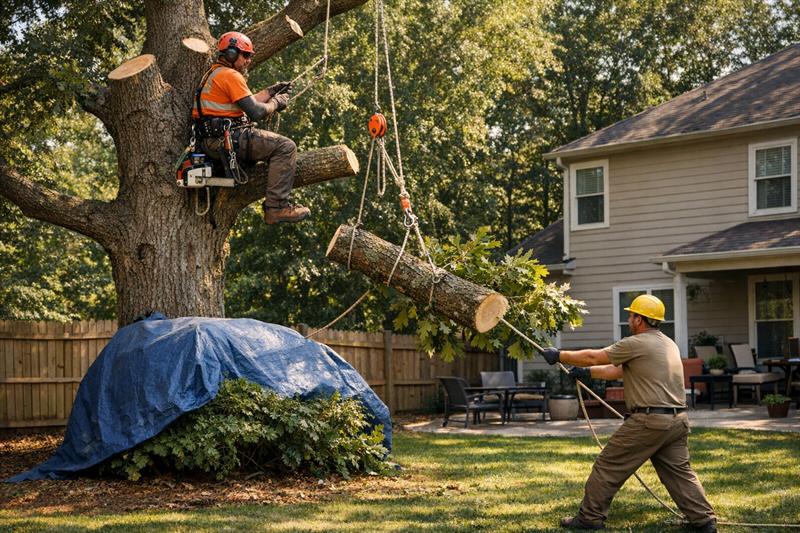
Quick Answer: Professional tree removal follows a controlled sequence: inspection, safety setup, sectional cutting, trunk removal, and cleanup. Many homeowners expect a tree to come down in one cut, but most removals are done in stages to control movement and help reduce the risk of property damage.
At One, Two, Tree, this is where confusion often starts. What looks straightforward from the ground is usually a coordinated process where each step affects the next. Once you understand how it works, it becomes much easier to judge whether a job is being handled carefully and professionally.
Why Understanding the Tree Removal Process Matters
Most problems during tree removal start with a lack of clarity about what should be happening. Without that context, it is hard to tell whether a crew is working methodically or improvising as the job unfolds.
Price is often the main factor homeowners compare, but the process behind the work matters just as much. When planning is thin, the result can be rushed cuts, limited property protection, or cleanup that falls short of expectations.
When you understand the process, you know what to expect at each stage. That makes it easier to ask better questions and spot avoidable problems before work begins.
Step 1: Initial Assessment and Safety Planning
Evaluating Tree Condition and Structural Risk
Every job starts with evaluating the tree itself. Crews look for decay, weak attachment points, lean, canopy weight, and how the tree is balanced overall.
One common issue is hidden weakness. A tree can look stable from the outside while internal decay or damage has already reduced its strength. If you have noticed leaning, cracking, or uneven growth, those may point to structural concerns. This is explained further in how to tell if a tree is structurally weak before it fails.
Identifying Hazards on the Property
The surrounding area is just as important as the tree. Crews assess nearby structures, fences, driveways, utilities, ground slope, and equipment access.
If those details are overlooked early, the crew may have to adjust the plan mid-job. That usually makes the work slower and less predictable.
Step 2: Site Preparation and Property Protection
Establishing Safety Zones
Before cutting begins, the crew defines clear work zones. These areas help control where debris can land and keep people away from active cutting and lowering areas.
Protecting Landscaping and Structures
- Ground protection such as plywood or mats
- Designated drop zones to help control impact
- Equipment positioned to avoid unnecessary contact with structures
This stage sets the tone for the rest of the job. When preparation is rushed, lawn damage and avoidable contact with nearby structures become more likely.
If you want to make the day of service easier, review how to prepare your property before tree removal so access and setup are already in place.
Step 3: Equipment Setup and Crew Coordination
Choosing the Right Removal Method
Different trees require different approaches. Some are climbed and dismantled by hand, while others call for lift access or crane support to manage weight and spacing more precisely.
This is where complexity is often underestimated. Trees near homes, fences, or utility lines usually require a more controlled method. The approach chosen has a direct effect on how smoothly and predictably the removal goes.
Roles of the Tree Removal Crew
Each person on-site has a specific role. One may handle cutting, another may manage rigging, and others may control the ground area, signals, and debris flow.
When that coordination is missing, the process becomes inconsistent. Cuts can happen out of sequence, communication breaks down, and control is reduced.
Step 4: Controlled Tree Cutting and Section Removal
Step-by-step overview:
- Assess the tree and surrounding risks
- Set safety zones and prepare the site
- Remove branches in sections from the top down
- Lower each piece using rigging or equipment when needed
- Cut down the trunk in controlled segments
- Clean up debris and leave the work area usable
Top-Down Removal Strategy
Trees are often removed from the top down to manage weight and balance. Each section is cut in a sequence that helps keep the remaining structure stable as it comes apart.
Removing too much weight at once can change how the tree shifts. That makes movement harder to predict and increases the chance of problems during the next cut.
Rigging and Lowering Branches Safely
Branches are lowered with ropes and rigging systems so they can be guided to the ground instead of dropped freely.
This is one of the clearest differences between controlled removal and shortcut work. Without a system for lowering pieces, the outcome depends far more on gravity and available space. For a closer look at those risks, see professional vs DIY tree service.
Step 5: Trunk Removal and Final Cuts
After the upper sections are removed, the trunk is taken down in segments or, if the site allows, guided into a controlled fall.
This stage requires careful judgment. In tight spaces, even a small error in angle, hinge control, or timing can bring the trunk too close to nearby structures. Larger or leaning trunks usually require even more control.
Step 6: Cleanup and Debris Removal
Debris Handling Options
- Chipping branches into mulch
- Hauling logs off-site
- Cutting wood into usable pieces
What a Proper Cleanup Should Include
- Removal of branches and debris agreed to in the scope of work
- Clearing or spreading sawdust
- Leaving the area reasonably level and usable
Cleanup is often where quality becomes most obvious. If debris is left behind or the area is left rough, homeowners usually feel it long after the cutting is done.
For a full breakdown of what to expect, review what cleanup should look like after tree removal.
Step 7: Stump Grinding (If Requested)
Stump grinding removes the stump below ground level so the surface can be used more easily. The root system typically remains in place, but the visible obstacle is gone.
This is often chosen when the stump interferes with mowing, landscaping, or future use of the area.
How Long Does Tree Removal Take?
Quick answer: Most tree removals take anywhere from a few hours to a full day, depending on size, location, complexity, and access.
- Small trees: a few hours
- Larger or more complex trees: most of the day
- Restricted access or added hazards: longer timelines
Delays usually come from access limitations, weather, or the need for more controlled cutting than expected.
What Can Delay or Complicate the Process?
- Weather conditions that affect safe working conditions
- Hidden structural issues inside the tree
- Tight working space near structures
- Overhead utility lines or underground obstacles
When these factors are identified early, the crew can plan around them. When they are not, the job usually becomes slower and more difficult to manage.
How to Prepare Before the Crew Arrives
Quick answer: Move obstacles, clear access, secure pets, and make sure the crew has room to work safely.
- Move vehicles and outdoor items
- Clear access paths and driveways
- Keep pets and children indoors
- Let neighbors know if space is limited
Preparation has a direct impact on how smoothly the job runs. Limited access or cluttered work areas tend to slow the process and create unnecessary complications.
Conclusion
The tree removal process is structured for a reason. Each step helps manage movement, protect the property, and keep the job organized from start to finish. When that structure is missing, the chance of damage, delays, or incomplete work goes up.
At One, Two, Tree, the focus is on keeping the process clear and controlled from the start. If you are planning a removal, the next step is to get a clear assessment and make sure the full process is explained before work begins. That clarity helps prevent problems later.
Key Takeaways
- Tree removal is a staged process, not a single cut
- Planning and setup shape how controlled the job will be
- Sectional cutting helps manage weight and direction
- Cleanup is part of a complete job, not an afterthought
- Preparation improves efficiency and reduces complications
How One, Two, Tree Approaches Tree Removal
At One, Two, Tree, tree removal is handled as a defined process rather than a one-step task. Each phase is planned and communicated so homeowners understand what is happening and why.
One of the biggest frustrations for homeowners is not knowing what to expect on timing, method, or cleanup. Clear communication helps reduce that uncertainty.
The approach here focuses on clarity from the start. Each step is outlined in advance, and updates are provided as the job progresses. That keeps the process more predictable and helps avoid preventable issues.
Frequently Asked Questions
What is the tree removal process step by step?
The process usually includes assessment, site setup, sectional cutting, trunk removal, and cleanup. Each step is planned to control how the tree comes down and how debris is handled. If a company cannot clearly explain the sequence, that may be a sign the process is not well defined.
How long does it take to remove a tree?
Most removals take a few hours to a full day depending on the tree size, location, and complexity. Trees near structures often take longer because they need to be removed in smaller sections. A proper assessment should give you a realistic timeframe before work starts.
Is tree removal dangerous?
Tree removal involves real risk if it is done without planning, coordination, and the right equipment. Falling limbs, shifting weight, and limited working space can all affect how the tree moves during removal. A structured process is used to keep that movement as controlled as possible.
Do I need to be home during tree removal?
You do not always need to be present, but access, scope, and expectations should be confirmed beforehand. In many cases, the crew can complete the work once the plan is clear and the site is accessible. If details are unresolved, delays or setup issues are more likely.
Will tree removal damage my yard?
A professional crew should take steps to limit yard impact through planning, controlled work zones, and protective measures where needed. Some disturbance can still happen, especially on larger removals or in wet conditions. Asking how the crew plans to protect the site helps set clear expectations.
What happens to the tree after it is cut down?
The wood is typically chipped, hauled away, or cut into sections for reuse, depending on the job and what was requested. Cleanup should leave the area clear and usable based on the agreed scope of work. Clarifying debris handling in advance helps avoid misunderstandings.