Quick Answer: Weather affects tree health by putting steady stress on roots, branches, and overall structure. In Atlanta, that stress builds across the year as trees deal with heat, heavy rain, humidity, wind, and occasional cold snaps. Many serious tree problems develop from repeated seasonal strain rather than a single weather event.
Why Atlanta’s Climate Creates Unique Tree Health Challenges
Atlanta weather is rarely consistent for long. Trees may go from warm, wet conditions to dry heat, then into storm activity or sudden temperature drops within the same year. That constant change affects both the canopy and the root system.
This tends to show up clearly in residential yards. Trees that grow naturally in wooded settings can struggle more in open landscapes where they face stronger wind, compacted soil, reflected heat, and inconsistent drainage.
- Temperature swings can gradually weaken branch structure
- Humidity can create conditions where fungal issues spread more easily
- Heavy rain followed by heat can stress roots and affect soil balance
These conditions do not always cause immediate failure, but they can set the stage for it. Over time, stability becomes the bigger concern, not just appearance or growth.
Spring: Growth, Rain, and Early Disease Risk
Spring brings rapid growth, but fast growth is not always strong growth. Branches can extend quickly before they are fully supported, and steady rainfall creates favorable conditions for disease to develop early.
How Spring Weather Triggers Tree Stress
Warm, wet conditions can increase the likelihood of fungal and bacterial issues. One common pattern is quick leaf growth followed by early signs of weakness in smaller branches or new shoots.
This becomes more noticeable when soil stays saturated. Roots need oxygen, and overly wet soil can limit it, which affects the tree from the ground up.
What to Watch for in Spring
- Leaf discoloration or spotting
- Soft or weak new growth
- Branches drooping earlier than expected
These can be early warning signs. If they continue, they may lead to disease pressure or uneven weight distribution in the canopy. For a closer look at what to catch early, review how to spot early signs of tree disease.
Summer: Heat Stress, Drought, and Hidden Damage
Summer is often when internal stress builds. Trees may still look full from the outside, but high heat and limited moisture can force them into survival mode.
How Heat Affects Tree Health
High temperatures and dry soil can slow normal growth and make it harder for roots to pull in enough water. Trees may hold their appearance for a while even as stress develops internally.
This creates a delayed problem. Damage from summer may not become obvious until the tree is pushed by storms, wind, or colder weather later in the year.
Signs of Heat Stress in Trees
- Wilting or curling leaves
- Leaves dropping earlier than expected
- Dry, hardened soil around the base
When these signs appear, the tree is already under strain. That strain can carry into the next season and reduce overall resilience.
Fall: Recovery, Weak Limbs, and Storm Preparation
Fall often reveals what earlier seasons caused. As growth slows and foliage thins, weak or dead limbs become easier to spot.
Why Fall Is Critical for Tree Inspections
With less foliage, structural issues are easier to see. This is often when hidden problems from spring and summer become more visible.
One common pattern is finding dead interior branches that were hard to notice during peak growth.
Preparing Trees for Storm Season
- Removing weak or dead branches
- Reducing excess canopy weight
- Correcting obvious imbalance in growth
Taking action in fall can help reduce stress before winter storms arrive. Targeted trimming can limit how much force the tree has to absorb. Learn more about preventing storm damage with tree trimming.
If you are seeing any of the following, it may be time to schedule service:
- Dead branches inside an otherwise full tree
- Limbs hanging lower than before
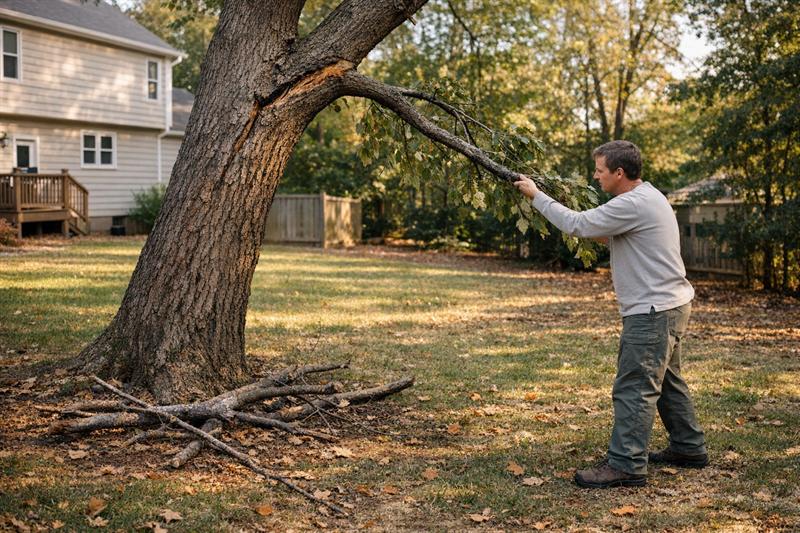
- Visible cracks forming in larger branches
- A canopy that looks uneven or overloaded
These are structural warning signs. If ignored, they can increase the chance of breakage during the next major storm.
Winter: Ice, Wind, and Structural Failure Risks
Winter slows growth but increases exposure. Without leaves, trees are more exposed to wind, and ice can add sudden weight to already stressed branches.
How Ice Storms Damage Trees
Ice adds weight to branches quickly. Even a light coating can increase the load enough to stress weak points. That can lead to splitting, cracking, or full limb failure.
The risk is higher when the tree is already weakened from earlier seasonal stress.
Winter Warning Signs
- Cracks forming along major limbs
- Trees leaning after storms
- Branches partially broken but still attached
These issues usually do not improve on their own. They often worsen with additional wind, rain, or another freeze.
How Weather Damage Leads to Property Risk
Tree failure usually follows a pattern. Stress builds over time, structure weakens, and eventually something gives under added pressure.
Common Tree Failure Points
- Roots losing stability because of soil movement or poor drainage
- Limbs carrying more weight than they can support
- Internal decay reducing overall strength
Warning Signs Homeowners Miss
- Gradual leaning that becomes more noticeable over time
- Small cracks that widen under pressure
- Dead branches hidden inside the canopy
Trees can appear stable until weather adds more stress, and then failure can happen quickly. For a practical way to check for concerns around your property, review this tree risk assessment checklist for homeowners.
When to Monitor vs When to Take Action
Some changes are seasonal. Others point to structural problems. Knowing the difference helps prevent avoidable damage.
Situations That Require Immediate Action
- A tree that has started leaning recently
- Large dead branches over a home or driveway
- Storm damage near structures
These situations can escalate quickly, especially if additional weather is expected.
Preventative Tree Care Approach
- Routine inspections to track changes over time
- Strategic pruning based on structure and canopy load
- Planning ahead for known seasonal risks
This is where a professional evaluation becomes useful. A well-structured visit can clarify what is happening and what needs attention next. Here is what to expect during a professional tree service visit.
Key Takeaways
- Weather affects tree health continuously, not just during storms
- Damage can build across seasons and show up later
- Many failures follow visible patterns before they happen
- Early action can reduce risk and prevent larger problems
Conclusion
Tree damage in Atlanta often develops over time. Heat, moisture, and storms can weaken structure little by little until failure becomes more likely.
What starts as minor stress can turn into visible damage and eventually a larger property concern. Waiting usually gives the problem more time to develop and can make it harder and more expensive to manage.
One, Two, Tree focuses on making that process clear. Conditions are explained in plain language, problem areas are documented, and the next step is easy to understand.
If your trees are showing signs of stress, leaning, or dead limbs, a practical next step is to have them evaluated before the next weather event adds more pressure.
How One, Two, Tree Approaches Tree Health and Risk
Tree care is approached as an ongoing process, not a one-time fix. Weather patterns, soil conditions, and structure all need to be considered together.
A common issue is uncertainty. Many property owners are not sure what is urgent and what can wait, and that uncertainty can lead to delayed action.
Each evaluation focuses on:
- Identifying structural concerns early
- Explaining what is happening in clear terms
- Outlining the next step based on visible conditions and overall risk
This approach keeps decisions straightforward and helps prevent smaller issues from turning into urgent situations.
FAQ
How does weather affect tree health in Atlanta?
Weather affects tree health by placing ongoing stress on roots, branches, and structure. In Atlanta, humidity, heat, and storms can contribute to disease pressure, root strain, and gradual weakening over time. If changes appear after seasonal shifts, it may be time for a closer look.
What season is hardest on trees in Georgia?
Summer often creates the most strain because of heat and limited moisture. This can reduce a tree’s ability to maintain strength and recover well. Trees stressed during summer may become more vulnerable in fall and winter.
Can heat waves permanently damage trees?
Extended heat can cause lasting stress to roots and internal structure. Even if leaves recover, the tree may not return to full vigor right away. That stress often becomes more noticeable when the tree faces additional pressure later.
How do ice storms affect tree stability?
Ice adds weight to branches, which increases the chance of cracking or breakage. Trees with existing weaknesses are more likely to fail under that load. After an ice event, visible damage often means the structure has been compromised.
What are signs a tree is unsafe after a storm?
Leaning, cracked limbs, and large dead branches are strong warning signs. These conditions can point to structural stress that may lead to failure. Trees near homes, driveways, or walkways should be checked promptly.
When should a tree be removed due to weather damage?
Removal may be the best option when a tree has lost structural stability and poses a clear risk to nearby people or property. Severe leaning, root movement, or major limb failure are common indicators. In those situations, a prompt professional evaluation is usually the safest next step.