Quick Answer: Fast-growing trees can come with weaker structure, aggressive root spread, and rapid size expansion that lead to ongoing maintenance, property conflicts, and a higher chance of storm damage over time. These issues often start early and become more noticeable as the tree matures.
Fast growth sounds appealing when you want shade or privacy quickly. At One, Two, Tree, this is often where the trade-offs begin. Trees that grow quickly can outpace the space they are planted in, and the consequences usually follow a familiar pattern.
A common scenario is planting for immediate results and dealing with long-term complications later. The tree grows faster than expected, roots spread outward, and maintenance becomes more frequent. What starts as a simple upgrade can turn into an ongoing responsibility.
Why Fast Growth Comes With Trade-Offs
Fast-growing trees are built for speed, and that often comes with compromises in structure, lifespan, or maintenance demands.
Rapid Growth vs Structural Strength
When a tree grows quickly, it often produces lighter, less dense wood. That can mean weaker branch attachments and a greater chance of breakage under stress. After storms, fast-growing species are often more prone to limb loss than slower-growing trees.
As the canopy expands, those weaknesses can become more noticeable, especially during wind or heavy rain.
How Growth Speed Affects Tree Longevity
Fast growth is often linked to a shorter useful lifespan. The tree reaches maturity sooner, but signs of decline may also appear earlier. That can include thinning foliage, dead branches, and reduced structural stability.
Over time, the focus can shift from routine maintenance to managing larger safety and property concerns.
Common Problems With Fast Growing Trees
- Weak branches that are more likely to break during storms
- Aggressive root systems that can disrupt nearby surfaces and structures
- Shorter lifespan with earlier signs of decline
- Outgrowing available space faster than expected
- Frequent pruning and ongoing maintenance needs
Weak Branches and Storm Breakage
Fast-growing trees often develop limbs that are more vulnerable during storms. That is one reason they are commonly involved in storm-related tree damage. For a closer look, see what trees fall in storms.
This can lead to fallen branches, cleanup, and damage to nearby structures or vehicles.
Aggressive Root Systems and Property Damage
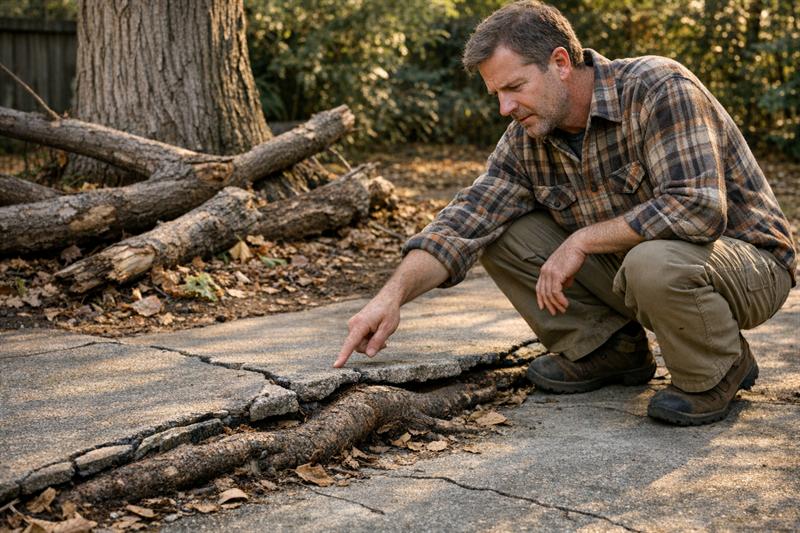
These trees often form wide, shallow root systems that spread quickly. Over time, roots can lift driveways and sidewalks, affect retaining walls, or interfere with underground lines.
If you want to understand how this develops, how tree roots can damage your foundation explains the process in more detail.
As the tree grows, these issues usually become harder and more expensive to correct.
Short Lifespan and Early Decline
Fast-growing trees often reach their peak sooner and begin declining earlier than slower-growing species. This can lead to deadwood, reduced stability, and increased maintenance.
At that stage, the tree often needs more active management to stay in good condition.
Outgrowing Space Too Quickly
A tree that fits your yard when planted can outgrow that space within a few years. Branches may extend over roofs, toward power lines, or into neighboring areas.
This creates ongoing conflict between the tree and its surroundings, often leading to repeated trimming.
High Maintenance Requirements
Fast-growing trees usually need more frequent pruning to control size and improve structure. Without regular care, the canopy can become uneven, overextended, or too heavy in certain areas.
That added weight and imbalance can increase stress on the tree and raise the chance of branch failure.
If you are seeing any of the following, the tree may already be creating problems:
- Branches extending over your roof or driveway
- Roots visible at the surface or lifting hardscapes
- Repeated limb drop after storms
- Noticeable size increase over a short period
At this stage, pruning, corrective work, or a closer evaluation is often needed to keep the situation from getting worse.
Warning Signs Before You Plant a Fast Growing Tree
- Growth rate is emphasized, but mature size is unclear
- The tree is recommended for a small space even though it matures large
- The species is known for surface roots or wide root spread
- The planned location is close to structures, utilities, or hardscapes
Growth Rate vs Mature Size Mismatch
This is one of the most common planning mistakes. A fast-growing tree can quickly exceed expectations and create spacing problems above and below ground.
Root Behavior Red Flags
Some species are known for aggressive or expansive roots. Without proper planning, that can lead to long-term issues with nearby surfaces, structures, and surrounding planting areas.
Placement Risks Near Structures
Planting too close to a home often creates avoidable problems. For more detail, see how tree placement near your house impacts safety.
As the tree grows, limited space usually leads to conflict between roots, branches, and the structure itself.
Why These Problems Are More Serious in Georgia
Storm Exposure and Tree Failure Risk
Storm activity is a regular part of the local climate. Fast-growing trees are often more vulnerable in these conditions because of their growth habit and branch structure.
That can increase the likelihood of broken limbs or storm-related damage during strong winds and heavy rain.
Soil Conditions and Root Behavior
Clay-heavy soils can limit deep root development. In those conditions, roots often stay closer to the surface and spread outward.
This can contribute to surface disruption and less stable anchoring over time.
Limited Space in Urban Landscapes
Smaller residential lots leave less room for large trees. Fast growth can quickly lead to overcrowding and clearance issues.
That often means more frequent pruning and added stress on the tree.
When Fast Growing Trees Make Sense (and When They Don’t)
Temporary vs Long-Term Tree Planning
Fast-growing trees can work well for short-term goals like quick shade or screening. Problems usually start when they are treated as permanent solutions without enough room or a maintenance plan.
Without that longer view, they often need heavy pruning or removal later.
Smart Use Cases for Fast Growth
They can make sense when planted with a clear plan for maintenance, spacing, and eventual replacement if needed. Without that plan, problems tend to build over time.
How to Avoid Costly Tree Mistakes
Planning for the Full Life of the Tree
Think beyond the first few years. Consider how large the tree will become, how far roots may spread, and what maintenance it is likely to need.
That approach helps reduce avoidable corrections later.
When Professional Guidance Helps
Professional input can help identify spacing, growth, and structural concerns before they turn into visible property issues. Waiting until damage appears usually limits the options.
Early planning or evaluation often makes the next steps simpler and less expensive.
The Long-Term Cost of Choosing the Wrong Tree
Maintenance Over Time
Fast-growing trees typically require repeated trimming, cleanup, and monitoring. Over time, that becomes an ongoing cost rather than a one-time project.
Property Damage Scenarios
Roots can disrupt hard surfaces, branches can affect roofs, and overcrowding can create conflicts with nearby structures.
In many cases, those issues end up costing more than better planning at the start.
When Removal Becomes Necessary
Some fast-growing trees eventually need removal because of structural decline, storm damage, or poor placement. This is especially common when long-term growth was not considered at planting.
At that point, removal may be the most practical way to resolve the problem.
Key Takeaways
- Fast growth is often linked to weaker structure and higher storm-related risk
- Many fast-growing trees require more ongoing maintenance
- Root systems can contribute to damage around hardscapes and nearby structures
- Problems usually increase as the tree matures
- Planning ahead helps reduce long-term cost and avoidable issues
Conclusion
Fast-growing trees offer quick results, but they can also create long-term challenges that become harder to manage over time. Weaker structure, expanding roots, and rapid size increase can lead to a cycle of maintenance and property conflict.
If these issues are not addressed early, they often become more expensive and disruptive. What begins as minor pruning can turn into larger structural concerns or removal.
At One, Two, Tree, this pattern comes up regularly. Trees planted for speed often need the most correction later. Choosing the right tree, giving it enough space, and managing growth early can make a major difference.
If you are already noticing rapid growth, root spread, or structural concerns, it may be time for a closer look. One, Two, Tree can evaluate the situation, explain what is happening, and help you decide on the next step with clarity.
Frequently Asked Questions
What are the disadvantages of fast growing trees?
Fast-growing trees are often associated with weaker wood, aggressive root spread, and shorter lifespans. Those traits can lead to more maintenance and a greater chance of property-related issues over time.
Do fast growing trees have weaker roots?
Not always weaker roots, but many fast-growing trees develop shallow, spreading root systems rather than deep anchoring roots. That can affect stability and increase surface disruption in some settings.
Which fast growing trees cause the most damage?
Trees with rapid canopy growth and expansive root systems tend to create the most issues, especially when planted too close to structures, driveways, or utilities. Placement often matters as much as species choice.
Are fast growing trees more likely to fall in storms?
They are often more prone to limb breakage or storm damage because of their growth habit and branch structure. Regular pruning and good placement can help reduce that risk.
How far should fast growing trees be planted from a house?
The right distance depends on the tree’s mature size, canopy spread, and root behavior. Planning for full growth, not just the size at planting, helps avoid future conflicts with the house.
Can fast growing trees be maintained safely long-term?
They can often be managed long-term with consistent pruning and proper care, but they usually require more attention than slower-growing species. In some situations, replacement becomes the more practical long-term option.