
Quick Answer: Yard cleanup after tree service is a step-by-step process that includes removing debris, addressing stumps and roots, repairing soil disruption, and restoring the surface. When cleanup stops too early, it often leads to uneven ground, weak grass recovery, and lingering safety or usability issues.
What Your Yard Looks Like After Tree Work (And Why)
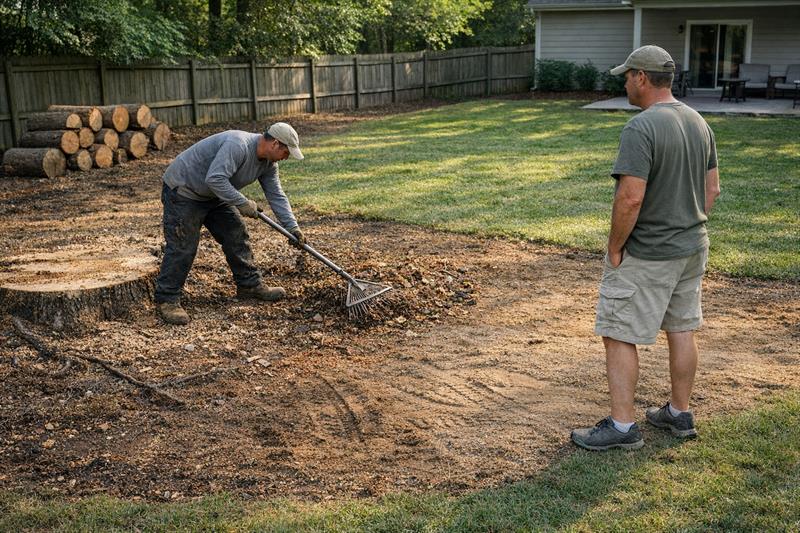
After tree work, it is normal for your yard to look unfinished. Branches may be scattered, wood chips may cover the ground, and equipment can leave behind ruts or compacted soil. The tree is gone, but the space may not feel usable yet.
Many homeowners expect a clean, ready-to-use yard, but what is left behind depends on how the job was scoped. If cleanup is limited to cutting and removal, the yard can still look and feel like a work site.
Common Types of Debris Left Behind
Tree work produces more debris than most people expect. Even a single removal can leave behind:
- Large logs and trunk sections
- Branches and limbs
- Leaves and fine debris
- Wood chips or sawdust
In many cases, larger debris is removed first while smaller material remains. That leftover layer can smother grass, hold moisture against the soil, and leave the area looking unfinished.
Hidden Damage You Might Not Notice Right Away
Visible debris is only part of the issue. The bigger impact is often below the surface.
Heavy equipment can compact the soil. Root systems may be disturbed. Ground levels can shift slightly. These are the conditions that slow recovery. Compacted soil makes it harder for grass to re-establish, and uneven grading can allow water to collect in low spots.
If this is not addressed, the yard usually recovers unevenly. In many cases, soil work and leveling are needed before grass can grow back consistently.
For a broader look at the full recovery process, see what to do after tree removal.
What Should Be Included in Tree Service Cleanup?
Cleanup is one of the least consistent parts of tree service. What one company considers complete, another may treat as an add-on.
Some crews remove the tree and leave debris stacked on-site. Others handle hauling, stump grinding, grading, and final surface cleanup. Expectations usually break down when those details are not clear before the job begins.
Basic Cleanup vs Full-Service Cleanup
Basic cleanup usually means cutting and stacking debris or clearing major hazards. The yard is safer and easier to navigate, but it is not fully restored.
Full-service cleanup typically includes debris removal, stump grinding, surface leveling, and preparation for regrowth or landscaping.
The difference shows up quickly. With basic cleanup, more work is still required. With full-service cleanup, the yard is much closer to being usable again.
Questions to Ask Before the Job Starts
- Is debris removed or left on-site?
- Is stump grinding part of the job?
- Will the ground be leveled and repaired?
These questions help prevent post-job surprises. When the scope is clear upfront, the outcome is easier to manage.
For a breakdown of what a complete visit should include, review what is included in a professional tree service visit.
Step-by-Step Yard Cleanup After Tree Service
Cleanup works best when it follows a clear order. Skipping steps or rushing the process often leads to extra work later.
Step 1: Remove Large Debris and Logs
Start with the largest material. Logs and heavy branches limit access and create obvious safety risks.
This step often requires the right equipment. Trying to move large sections without it is where injuries and property damage are more likely to happen.
Step 2: Clear Branches, Leaves, and Wood Chips
Once large debris is gone, smaller material needs to be cleared or managed.
Wood chips are often left behind. A thin layer can work as mulch, but thick piles create problems. They block light, trap moisture, and prevent grass from recovering. When buildup is too heavy, it should be spread out or removed.
Step 3: Address the Stump and Root Area
Stumps are commonly left unless removal is included in the original scope.
This is where cleanup becomes functional, not just visual. A remaining stump limits how the space can be used and may lead to regrowth or attract insects over time.
In many cases, grinding is the most practical way to clear the area. Learn more about what happens during stump grinding.
Step 4: Repair Lawn and Soil Damage
This step has a major impact on how well the yard recovers.
Compacted soil needs to be loosened. Ruts need to be filled. Damaged lawn areas may need seed or sod. When this step is skipped, the yard often stays uneven and struggles to fill back in.
This usually becomes more noticeable after rain, when water settles into low areas and exposes grading problems.
Step 5: Final Grading and Yard Restoration
The final step is smoothing and leveling the surface.
This supports drainage and creates a more stable, usable yard. Without it, small uneven areas tend to become more noticeable over time.
A properly restored yard should feel finished, not simply cleared.
Common Yard Cleanup Mistakes to Avoid
Most cleanup problems come from stopping too early or overlooking key steps.
- Leaving behind fine debris that interferes with grass recovery
- Ignoring compacted soil
- Disposing of debris improperly
- Leaving the stump in place without a plan for the space
A yard can look mostly clean while underlying issues remain. Over time, those usually show up as patchy grass, uneven ground, or drainage problems.
When to Handle Cleanup Yourself vs Hire Professionals
Some cleanup tasks are manageable on your own, but usually only when the scope is small.
Light debris and minor surface cleanup can be handled with basic tools. Larger jobs become more demanding quickly, especially when heavy material, stump work, or ground repair is involved.
Signs You Need Professional Debris Removal
- Large tree or multiple trees were removed
- Heavy logs cannot be moved safely
- There is visible ground damage or uneven grading
- A stump or major root area is still in place
If you are dealing with any of these issues, cleanup may require equipment and a more structured process. In those cases, hiring help is often the safer and more efficient option.
For a deeper comparison, see professional vs DIY tree service.
How Cleanup Affects Long-Term Yard Health
Cleanup directly affects how your yard recovers and how usable it becomes.
Debris left in place can limit sunlight and hold excess moisture. Compacted soil restricts root growth. Poor grading causes water to collect in certain areas. These conditions usually do not improve on their own.
Over time, an unfinished yard tends to develop uneven growth and ongoing maintenance issues. Addressing cleanup thoroughly from the start leads to more stable results.
Healthy recovery depends in part on soil condition, which is explained further in the importance of soil quality for tree health.
Key Takeaways
- Yard cleanup after tree service is a step-by-step process, not a single task
- Many long-term yard issues start when cleanup is incomplete
- Soil condition and grading affect recovery
- Stump removal is often needed to fully restore the space
- Professional cleanup is often the better fit for larger jobs
Conclusion
Yard cleanup after tree service is where the job actually gets finished. When this part is rushed or skipped, the result is often a yard that stays uneven, drains poorly, and takes longer to recover.
In many cases, the tree is removed but the yard is left needing more work than expected. Without proper cleanup and restoration, those issues tend to keep showing up over time.
One, Two, Tree handles cleanup as part of the full process. Clear communication, defined steps, and jobsite coordination help prevent gaps between removal and restoration.
If your yard still looks incomplete after tree work, the next step is to finish the cleanup properly so the space can recover and be used again.
Frequently Asked Questions
Does tree service include cleanup?
Some services include basic cleanup, but not all include full debris removal or restoration. Basic cleanup often means stacking debris rather than hauling it away. Confirming details upfront helps avoid extra work later.
How long does yard cleanup take after tree removal?
Cleanup time depends on the size of the job and how much restoration is included. Smaller projects may take a few hours, while larger removals can take longer because of debris volume, stump work, or lawn repair.
What happens to the wood and debris after tree removal?
Debris may be hauled away, chipped into mulch, or left on-site depending on the agreement. Many homeowners prefer removal to avoid buildup. Clarifying this ahead of time sets clear expectations.
Should I remove wood chips or leave them?
Wood chips can be useful as mulch when spread thin in appropriate areas. Thick layers can block grass growth and hold too much moisture. Excess material should be redistributed or removed.
Can tree removal damage my lawn?
Yes, tree removal can affect the lawn. Equipment and debris may create ruts and compact soil, which changes how grass grows back. Repairing these areas helps the yard recover more evenly.
Do I need stump grinding after tree removal?
Stump grinding is often the most practical next step if you want to fully clear the area. Leaving a stump limits how the space can be used and can lead to regrowth. Removing it makes restoration easier.