Quick Answer: Tree removal is not always the right solution when a tree is still structurally stable and risk can be reduced through pruning, support systems, or targeted care. Problems like leaning, storm damage, or root conflicts can look worse than they are and may sometimes be addressed without full removal.
Why Tree Removal Isn’t Always Necessary
Tree removal often feels like the safest move, especially when something suddenly changes. A tree starts leaning, drops large limbs, or gets too close to the house. The default reaction is to remove it before it becomes a larger problem.
That is where costly mistakes can start. Many trees that look dangerous are still structurally sound. The visible issue may be real, but it does not always mean the tree is failing.
In many cases, a homeowner prepares for removal when the actual problem is isolated and manageable. When the condition of the tree is evaluated carefully, the solution is often less invasive and more cost-effective.
Common Situations Where Trees Can Be Saved
Not every tree problem leads to removal. A common mistake is reacting to what is visible without understanding what caused it. Trees respond to stress in ways that can look severe but are often correctable.
The key factors are location, structural condition, and what the tree could impact if it fails. Those factors help determine whether the tree can be preserved or needs to come down.
Leaning Trees That Are Still Stable
A leaning tree is one of the most common triggers for removal. It is also one of the most misunderstood.
The direction of the lean matters more than the angle alone. A tree leaning away from structures with stable roots may be manageable. A tree leaning toward a house with shifting soil is a different situation entirely. For a deeper breakdown, see why trees start leaning and what it means.
This becomes more concerning when the lean changes quickly. Sudden movement can point to root instability, and that is when the risk increases.
Storm-Damaged but Recoverable Trees
Storm damage looks dramatic. Large limbs come down, the canopy becomes uneven, and the tree can appear compromised. That visual alone leads many homeowners to assume removal is the only option.
In some cases, the trunk and root system are still solid. The damage may be concentrated in the canopy rather than the main structure.
The problem grows when broken or hanging limbs are left in place. That imbalance adds stress and increases the chance of further damage. Corrective pruning can help restore balance and reduce that risk.
Trees Causing Minor Property Concerns
Roots pushing up a sidewalk or branches hanging over a roof can feel urgent, but these are often management issues rather than automatic removal triggers.
A common assumption is that roots are causing major damage when the impact is limited to the surface. In some cases, adjustments can reduce the conflict without removing the tree. Understanding how tree roots interact with underground systems can help clarify what is actually at risk.
These situations usually get more expensive when ignored. Small conflicts can grow over time, and what could have been managed early may become harder to correct later.
Top Alternatives to Tree Removal
When a tree is structurally stable, the goal is not removal. The goal is reducing risk while keeping the tree intact. Several established methods may help, depending on the issue.
- Strategic pruning to reduce weight and improve balance
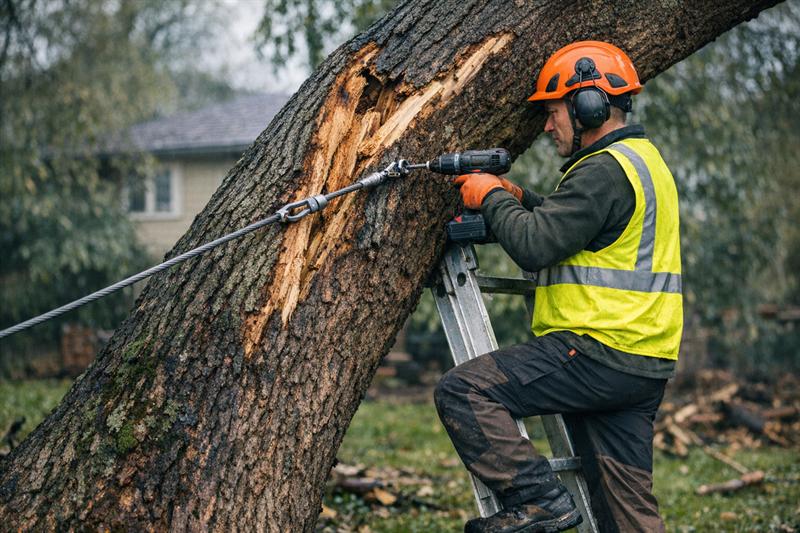
- Cabling and bracing to support weak structural points
- Disease and pest treatment to support tree health
- Root management to limit impact on surrounding structures
Strategic Pruning and Crown Reduction
Pruning is one of the most common alternatives to removal because it can directly address imbalance. Reducing weight in the canopy lowers stress on weak branches and can improve stability.
This is also where problems can get worse when the work is done incorrectly. Over-pruning or uneven cuts can shift weight in the wrong direction. That creates new stress points instead of addressing the original issue.
Cabling and Bracing for Structural Support
Some trees develop weak unions or partial splits. These do not always require removal if the rest of the tree remains sound.
Cabling and bracing add support where the structure is weakest. This is typically most effective when installed before the damage progresses. Once separation becomes severe, support systems are less dependable and removal becomes more likely.
Disease and Pest Management
Disease does not automatically mean a tree is beyond saving. Many issues start small and spread gradually.
Problems usually escalate when early signs are missed or ignored, allowing the condition to move deeper into the tree. Once structural strength is affected, the available options become more limited.
Root Management Solutions
Root-related concerns are often misunderstood. Surface roots and minor lifting can sometimes be managed without removing the tree.
The concern increases when roots begin affecting foundations or critical infrastructure. At that point, the situation shifts from routine maintenance to risk control, and removal may need to be considered.
How to Know If a Tree Is Truly Unsafe
Some trees cannot be safely preserved. The decision comes down to structural integrity and what the tree could hit if it fails.
- Deep cracks or splits in the trunk
- Movement at the base or lifting soil around the roots
- Large sections of dead or falling wood
- Position over a home, driveway, or high-traffic area
If you are unsure how to evaluate these signs, a tree risk assessment checklist can help break down what to look for.
Delays create more concern when structural weakness reaches this level, especially during storms or high winds.
What a Professional Tree Assessment Should Include
A proper assessment is more than a quick opinion. It is a step-by-step evaluation of how the tree is built, how it is responding to stress, and what it could impact.
This includes the canopy, trunk, root system, and nearby targets such as structures or walkways. One common mistake is focusing only on visible damage while missing underlying instability.
Clear communication matters just as much as the assessment itself. Understanding what was found and what it means gives homeowners a clearer path forward instead of guesswork.
Balancing Safety, Cost, and Long-Term Property Value
Removing a tree solves one problem, but it also removes shade, visual balance, and part of the property’s character.
When a tree is stable, preservation is often the more practical option. Timing matters. Addressing issues early can keep costs lower and help prevent conditions from getting worse.
A manageable issue that is delayed can worsen over time until removal becomes the only realistic option.
When Removal Actually Is the Better Option
There are situations where removal is the right call, and delaying it increases risk.
Severe structural damage, advanced decay, or a tree positioned to strike a home if it fails are strong indicators. In these cases, the focus shifts from preservation to safety.
If you are weighing that decision, reviewing when removal is safer than trimming can help clarify where that line is.
Key Takeaways
- Tree removal is not always the correct solution
- Many visible problems can be addressed without removing the tree
- Structural condition matters more than appearance alone
- Delays can allow manageable issues to turn into larger risks
- A proper assessment is the most reliable way to decide
Conclusion
The real issue is not the tree itself. It is deciding too quickly or waiting too long without understanding the actual risk.
Removing a tree that could have been saved can lead to unnecessary cost and loss. Ignoring a tree that is structurally failing can lead to property damage and safety concerns.
One, Two, Tree approaches this by focusing on clear evaluations and straightforward communication, so you understand the condition of your tree and what makes sense next. If something about a tree on your property has changed, the next step is to have it evaluated before the problem gets worse.
Our Approach to Tree Decisions
Every tree decision should be based on structure, risk, and location, not assumptions. The process should focus on identifying what is actually happening and explaining it in a way that is easy to follow.
That is where many homeowners get stuck. They receive a recommendation without enough context. A clear, step-by-step evaluation helps remove that uncertainty and supports better decisions.
Frequently Asked Questions
Can a tree be saved instead of removed?
Yes, if the structure is stable, many trees can be preserved. Trees with limited damage or early-stage issues are often good candidates for pruning or support systems. An evaluation helps confirm whether that approach makes sense.
What is the best alternative to tree removal?
The best option depends on the problem. Pruning, structural support, or treatment are among the most common solutions. The right choice depends on how the tree is built and where the risk exists.
How do you know if a tree is beyond saving?
A tree is typically beyond saving when structural failure is already developing. Deep trunk cracks, unstable roots, and large dead sections are strong indicators. At that point, removal is often the safer option.
Is pruning enough to make a tree safe?
Pruning can significantly reduce risk when the issue is related to weight or imbalance. If the structure itself is compromised, additional support or removal may be needed.
How much does it cost to preserve a tree vs remove it?
Preservation is often less expensive because it may involve less equipment and labor. Costs usually increase when issues are left unresolved and conditions worsen, making removal more likely.