Quick Answer: Tree work affects a yard most when the access route, equipment plan, drop zone, and cleanup scope are not defined before the crew arrives. Tree removal, pruning, stump grinding, and debris hauling create temporary disruption, but a site-specific plan can help limit that disruption to the areas needed to complete the work safely.
A tree may need attention because it is damaged, declining, overgrown, or too close to a structure. The concern is usually bigger than the tree itself: Will trucks affect the grass? Will branches reach landscaping? What does cleanup actually include? One, Two, Tree emphasizes clear project communication so customers understand the work plan, access needs, and expected site conditions.
Key Takeaways
- Tree work can affect turf, landscaping, access areas, and parking, especially when large equipment or repeated traffic is necessary.
- The equipment route and debris-staging area can affect the yard as much as the tree itself.
- Pruning, full removal, storm cleanup, stump grinding, and debris hauling leave different conditions behind.
- “Cleanup” should be clearly defined because brush removal, log hauling, stump-grinding material, and landscape restoration are separate tasks.
- A clear pre-job plan and timely updates can reduce surprises for homeowners and property managers.
The Short Answer: Tree Work Can Affect a Yard, but the Impact Depends on the Plan
The effect tree work has on a yard depends on how the crew reaches the tree, how material is lowered, where equipment is staged, and what happens to debris after the work is complete. A small pruning job in an open yard creates a different work zone than a large removal beside a building, driveway, fence, or parking lot.
- Large trees generally require larger work zones and more debris handling.
- Soft or saturated ground is more likely to show tire marks and turf compression.
- Narrow gates, steep slopes, and limited parking can change the equipment plan.
- Stump grinding leaves wood material and soil that may need preparation before reseeding or planting.
- Urgent work may prioritize addressing immediate hazards and restoring access before cosmetic restoration.
Problems often start when expectations are vague. A crew may remove a tree safely, but unclear plans for equipment access, retained logs, chips, or cleanup can leave the property owner unprepared for the final condition of the yard.
Before Tree Work: How a Property Should Be Evaluated and Planned
The best time to protect a yard is before equipment enters it. Tree work should begin with a plan for the tree, the site, the access route, and the cleanup process.
The Tree and Site Conditions Shape the Work Plan
Tree height, canopy spread, trunk size, lean, visible decay, branch weight, and proximity to structures all affect how work is performed. A tree with limited open space beneath it generally requires a more controlled approach than one standing in an unobstructed area.
The most difficult jobs are not always the tallest trees. Jobs become more complex when trees are close to roofs, fences, utility areas, driveways, neighboring property, or active pedestrian spaces. That is when controlled lowering, rigging, and defined work zones may be necessary.
If a tree is leaning, split, visibly decayed, or dropping large limbs, delaying the work can narrow the available options. The tree may become less predictable, the work zone may expand, and the job can shift from planned maintenance to urgent hazard removal. Readers concerned about tree condition can review how to identify a high-risk tree on your property before the situation becomes more complicated.
Equipment Access Can Have as Much Impact as the Tree Itself
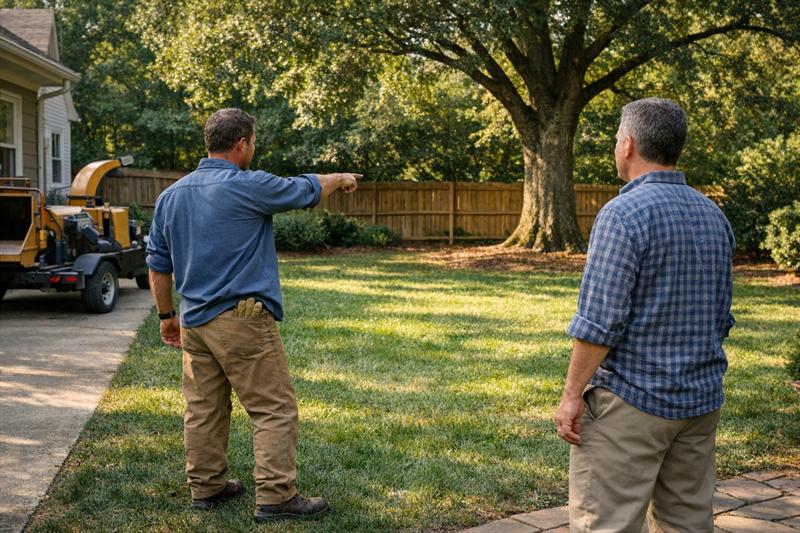
Trucks, lifts, cranes, chippers, stump grinders, and crew movement all need a route into and out of the work area. That route may use a driveway, side yard, lawn edge, parking lot, gate opening, or designated staging area.
On tight residential and commercial sites, the tree itself may have enough room for removal while access remains limited by landscaping, parked vehicles, narrow entrances, or soft ground. When access is constrained, the plan needs to account for how material will be moved without creating unnecessary traffic across the property.
Equipment selection is not simply about convenience. Larger, unstable, or structure-adjacent trees may require more controlled methods and more space. The practical goal is to use a safe, workable approach while keeping routes, staging areas, and temporary restrictions clear to everyone affected.
Sensitive Areas Should Be Identified Before the Crew Arrives
Some property features are easy to miss unless they are pointed out in advance. Irrigation heads, newly installed sod, landscape lighting, invisible fencing, drainage features, septic components, decorative hardscaping, garden beds, and buried lines can all affect how a work area is planned.
- Mark or describe irrigation heads and shallow landscape features.
- Identify gates, drainage swales, septic areas, and restricted access points.
- Point out recently installed sod, delicate plantings, and high-value landscaping.
- Explain where equipment should not be staged if the site has alternatives.
Visible markers and clear pre-job communication can help crews account for known site conditions. They do not replace appropriate utility locating or site-safety procedures, but they can prevent avoidable surprises once the work zone is active.
Cleanup Should Be Defined in the Written Scope of Work
Cleanup is not one single task. It can include branch hauling, log removal, chipping, raking, blowing hard surfaces, removing sawdust, stump grinding, or managing the material left by stump grinding.
A common misunderstanding is that tree-service cleanup automatically includes lawn restoration. It does not necessarily include sod, reseeding, grading, mulch replacement, planting, irrigation repair, or hardscape work. Those are separate restoration tasks that should be identified if they are part of the desired outcome.
How to Prepare Your Yard Before Tree Service
Preparing the property gives the crew room to work and helps keep the job focused on the agreed access route and work area.
- Move vehicles from the equipment route, work zone, and debris-loading area.
- Remove patio furniture, grills, decorations, play equipment, and movable lawn items when requested.
- Secure pets and keep children away from the active work area.
- Confirm gate access, parking arrangements, building access rules, and site restrictions.
- Point out irrigation components, gardens, drainage structures, septic features, and recently installed landscaping.
- Decide whether logs, chips, or mulch material should be removed or retained when that option is available.
- Notify tenants, employees, neighbors, or visitors if parking, walkways, or shared access will be affected.
Do not enter a drop zone or try to move branches while tree work is underway. If a tree or limb is touching a power line, stay clear and report the condition to the utility provider or an appropriate tree service rather than attempting cleanup yourself.
During Tree Work: What May Affect Your Lawn, Landscaping, and Property
Even a well-planned job creates temporary activity around the tree. A clear plan makes the work zone easier to understand, limits unnecessary movement, and gives the property owner a clearer picture of what will happen next.
Foot Traffic, Tires, and Soil Compaction
Repeated foot traffic and equipment movement can compress grass and soil, especially when the ground is wet or soft. Compacted soil can limit air and water movement around turf and roots, so visible tracks and flattened grass are more likely after work on saturated ground.
This issue becomes more pronounced when heavy equipment repeatedly travels through the same narrow area. A planned route keeps activity where it is necessary instead of allowing equipment and crews to move unpredictably across the property.
Controlled Lowering, Rigging, and Drop Zones
Controlled lowering means branches or trunk sections are managed into a planned landing area instead of being left to fall freely. Rigging uses ropes and related equipment to guide or lower material when the tree is near structures, fences, landscaping, or other property features.
The available drop zone depends on the tree’s location and condition. When the work area is tight, portions of a driveway, lawn, walkway, or parking area may need to remain clear until the crew has completed that part of the job.
Problems can arise when people are not told where the work zone is, how long it will affect access, or why that area is needed. Clear job-status updates can help prevent confusion on active properties.
Lawn, Garden, Fence, Driveway, and Hardscape Considerations
Landscaping, fences, driveways, sidewalks, patios, and garden beds all shape the work plan. A driveway or parking area may be the most practical staging surface, while a narrow side yard may require a different method for moving branches and wood.
A site-specific plan should not treat every surface the same. The safest method may require temporary use of part of a lawn or driveway, but that use should be explained before the project starts. This is especially important when landscaping is newly installed, difficult to replace, or shared by multiple tenants or property users.
Why Tree Pruning and Tree Removal Affect a Yard Differently
Pruning usually creates less wood and a smaller debris volume than full removal, but large limbs and difficult access still require controlled work areas. Full removal involves more material, more processing, and often more hauling because the trunk, major limbs, and brush all need to be managed.
Storm-damaged tree work follows a different sequence. The immediate priority is addressing hazardous limbs, removing trees from structures or access routes, and reducing the chance of further damage where possible. Cosmetic cleanup generally follows once urgent work is under control.
When Yard Disruption Signals a More Complex Tree Job
A tree job needs a defined site plan when the work affects more than the tree itself. If the property has any of the following conditions, the project generally requires more coordination before work begins:
- The tree is close to a home, building, fence, parked vehicles, or utility area.
- Equipment must pass through a narrow gate, landscaped side yard, soft lawn, or shared parking area.
- The tree is leaning, split, visibly decayed, storm-damaged, or dropping large limbs.
- The site has active tenants, pedestrian traffic, deliveries, or limited access windows.
These conditions generally call for controlled removal methods, a planned access route, and active communication as the work progresses. Treating a complex site like a routine open-yard job can lead to unnecessary property disruption and unsafe conditions.
How Different Tree Services Affect a Yard
Tree Trimming and Pruning
Tree trimming and pruning usually leave cut limbs, leaves, twigs, and sawdust in the work area before cleanup is complete. The work may also change the tree’s shade pattern and the amount of light reaching the lawn or planting bed below.
Pruning should have a defined purpose, such as addressing clearance, deadwood, weight distribution, or canopy concerns. For a closer look at the distinction between these services, read tree trimming, pruning, and canopy management.
Full Tree Removal
Full tree removal creates the largest change because it involves dismantling the tree, handling trunk sections, processing brush, and hauling debris. Large removals near structures often require controlled lowering and more defined equipment access.
Once the tree is gone, the yard can change in practical ways. More sunlight, wind exposure, open space, and altered privacy can affect future lawn and landscape decisions. For the next phase, review what to do after tree removal.
Storm-Damaged Tree Work
Storm-damaged trees create a less predictable work environment because limbs may be suspended, trunks may be split, and the ground is frequently wet. The first task is generally reducing immediate hazards and restoring safe access where possible.
Do not approach downed limbs that are hung up in another tree or touching utility lines. Those conditions may require professional tree work and coordination with the utility provider rather than homeowner cleanup.
Stump Grinding
Stump grinding removes the visible stump below the surface, but it does not remove the entire root system. The process leaves a mix of ground wood material and soil near the former stump location.
This is where post-service expectations matter. The area may need settling, soil adjustment, reseeding, sod, or planting preparation before it looks like the surrounding lawn again. Grinding is generally a practical choice when the goal is to remove the visible obstacle and prepare the area for future use, but it is not the same as complete root excavation.
Debris Removal and Wood Disposal
Branches, logs, chips, and green waste need a clear plan. Some properties want all material removed, while others may want usable logs or chips retained when the work scope and site conditions allow it.
Material handling should not be assumed. The condition of the wood, available space, access for hauling, and the agreed scope all affect what remains on site. Readers who want a deeper explanation can review yard cleanup after tree service.
What Cleanup Should Usually Include After Tree Work
Standard tree-work cleanup should focus on the agreed work area, access route, and debris-staging location. The specific details should match the written scope, but cleanup commonly includes the following:
- Collection of agreed-upon branches, brush, and wood.
- Processing and hauling of debris included in the job.
- Raking or blowing smaller debris and sawdust from work surfaces where practical.
- Review of the work zone, access route, and staging area after the job.
- Management of chips or stump-grinding material only when included in the scope.
The important distinction is that cleanup restores order to the tree-work area. It does not automatically restore every part of the landscape. If the yard needs grading, sod, reseeding, irrigation work, plant replacement, or mulch installation, those next steps should be planned separately.
Post-Tree-Work Yard Care: What to Check After the Crew Leaves
Review the Work Area and Access Route
Review the areas identified before the job, including the lawn route, driveway, hard surfaces, landscape beds, and debris-staging area. Compare the final condition with the agreed work and cleanup scope while the project details are still clear.
For commercial and shared properties, a final update can be useful because the property manager may not be present during every stage of the work. The practical goal is to know when access is restored, where material was handled, and whether separate restoration work is needed.
Check Irrigation, Drainage, and Lawn Conditions
Inspect visible irrigation components and pay attention to watering patterns after the work is complete. Around a stump-grinding area or exposed soil, watch for settling, standing water, or drainage changes that may need landscape attention.
Compressed turf and disturbed soil generally need time and appropriate lawn care to recover. If an irrigation line, drainage feature, or landscape system needs specialized repair, that work should be handled by the appropriate lawn, irrigation, or landscape professional rather than treated as routine tree cleanup.
Plan for Reseeding, Sod, Replanting, or Landscape Changes
Removing a tree changes the yard. More sunlight and open space may improve some planting options while increasing heat exposure or changing the way water moves through the area.
Before reseeding or planting, consider the former stump location, remaining roots, drainage, sunlight, mature plant size, and how the space will be used. Planting directly into a freshly ground stump area without preparing the surface can create a poor starting point because the soil and wood material may still need adjustment.
Questions to Ask a Tree Service About Yard Protection and Cleanup
- What access route will equipment and debris hauling use?
- What equipment is expected, and why is it needed for this tree and site?
- Which lawn, driveway, landscaping, or parking areas will be used during the job?
- How will irrigation heads, landscape beds, drainage features, and other sensitive areas be identified?
- What does cleanup include, and what does it exclude?
- Will logs, chips, stump-grinding material, or surface roots remain on site?
- What happens if wet ground, hidden decay, restricted access, or other site conditions change the plan?
- How will the final walkthrough or post-job update be handled?
These questions help show whether a provider is planning the entire work area or only focusing on the tree. Useful answers explain the route, the work zone, the equipment, the cleanup scope, and how changes will be communicated.
Tree Work Planning for Commercial Properties and Shared Sites
Commercial and multifamily tree work affects more than a lawn. It can affect parking, delivery schedules, pedestrian routes, tenant access, landscaping contractors, visitors, and daily operations.
Access, Parking, Pedestrian Routes, and Daily Operations
Active properties need a work plan that identifies where equipment will enter, where crews will stage material, and how people will move around temporary restrictions. Parking areas, building entrances, loading areas, and shared walkways need to be considered before the work date.
On commercial sites, tree work can create operational problems when tenants, delivery drivers, or employees do not know where access has changed. Clear notices and a defined route can help keep the project from creating avoidable disruption.
Why Real-Time Job Updates Matter on Active Properties
Tree work plans sometimes change because crews uncover hidden decay, encounter wet ground, need different access, or find additional storm debris. Those changes can affect timing, parking, pedestrian movement, and cleanup expectations.
One, Two, Tree provides step-by-step process communication and real-time job-status updates to help keep property stakeholders informed as conditions change. That approach can give managers a clearer picture of what is happening on site, what access is affected, and what needs to happen before the property returns to normal use.
How One, Two, Tree Plans Tree Work Around Your Property
One, Two, Tree provides commercial tree services with an emphasis on step-by-step communication and real-time job-status updates. On projects involving constrained access, soft ground, shared parking, large debris, or changing site conditions, that communication helps stakeholders understand the work plan and site status.
Clear communication is especially useful when a job involves multiple property users. It helps managers track access changes, understand debris handling, and identify whether separate restoration work needs to be planned after the tree service is complete.
FAQ
Does tree removal damage your yard?
Tree removal can temporarily affect grass, soil, landscaping, and access areas because crews need space to reach the tree, lower material, and haul debris. Large removals beside structures generally require more controlled work and a larger defined work zone than open-yard removals. The impact can be reduced when the access route, sensitive areas, and cleanup details are clear before the job begins.
How do tree crews protect grass and landscaping?
Tree crews can help protect grass and landscaping by planning equipment routes, identifying sensitive areas, setting work zones, and limiting unnecessary movement across the site. Irrigation heads, new sod, decorative beds, drainage features, and narrow gates change what a practical plan looks like. The key detail is not a blanket promise of no impact, but a clear explanation of where work and equipment will be concentrated.
What does tree service cleanup usually include?
Tree-service cleanup usually includes the agreed handling of branches, brush, wood, and smaller debris from the work area. Log hauling, wood chips, stump-grinding material, raking, and hard-surface cleanup should be defined because proposals vary. Lawn restoration, sod, reseeding, grading, and irrigation repair are separate restoration needs rather than automatic parts of tree cleanup.
Will stump grinding leave a mess in my yard?
Stump grinding leaves a mixture of ground wood material and soil near the former stump because the stump is reduced below the surface rather than fully excavated with all roots. The amount of material depends on stump size, root flare, grinding depth, and whether removal of that material is part of the scope. The area generally needs soil preparation before new grass or plants are installed.
Should I move my car before tree service arrives?
Yes, move vehicles from the planned work zone, equipment route, and debris-loading area when requested. This gives crews space to position equipment and maintain controlled lowering and hauling areas without working around parked cars. On commercial or shared properties, parking changes should be communicated early so tenants, employees, and visitors have time to adjust.
What should I do after a tree is removed?
Review the agreed work area, access route, and debris plan first, then inspect visible irrigation components and the stump area for settling or drainage changes. Removal also changes sunlight, wind exposure, and planting space, which can affect the next lawn or landscape decision. Plan reseeding, sod, soil preparation, or replanting around the conditions that exist after the tree is gone.
Conclusion: A Clear Plan Creates Better Expectations for Your Yard
Tree work creates temporary activity around a property. The greater source of frustration is unclear planning that leaves people surprised by equipment routes, restricted access, debris, stump material, or cleanup limits after the work is already underway.
When those details are not addressed in advance, a necessary tree project can lead to preventable frustration, disrupted operations, and added restoration work. One, Two, Tree provides commercial tree services with step-by-step communication and real-time job-status updates to help property stakeholders understand the work plan, changing site conditions, and cleanup expectations from start to finish.
When tree work affects a lawn, parking area, landscape bed, building entrance, or shared property, the practical next step is to work with One, Two, Tree on a defined plan for access, safety, debris handling, and final site condition. For more detail on the final stage of the process, review the complete yard cleanup guide after tree work.