Quick Answer: Tree placement near a house becomes a problem when a tree outgrows its space, bringing roots, branches, and overall size too close to the home. The safest approach is to plan around a tree’s mature size, not how it looks when it is first planted.
Introduction
A tree that once felt like the perfect addition to your yard can gradually become a concern. Branches edge closer to the roof, roots start affecting nearby surfaces, and storms make that proximity harder to ignore.
This is where most placement issues begin. Trees rarely cause problems right away. Growth happens over time, and by the time something looks off, the underlying issue may already be developing.
In areas like Marietta and Atlanta, where trees grow quickly and storms are a regular factor, placement decisions can have long-term consequences. Getting ahead of those risks helps protect both your home and your budget.
Why Tree Placement Is More Than Just Landscaping
Tree placement affects safety, maintenance, and property value. It is not just about appearance. It is about how the tree interacts with your home over time.
The Hidden Risks Homeowners Overlook
A tree planted years ago can look harmless until it reaches a size where space becomes an issue.
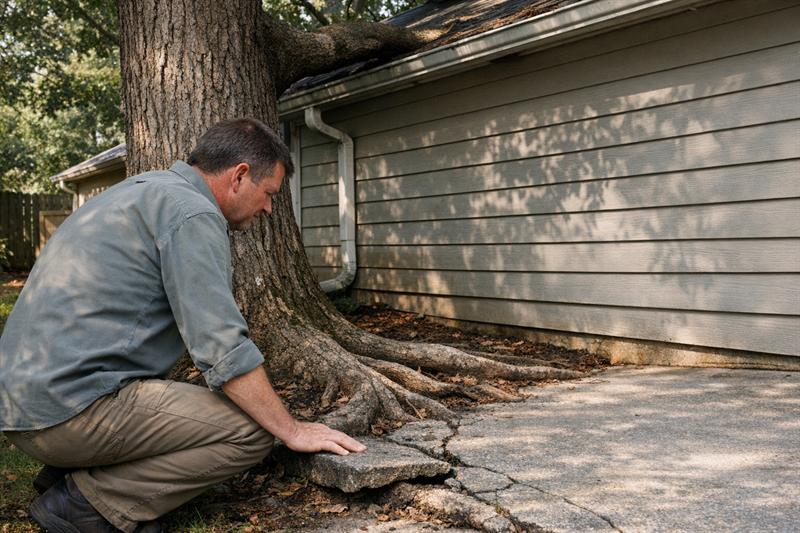
Roots expand toward foundations and hard surfaces. Branches stretch over the roofline. Moisture around the base of the home can become less consistent. None of this happens overnight, but it builds steadily.
Once these patterns start, they usually continue. Root growth can affect nearby soil and surfaces, and overhanging limbs increase exposure during storms. If you want a closer look at how root-related issues develop, this guide on how tree roots can damage your foundation explains what to watch for.
How Placement Affects Long-Term Costs
Poor placement usually leads to repeated work or a larger correction later.
A common pattern is ongoing trimming to control growth, followed by removal when the tree becomes too close to structures. By that point, the job is often more complex and more urgent.
When placement is not addressed early, the solution tends to become more involved over time.
How Far Should Trees Be From a House?
Recommended Distance by Tree Size
- Small trees: 10–15 feet from the house
- Medium trees: 15–25 feet from the house
- Large trees: 25–50+ feet from the house
These are general spacing guidelines based on mature size. This is where many mistakes happen. A young tree may seem safely placed, but its eventual spread can tell a different story.
Root Systems vs Canopy Spread Explained
It is easy to assume the canopy shows how far a tree reaches. In reality, the root system often extends beyond it.
This means a tree that looks well positioned above ground can still affect soil and surfaces closer to the foundation below. Over time, that interaction can contribute to shifting, cracking, or surface movement.
This is why early placement decisions matter so much.
The 3 Risk Zones for Tree Placement Near a Home
Low-Risk Zone
Trees planted with enough space to reach full size without interfering with the home fall into this category. They typically require less corrective work and are less likely to affect nearby structures.
Moderate-Risk Zone
These trees are closer than ideal but still manageable. This is where regular pruning and monitoring can make a meaningful difference.
Without that attention, moderate risk tends to increase as the tree grows.
High-Risk Zone
This is where problems are already developing or are more likely to develop.
Trees in this range are usually too close to the home, have limbs over the roof, or show signs of root-related impact. At this stage, trimming alone often does not resolve the underlying issue.
If you are unsure where a tree falls, using a structured guide like this tree risk assessment checklist can help you evaluate it more clearly.
Key Factors That Change Safe Tree Placement
Soil Type and Drainage
Soil conditions influence how roots behave. Some soils shift more with moisture changes, which can increase movement around nearby structures.
When drainage is inconsistent, that movement may become more noticeable. Roots do not cause every issue, but they can contribute to how the soil responds over time.
Tree Species and Growth Behavior (Georgia Focus)
Many trees in the Atlanta area grow quickly and develop wide canopies. That growth can outpace the available space if placement was not planned around mature size.
Fast-growing species often reach problem size sooner, which can bring forward the need for trimming or removal.
Choosing the right tree from the beginning helps reduce that risk. This guide on low maintenance trees for Atlanta yards outlines better long-term options.
Distance from Rooflines, Power Lines, and Driveways
Tree placement affects more than just the foundation.
Branches over the roof can lead to debris buildup and increase the chance of damage during storms. Trees near power lines create obvious safety concerns. Roots near driveways can lift and crack surfaces.
When a tree interacts with multiple parts of the property, the potential for problems increases.
Warning Signs a Tree Is Too Close to Your House
Structural and Visual Indicators
- Cracks forming in driveways or near the foundation
- Roots visible above ground or pressing against surfaces
- Branches making contact with the roof
After-Storm Warning Signs
- The tree is leaning more than before
- New broken or hanging limbs appear
- Soil is lifting or shifting at the base
These signs point to increasing stress on the tree or surrounding area. When movement or structural changes are visible, the situation usually needs a closer look. For more detail, this guide on common signs a tree is dangerous explains what to look for.
If You’re Seeing These Signs, It’s Time to Act
If any of the following sound familiar, the issue has likely moved beyond simple placement:
- Branches regularly touching or scraping your roof
- Cracks or lifting appearing near roots
- A tree that shifts or leans after storms
- Repeated trimming that does not solve the problem
At that point, waiting usually leads to more involved work. A clear evaluation is the next step to understand what needs to be corrected.
How Tree Placement Affects Property Value
When Trees Add Value
Well-placed trees improve curb appeal, provide shade, and make outdoor spaces more usable. These benefits hold when the tree has room to grow without affecting structures.
When They Become a Liability
A tree placed too close to a home can raise concerns during inspections.
Buyers often see that proximity as a future issue that may need to be addressed. That can affect negotiations or require action before a sale moves forward.
What to Do If a Tree Is Already Too Close
When Pruning Is Enough
Pruning can help when the main issue is canopy spread and the tree is otherwise in good condition. Reducing weight and clearing the roofline can lower immediate risk.
However, pruning does not change where the tree is rooted.
When Removal Is the Safer Option
Removal becomes the more practical option when placement creates ongoing conflict with the home.
This includes trees close to the foundation, trees showing structural stress, or trees that continue to cause problems after trimming. This is often the point where homeowners shift from maintenance to correction. If you are deciding between the two, this guide on when to remove a tree instead of trimming it walks through the decision clearly.
Why Professional Assessment Matters
A proper assessment looks at the full picture: tree condition, location, soil, and surrounding structures.
Clear communication matters here. Understanding what is happening and what comes next helps avoid guesswork and reduces the chance of reactive decisions later.
Conclusion
Tree placement near a house becomes a problem when growth pushes the tree into the space your home needs to stay protected. What starts as a small spacing issue can turn into ongoing maintenance, property damage, or safety concerns.
Left unaddressed, those issues usually do not improve on their own. They become harder to manage as the tree grows.
One, Two, Tree focuses on identifying these risks early and explaining what is happening and what the next step may be. That clarity helps homeowners make confident decisions before the situation becomes more serious.
If a tree near your home is starting to raise concerns, getting a clear assessment now is the most practical next step.
Key Takeaways
- Tree placement should be based on mature size, not current size
- Roots and canopy both influence nearby structures
- Trees too close to homes create increasing maintenance and safety concerns
- Problems build over time and become harder to correct later
- A proper assessment helps determine whether pruning or removal is the right step
FAQ
How close can a tree be to a house without causing damage?
That depends on the tree’s mature size, species, soil conditions, and how close it is to features like the roof, foundation, or driveway. As a general guideline, trees are often planted 10 to 50 feet away depending on size. If a tree is already closer than that, its condition and growth pattern matter more than distance alone.
Can tree roots damage a house foundation?
Tree roots can contribute to foundation or surface issues, especially in soils that expand, shrink, or shift with moisture changes. The impact depends on the tree, the soil, and the condition of the surrounding structure.
What trees are safe to plant near a house?
Smaller, slower-growing trees are typically easier to manage near homes. Trees with more controlled growth habits are less likely to create long-term space conflicts.
Should I remove a tree that is too close to my house?
Not always. Some trees can be managed with pruning, but when the location creates ongoing issues, removal may be the more reliable solution. A professional evaluation can help clarify the best approach.
Does tree placement affect home value?
Yes. Trees that are well placed can enhance a property, while trees too close to structures can raise concerns during inspections and affect buyer confidence.
How do I know if a tree is a safety risk?
Common signs include leaning, visible root pressure, cracks in nearby surfaces, and branches over the roof. These indicators suggest the tree is interacting with its surroundings in a way that may need attention.