Quick Answer: Ignoring a damaged tree can leave a structural concern exposed to the next round of wind, rain, or added weight. When damage involves the roots, trunk, or large limbs near a home, vehicle, walkway, parking area, or power line, keep clear of the area and arrange a professional evaluation before the problem becomes more urgent.
A new lean, a hanging limb, a crack where the trunk divides, or soil lifting around the base are changes worth taking seriously. These signs can point to a concern in the tree’s structure, root system, or canopy that needs closer attention.
Not every damaged tree fails, and not every damaged tree needs removal. The practical question is whether the damage, the tree’s location, and changing weather could place people or property within reach if part of the tree fails.
Ignoring Tree Damage Can Turn an Uncertain Problem Into a Higher-Risk One
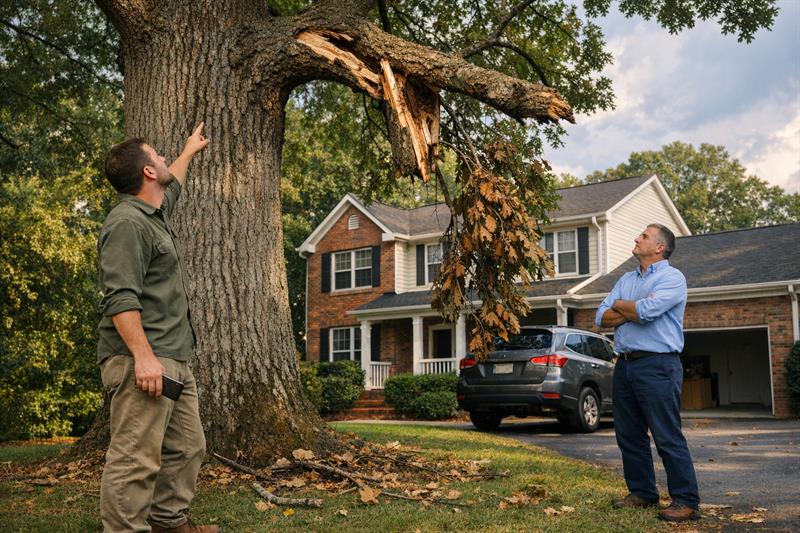
Tree damage does not carry the same level of concern in every yard or commercial property. A broken limb over an unused wooded area is different from a similar limb hanging above a driveway, storefront entrance, patio, vehicle, or play space.
One, Two, Tree reviews damaged-tree concerns through four practical questions:
- What is damaged or changing? Look for cracks, split stems, a new lean, broken limbs, visible decay, or movement around the roots.
- What could the tree or limb strike? Homes, vehicles, fences, walkways, outdoor seating, parking areas, and utility infrastructure all increase exposure.
- What could add stress? Wind, saturated soil, repeated storms, and additional limb loss can place more pressure on an already compromised tree.
- What changes if the issue gets worse? Access can become more difficult, nearby property may need more protection, and the work plan can become more involved.
A visible defect may be more than cosmetic when it hangs above an area people use every day. The condition of the tree matters, but what lies within its potential fall zone matters just as much.
The Real Risks of Leaving a Damaged Tree Untreated
Falling Limbs Can Damage Roofs, Vehicles, Fences, and Outdoor Areas
A limb does not need to fall during the first storm to remain a concern. Dead, cracked, partly detached, or storm-damaged limbs can remain in the canopy until wind, rain weight, or normal movement causes them to drop.
The concern depends on the limb’s size, height, condition, and what sits below it. A limb over a roof, parked car, deck, fence, driveway, or gathering space deserves attention because people may continue using the area as if the branch is secure.
A Leaning or Root-Damaged Tree May Lose Stability
A long-standing lean is different from a tree that recently shifted. A new or worsening lean, especially after rain or wind, is a meaningful change. The concern is greater when soil at the base is raised, cracked, or moving with the tree.
Watch for these signs around a leaning tree:
- Freshly lifted or heaved soil near the trunk
- Cracked ground or exposed roots
- A root plate that appears to be shifting
- A lean that appeared suddenly or has increased
- A trunk leaning toward a house, driveway, parking area, or occupied space
After wet and windy conditions, a tree can appear stable until weather places added stress on a weakened root system. Review these dangerous tree warning signs for other conditions that deserve attention. When a lean is new and the ground around the base is moving, prompt professional evaluation is appropriate.
Cracks, Splits, and Decay Can Affect Structural Strength
Cracks in the trunk, split stems, cavities, and decay can affect how a tree carries its own weight. The concern increases when damage appears where large stems meet, where a major branch joins the trunk, or on the side facing a nearby structure.
Decay is not always obvious from the outside. A tree may still have leaves and appear generally healthy while internal deterioration or a weak branch union affects its structure. A cavity, mushroom growth, dead limb, or trunk crack should be considered alongside the tree’s overall condition, location, and nearby targets.
Damage that deserves closer attention includes:
- Fresh cracks in a trunk or major stem
- Splitting where two large trunks join
- Large cavities or visible decay
- Major dead limbs above areas people use
- Sudden canopy dieback combined with trunk or root concerns
Understanding how long it can take for a tree to become dangerous helps put visible decay and structural changes in context. Waiting for a crack or split to worsen can leave fewer practical options during future weather stress.
Delayed Action Can Make Tree Work More Complicated
A damaged tree does not necessarily remain in the same condition simply because work is postponed. If a tree becomes less stable, loses additional limbs, or shifts closer to a structure, the work may require more careful planning for access, equipment, property protection, and cleanup.
At a home, that can mean limited driveway use, added protection around landscaping, or greater care near roofs and fences. At a commercial property, it can affect parking areas, tenant walkways, delivery zones, customer entrances, and normal daily access.
Complexity matters because the appropriate approach depends on the site, not just the tree. Learn more about what makes a tree removal job complex and why access, nearby structures, and tree condition shape the work plan.
Utility Hazards Require Extra Caution
Trees, branches, or debris touching or close to power lines should not be handled by a homeowner, tenant, employee, or property manager. Do not pull on the tree, cut branches near the line, or try to move debris away from electrical equipment.
- Keep people, pets, and vehicles away from the area.
- Do not touch the tree, wire, fence, or nearby object that could be energized.
- Contact the electric utility when a line is involved.
- Contact emergency services when there is an immediate threat to people, access routes, or property.
Electrical hazards require a separate response from standard tree work. Once the immediate utility concern has been addressed, the remaining tree damage can be evaluated and planned more safely.
Why Tree Damage Can Worsen After Rain, Wind, and Repeated Storms
Storms do not create every tree defect. They can expose a weakness already present in the roots, trunk, limb attachment, or canopy. Heavy rain saturates soil, wind adds force to limbs and trunks, and repeated weather events can keep stressing the same weak point.
After rough weather, the obvious break is sometimes only part of the issue. A hanging limb may show uneven canopy weight, while a new lean may indicate that the roots and surrounding soil are no longer supporting the tree as they did before.
Conditions can change quickly when these factors combine:
- Saturated soil can reduce the stability of a compromised root system.
- Wind adds pressure to weakened limbs, trunks, and branch unions.
- Repeated storms can add stress before a damaged tree has been evaluated or managed.
- Additional limb loss can change the canopy’s balance and weight distribution.
Rain alone does not make every tree unsafe. But when a tree already has a crack, lean, root disturbance, or hanging limb, the next weather event can turn an uncertain problem into a more urgent one.
Signs a Damaged Tree Should Be Assessed Promptly
A damaged tree should be assessed promptly when there is a visible structural change and something important sits within reach. The more warning signs present, the less practical it is to wait for another storm or another branch to fail.
- A new or increasing lean
- Raised, cracked, or shifting soil around the base
- Fresh trunk cracks or split stems
- Separation where major trunks meet
- Large hanging, broken, or partly detached limbs
- A large dead limb above a driveway, patio, walkway, or parking area
- Visible decay or cavities combined with structural changes
- Sudden canopy dieback
- Damage within reach of a house, vehicle, public path, or power line
If you are seeing a new lean, lifting soil, trunk cracking, or a large broken limb over an area people use, do not treat it as routine yard cleanup. These signs generally warrant a professional evaluation and a clear plan for the property.
What to Do When You Notice Tree Damage
Keep People and Vehicles Out of the Potential Drop Zone
Start by reducing exposure. Keep children, pets, visitors, tenants, and staff away from the affected area. Move vehicles only if doing so does not require passing beneath a hanging limb or entering an unstable area.
Restrict access to outdoor seating, walkways, parking spaces, driveways, and play areas below the damaged tree or limb. Do not allow normal activity to continue beneath a tree or branch that has already shown signs of failure.
Document Changes From a Safe Distance
Take clear photos from the ground if you can do so without entering the hazard area. Note what changed, when you first saw it, and whether the shift followed wind, rain, construction activity, or limb loss.
This information can help communicate the concern when scheduling an evaluation. Photos provide useful context, but they do not replace an on-site review of the tree, roots, structure, and surrounding targets.
Do Not Attempt High-Risk DIY Cutting or Stabilization
Do not climb a damaged tree or cut limbs that are bent, hanging, elevated, or under tension. Do not pull on a leaning tree or try to hold it in place with ropes. Damaged wood can shift when weight is removed, and DIY attempts can lead to injuries or additional property damage.
Do not work near power lines. A damaged tree is not a situation for trial and error. If the tree is unstable or elevated work is involved, a planned professional response is generally the practical option.
Contact the Right Help Based on the Immediate Hazard
Contact emergency services when a tree creates an immediate threat to people, blocks a public route, creates a fire concern, or has already caused a serious safety hazard. Contact the electric utility when a tree or limb is involved with power lines.
For a damaged tree that could affect private property, access areas, or business operations, contact a qualified tree service. One, Two, Tree provides commercial tree services for properties where tree concerns affect parking, pedestrian routes, entrances, and normal site use.
Does Every Damaged Tree Need to Be Removed?
No. Tree removal is not the right answer for every damaged tree. The practical recommendation depends on the type and extent of damage, the tree’s health and structure, root and trunk condition, site conditions, nearby targets, and whether pruning or monitoring can reasonably reduce the concern.
In some cases, targeted pruning or ongoing monitoring addresses the issue. In others, the damage affects the tree’s structure or location enough that removal becomes the clearer option. A one-size-fits-all answer does not work, especially when a tree is close to a home, driveway, commercial building, or busy walkway.
A sound recommendation should explain what is being seen, what it could lead to if left alone, and why one option is more practical than another. Removal should be based on the tree’s condition and the site, not used as the default response to every visible defect.
What a Clear Tree-Service Response Should Look Like
A useful response gives the property owner a clear picture of what happens next. That is especially important when the work affects access, landscaping, vehicles, tenants, customers, or the daily use of a home.
At One, Two, Tree, the process includes:
- A review of the visible damage and surrounding site conditions.
- Identification of what could be affected if a limb or tree fails.
- A clear explanation of the available management options.
- A defined work sequence that accounts for access, equipment, and property protection.
- Communication about cleanup, site impact, and changes that arise during the work.
- Job-status updates so the property owner understands what is happening.
For commercial sites, planning includes more than the tree itself. Parking and vehicle management, pedestrian access, tenant access, deliveries, and customer routes should be considered before work begins. That creates a work plan that fits the property rather than a vague recommendation.
Key Takeaways
- A damaged tree does not always fail, but structural changes involving roots, trunk, or major limbs should not be ignored.
- Concern increases when a tree or limb can reach a home, vehicle, walkway, parking lot, gathering area, or power line.
- Rain, wind, and repeated storms can add stress to trees that already have structural weaknesses.
- Do not climb, cut, pull, or work near a damaged tree that is elevated, unstable, or close to utility lines.
- A prompt professional evaluation helps determine whether monitoring, pruning, risk-reduction work, or removal is the practical next step.
Conclusion: Act Before Changing Conditions Increase the Risk
The issue is not simply that a tree looks damaged. The concern is leaving a structural change in place when the tree could affect people, buildings, vehicles, access routes, parking areas, or utility infrastructure. Addressing a crack, lean, hanging limb, or shifting root zone before conditions change can provide more control over the next steps.
One, Two, Tree can help when a damaged tree needs a practical evaluation and a work plan that accounts for the property around it. The process focuses on what changed, what may be affected, what should happen next, and how the work will move forward with clear communication and job updates.
Frequently Asked Questions About Damaged Trees
What happens if you ignore a damaged tree?
Ignoring a damaged tree leaves the defect exposed to wind, rain, added weight, and normal movement. Cracked limbs, weakened trunks, and compromised roots can become more concerning when the tree is near a home, vehicle, walkway, or other occupied area. Keep clear of the affected space and arrange a professional evaluation when the tree could affect people or property.
Can a damaged tree recover on its own?
Trees can respond to some injuries, but structural damage, root disruption, major splits, and significant decay do not necessarily become less concerning because the tree remains alive. A tree can leaf out while still having a weak limb union, trunk crack, or root-zone problem. When the damage involves major limbs, the trunk, or the base, a professional evaluation is generally the practical next step.
How long can you leave a damaged tree before removing it?
There is no universal timeline because urgency depends on the damage, stability, nearby targets, and changing weather conditions. A damaged tree near a house, parking area, walkway, or power line generally needs faster attention than one in an isolated area. If the tree is shifting, cracking, or dropping limbs, waiting for a set timeframe is not the right approach.
Is a leaning tree always dangerous?
No. Some trees naturally lean and remain stable. A new or worsening lean is different, especially when it appears with lifting soil, cracked ground, exposed roots, or a direction toward a building or occupied area. Do not test or pull on the tree. Arrange a professional evaluation if the lean is recent, increasing, or affecting a high-use area.
Should I remove a tree that has a cracked trunk?
A cracked trunk does not automatically require removal, but it should not be treated as a minor cosmetic issue. The appropriate response depends on the crack’s location, size, direction, effect on tree structure, and what the tree could strike if it fails. A professional evaluation can help determine whether pruning, monitoring, risk-reduction work, or removal is the practical option.
Who should I call if a tree is near a power line?
Stay away from the tree and wire, and contact the electric utility or emergency services when there is an immediate hazard. Do not touch the tree, line, nearby fence, or other objects that could be energized. After the electrical hazard is addressed, a qualified tree service can evaluate any remaining tree work needed on the property.