
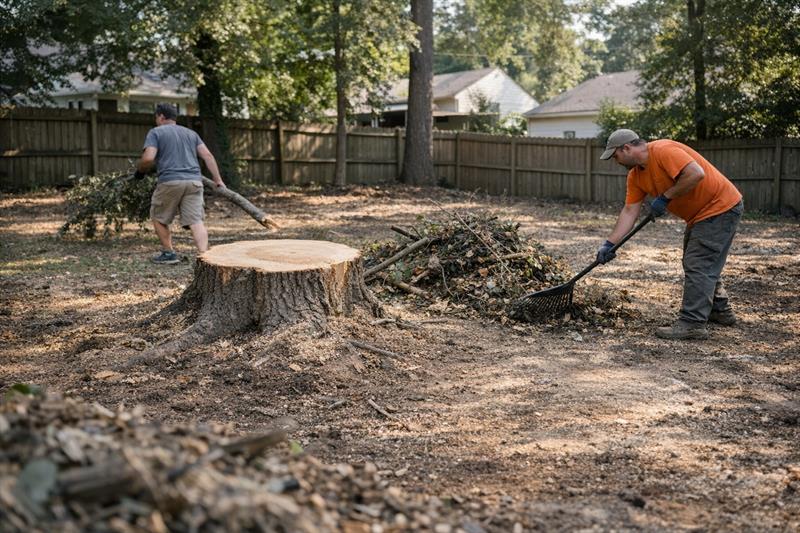
Quick Answer: After tree removal, the yard is usually left in a transitional state, not fully restored. The area often needs cleanup, stump work, soil repair, and grading before the lawn can recover properly. If those steps are skipped, uneven ground, poor drainage, and weak grass growth can follow.
Most homeowners expect the job to feel complete once the tree is gone. Instead, they are left with exposed soil, leftover roots, and a space that does not look or function the same. That is where confusion usually starts.
On many properties in Marietta and Atlanta, tree removal is only one phase of the work. What happens next plays a big role in whether the yard settles well or continues to shift and create problems.
What Your Yard Looks Like Immediately After Tree Removal
Right after removal, the yard will usually look disturbed. That is normal given the amount of work involved.
What’s Normal After Tree Removal
Most properties show exposed soil, wood chips, and a dip where the tree stood. In many cases, a stump remains, or roots are still visible near the surface.
It is common to assume the job is incomplete. In reality, this is often the standard starting point before recovery work begins.
What Needs Immediate Attention
Some conditions should be addressed promptly to keep the area safe and easier to restore.
- Uneven ground or open holes that create tripping hazards
- Sharp debris or leftover wood fragments
- Water collecting where the tree previously absorbed moisture
- Damage to surrounding grass or planting areas
If these issues are left alone, the ground may settle unevenly and become harder to correct later.
Step-by-Step: What to Do After Tree Removal (Complete Checklist)
The recovery process works best when handled in a clear sequence. Skipping steps is one of the main reasons minor yard issues turn into bigger repairs.
Step 1: Clear Debris and Inspect the Area
Remove branches, sawdust, and wood fragments so the surface is visible. This makes it easier to spot grading issues or damage.
Debris left behind can hold moisture and interfere with new growth. For a closer look at cleanup, see effective debris removal tips for homes.
Step 2: Decide on Stump Grinding or Removal
This decision shapes everything that follows. It affects how the ground settles and what can be done with the space.
Leaving a stump too long can delay the rest of the recovery process and limit how the area can be used.
Step 3: Address Soil and Root Systems
Tree removal equipment can compact the soil. At the same time, roots underground begin breaking down.
This is where many post-removal issues begin. Compacted soil can restrict growth, while decaying roots may lead to gradual settling.
Step 4: Fix Grading and Drainage
Once the tree is removed, water flow across the yard can change. Areas that were stable before may begin holding water.
If grading is not corrected, that can lead to pooling, erosion, or weak grass growth in the area.
Step 5: Repair or Replace Lawn
Lawn repair should come after the ground is stable and level.
Seeding or installing sod too early often leads to uneven results because the soil has not been fully prepared.
Stump Grinding vs Removal: What Comes Next
This is one of the most important decisions in the process because it affects both short-term appearance and long-term stability.
When Stump Grinding Is Enough
Grinding reduces the stump below ground level and is usually less disruptive to the surrounding yard.
It works well when the goal is to improve appearance and regain usable space more quickly. However, the root system remains, which can contribute to some settling over time.
When Full Stump Removal Is Better
Full removal takes out the stump and larger roots.
This is often the better option when the area will be replanted, regraded extensively, or used for a new feature. It reduces the chance of future ground movement in that spot.
For a more detailed breakdown, see stump grinding and what to expect.
How Soil and Roots Affect Your Yard After Tree Removal
The condition of the soil and roots below the surface plays a major role in how the yard recovers.
What Happens to Roots Underground
Roots break down slowly over time rather than disappearing right away.
As they decompose, the soil above them can settle. That is why some yards look level at first but develop dips later.
Soil Compaction and Why It Matters
Heavy equipment used during removal can compress the soil.
This makes it harder for grass and plants to establish. In some cases, reseeding fails not because of the seed itself, but because the soil underneath is too dense.
How to Restore Healthy Soil
Soil usually needs to be loosened and rebuilt before planting.
- Aeration to relieve compaction
- Adding topsoil or compost to improve structure
- Leveling the surface to support even growth
When this step is handled well, the lawn has a much better chance of establishing evenly.
How Long Does It Take for a Yard to Recover?
Recovery happens in stages rather than all at once.
Short-Term (First Few Weeks)
This stage focuses on cleanup, grading, and stabilizing the area.
Mid-Term (1–3 Months)
Grass begins to establish if the soil has been properly prepared.
Long-Term (6–12 Months)
Roots continue to break down and the ground gradually settles into place.
If earlier steps were skipped, this is often when uneven ground or patchy growth becomes more noticeable.
Replanting After Tree Removal: What You Need to Know
Replanting requires good timing. Moving too quickly is one of the most common mistakes.
When It’s Safe to Plant Again
The soil should be stable and free of major root interference.
Planting too early can lead to weak growth because the ground is still shifting.
Choosing the Right Replacement
The replacement should match the space, soil conditions, and long-term goals for the property.
If the original tree was removed because it had become a problem for the site, reviewing when tree removal is necessary can help you make a better replacement decision.
Common Mistakes Homeowners Make After Tree Removal
- Replanting before the soil is stable
- Leaving the stump in place too long
- Ignoring compacted soil
- Not correcting grading or drainage
- Assuming the job is complete after removal
These issues tend to build over time and make the yard harder to restore later.
When to Bring in Professionals
Some situations go beyond basic cleanup and require more involved correction.
Signs You Need Additional Help
- The ground continues to sink or feels unstable
- Water consistently pools in one area
- Large roots are still affecting the surface
- Lawn repair efforts are not taking hold
When these signs show up, the issue is often below the surface. Addressing it early can help prevent more extensive repair work later.
If your yard still feels unfinished after tree removal, there is usually a reason.
- The ground stays soft or uneven weeks after the job
- Water collects in the same spot after rain
- Grass fails to grow despite reseeding
- The stump or roots limit how the space can be used
These conditions usually point to incomplete recovery. At that stage, targeted work is often needed to stabilize the area and improve how the space drains and grows.
Conclusion
The challenge after tree removal is not just taking down the tree. It is restoring the space so it functions well again.
If the stump, soil, and grading are not handled properly, the yard can settle unevenly, hold water, and struggle to support healthy growth. Those issues usually become more noticeable with time.
One, Two, Tree approaches this as a complete process. From debris removal to stump work to restoring the ground, each step is handled with clear communication so homeowners know what to expect.
If your yard does not feel finished or the ground is not settling the way it should, the next step is to have the area looked at and corrected before the problem spreads.
Key Takeaways
- Tree removal leaves the yard in a transitional state, not a finished one
- Stump decisions affect both usability and long-term ground stability
- Soil compaction and grading should be addressed early
- Skipping steps can lead to uneven ground and poor lawn results
- A structured recovery process leads to more consistent outcomes
FAQs
What should you do immediately after tree removal?
Start by clearing debris and inspecting the area for safety concerns. Uneven ground and leftover materials are common and should be addressed before moving into repair. If the surface looks unstable, additional work may be needed.
Is it necessary to remove the stump after cutting down a tree?
No, but leaving it in place limits how the space can be used. Grinding improves appearance, while full removal is often better for replanting or adding a new feature. The right choice depends on your plans for the area.
How do you fix a yard after tree removal?
The process usually includes clearing debris, relieving soil compaction, leveling the ground, and restoring the lawn. If any step is skipped, the yard is more likely to develop uneven growth or drainage problems.
How long does it take for grass to grow back after tree removal?
Grass can begin establishing within a few weeks if the soil is properly prepared. Full recovery takes longer as the ground settles. Patchy results often point to soil or grading issues that still need attention.
Can you plant a new tree in the same spot?
Yes, but usually only after the soil is stable and roots are no longer interfering. Planting too early can lead to poor establishment.
Will tree roots decompose on their own?
Yes, roots break down gradually over time. As they decompose, the soil can shift, which is why monitoring and leveling the area can be important.