Quick Answer: A tree can look healthy while its roots are under stress, and common signs of root damage include a new lean, soil movement, thinning canopy, and dead upper branches. When several of these show up together, the tree may be losing stability and should be checked.
At One, Two, Tree, this is a concern many homeowners don’t expect. A tree can look full and green while the support system below it is already weakening. Because root damage develops out of sight, obvious warning signs often appear later than the underlying problem.
If something about a tree feels off but not clearly dangerous, root problems may be part of the reason.
Why Root Damage Is Often Missed
Root issues do not always show up the way people expect. The canopy can stay green even as the support system below it weakens. That disconnect is one reason people assume everything is fine.
A common mistake is waiting for visible decline before taking action. By then, the root system may already have lost strength, and the tree may be less stable than it appears.
The Disconnect Between Roots and Canopy
Roots help with stability, water uptake, and nutrient flow. The canopy reflects overall tree health, but it does not always show immediate structural problems. That means visible growth does not always match what is happening below ground.
A tree can still look healthy while its foundation is slowly weakening.
Why Trees Can Look Healthy Before Failing
Trees store energy, which can allow them to maintain leaf growth even when roots are under stress. That delay can hide early warning signs.
This often becomes more noticeable after heavy rain or strong winds. When soil softens or shifts, weakened roots may no longer hold the tree as firmly in place.
The Most Common Causes of Root Damage
Root damage rarely comes from one obvious event. In many cases, it develops over time as conditions around the property change.
Construction and Soil Compaction
Heavy equipment can compress the soil, limiting airflow and water movement. Roots depend on both, so this kind of pressure can gradually reduce their function.
This is a common issue after nearby work is done. If you want a deeper breakdown, soil compaction and its impact on roots explains how this process can affect stability.
Overwatering or Drainage Issues
Too much water reduces oxygen in the soil. Over time, roots can weaken and lose some of their ability to anchor the tree firmly.
This can also create softer ground conditions where shifting is more likely.
Root Cutting and Landscaping Changes
Trenching, grading, and hardscape installation can cut through structural roots. Even partial damage can change how the tree is supported.
It is not unusual for a tree to look fine right after the work, then slowly develop a lean or other stress symptoms later on.
7 Signs of Root Damage in Trees
One symptom on its own does not always tell the full story. What matters is the overall pattern. When several of these signs show up together, the tree may be under stress below ground.
Subtle Leaning or Shifting
If a tree was not leaning before and now is, that change can point to reduced stability.
Thinning Canopy or Uneven Leaf Growth
When one side looks weaker than the other, it can reflect uneven root performance.
Early Leaf Drop or Discoloration
This can suggest the tree is struggling to move water and nutrients efficiently.
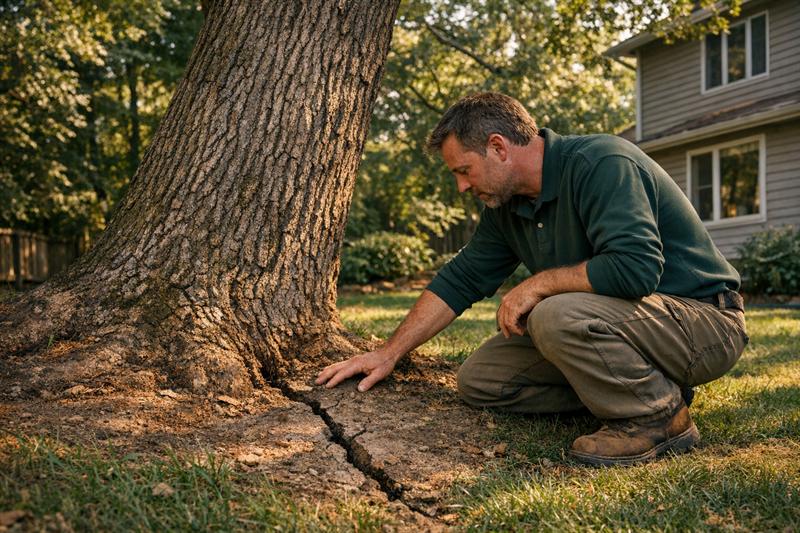
Cracks in Soil or Lifting Ground
Soil pulling away or lifting near the base can mean the root plate is starting to move. That may indicate a developing structural problem.
Fungal Growth Near the Base
Fungal growth around the trunk flare or nearby soil can be associated with decay and may point to weakening below the surface.
Dead Branches in Upper Canopy
This can be one of the earlier visible signs that the root system is no longer supporting the entire tree well.
Slow or Stunted Growth
Reduced growth over time can reflect ongoing stress that has not been corrected.
Changes in canopy balance can also signal deeper issues. canopy weight distribution can influence how instability develops.
High-Risk Warning Signs You Should Not Ignore
Some signs suggest a more immediate safety concern and deserve prompt attention.
Sudden Lean After Storms
This can mean the root system was already weakened and shifted under stress.
Exposed or Severed Roots
Visible root damage can reduce the tree’s ability to stay anchored.
Soil Heaving Near the Trunk
Raised or cracked soil can show that the root plate is lifting. This is a strong sign that the tree may be unstable.
If you are seeing any of these signs, the tree may no longer be secure.
How to Confirm Root Damage (Without Guessing)
Visual signs are useful, but they do not always show how serious the problem is.
Visual Inspection vs Professional Assessment
Homeowners can often spot leaning, soil movement, and canopy changes. What is harder to judge is how much structural support has been lost.
That is where root problems can be underestimated. A tree can look only slightly off while already being compromised.
When an Arborist Evaluation Is Necessary
If multiple signs are present or the tree is close to your home, waiting can increase the chance of damage if conditions worsen.
This is especially important when deciding between trimming and removal. when to remove instead of trim outlines how that decision is typically approached.
What Happens If Root Damage Is Left Untreated
Root damage does not usually stay the same. It often gets worse over time.
Structural Instability
The tree can gradually lose its ability to stay anchored, which may lead to movement or leaning.
Increased Fall Risk
This becomes more likely during storms or when the soil is saturated.
Property Concerns
When a tree fails, the impact often extends beyond the tree itself. Nearby structures, vehicles, fences, and neighboring property can all be affected.
Delays can make the situation harder to manage. Waiting for obvious decline often means the risk has already increased.
What to Do If You Suspect Root Damage
If you are seeing multiple signs, the focus should shift from observation to action.
Immediate Steps Homeowners Can Take
- Avoid disturbing the soil around the base
- Watch for changes in lean, canopy shape, or exposed roots
- Limit added stress such as overwatering
These steps may help prevent additional stress, but they do not restore lost structural support.
When Removal Becomes the Safest Option
If the tree is leaning, the soil is moving, or roots are exposed, the structure may already be compromised.
In those cases, removal is often the most practical option, especially near homes, driveways, or other high-use areas.
How Professional Tree Services Evaluate Risk
At One, Two, Tree, the focus is on how the tree is behaving, not just how it looks. The evaluation considers factors such as lean direction, soil condition, canopy balance, and proximity to structures.
That approach helps create a clearer picture of what is happening and what next step makes sense.
If you are seeing any of the following, the tree should be checked soon:
- The tree has started leaning recently
- Soil is cracking or lifting near the base
- Multiple dead branches are appearing in the canopy
- The tree is close to your home, driveway, or power lines
These signs can point to structural instability rather than a cosmetic issue. Waiting can increase the chance of failure.
Conclusion
The main problem with root damage is that it develops out of sight. A tree can look healthy while losing the support that helps keep it stable.
If it is not addressed, the situation can move toward leaning, shifting, and possible failure, often during storms or heavy rain. That is when property damage becomes more likely.
At One, Two, Tree, this is where a clear, straightforward evaluation matters. Instead of guessing, you get a practical understanding of the tree’s condition and what should happen next.
If you are seeing early signs or something does not look right, it is worth having the tree checked before the problem grows.
Key Takeaways
- Root damage is often hidden while the tree still looks healthy
- Multiple symptoms together can point to structural issues
- Leaning and soil movement are important warning signs of instability
- Problems often become more noticeable after storms or saturated soil
- Early evaluation can help reduce the risk of property damage
FAQ
How do you tell if tree roots are damaged?
Common signs include a new lean, thinning canopy, soil movement, and dead branches. When several appear together, the root system may be compromised. A professional evaluation can help determine how serious the issue is.
Can a tree recover from root damage?
Minor root damage may improve over time, depending on the tree and site conditions. More severe root loss often leads to decline or instability. An evaluation can help determine whether recovery is realistic or whether removal makes more sense.
Is a leaning tree always dangerous?
Not always, but a new or increasing lean is a warning sign. Trees that shift after storms or heavy rain may be losing support and should be checked before conditions get worse.
What happens when tree roots are cut?
Cutting roots can reduce stability and interfere with water and nutrient uptake. That can create imbalance and additional stress on the tree. Trees affected this way should be checked for structural concerns.
Should I remove a tree with root damage?
If the tree appears unstable or is close to structures, removal is often the safest option. Root damage can increase the chance of failure. A proper evaluation helps confirm the best next step.
Can construction damage tree roots without visible signs?
Yes. Soil compaction and underground disturbance do not always cause immediate symptoms. The effects may show up later as leaning, thinning, or decline. Trees near construction areas should be watched closely and checked if changes begin to appear.