
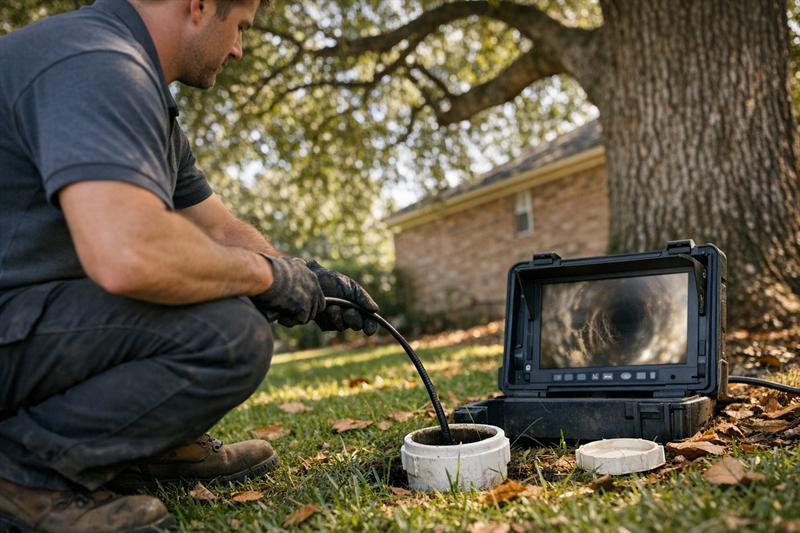
Quick Answer: Tree roots get into pipes by following moisture to small cracks, loose joints, or other openings. Once inside, they keep growing, restrict flow, and can lead to recurring clogs, backups, and, over time, pipe damage if the root source is not addressed.
Introduction
Slow drains that keep coming back, gurgling sounds, or backups that never fully go away often point to something deeper than a simple clog. In many homes, nearby trees play a direct role in what is happening underground.
The issue is easy to miss. Clearing the pipe can seem like the fix, but if roots are involved, the source of the problem is outside the pipe itself. When that connection is overlooked, the same symptoms usually return.
How Tree Roots Actually Grow (And Why Pipes Attract Them)
Tree roots do not force their way through the ground without direction. They follow moisture. When a steady water source is present, roots naturally grow toward it.
Roots Seek Moisture and Nutrients
Roots spread outward in search of water and nutrients. Soil conditions, compaction, and drainage all influence where they go. When one area stays consistently damp, roots tend to concentrate there.
This is especially relevant on older properties. As pipes age, small leaks can develop, and that steady moisture can gradually draw roots in the same direction.
Why Pipes Become a Target
Pipes can release small amounts of moisture through joints, cracks, or minor leaks. That is often enough to attract root growth. The roots are not targeting the pipe itself; they are following the moisture around it.
That is where the problem begins. Once a root reaches a pipe, even a small opening may allow it to enter. Inside the pipe, the consistent presence of water supports continued growth.
For a broader look at how roots interact with structures, see how tree roots can damage your foundation.
Can Tree Roots Break Pipes — Or Do They Exploit Existing Damage?
Roots usually do not damage solid, intact pipes on their own. In most cases, root intrusion starts where a pipe already has a weakness.
The Truth About Root Pressure
As roots grow, they expand. Rather than crushing pipes from the outside, they typically move into small openings and enlarge inside the line. That growth restricts flow and increases the chances of a blockage.
One common pattern is repeated drain clearing that only works for a short time. The root remains in place, so the obstruction builds again.
Common Pipe Vulnerabilities
Root intrusion usually starts where the pipe is already compromised. Common entry points include:
- Aging materials such as clay or cast iron
- Loose or separated joints
- Cracks caused by soil movement
- Installation defects or misalignment
Once inside, roots continue to grow. That leads to buildup, reduced flow, and, in some cases, more serious damage to the pipe over time.
Signs You May Have Tree Roots in Your Pipes
Root intrusion tends to follow a clear progression. Early signs are easy to ignore, but they rarely stay minor for long.
Early Warning Signs
- Drains that slow down again after being cleared
- Gurgling sounds in sinks or toilets
- Frequent clogs in the same area
These symptoms are often treated as routine plumbing issues, which is why the underlying cause can get missed.
Advanced Damage Indicators
- Sewage backing up into the home
- Persistent odors from drains
- Multiple fixtures having problems at the same time
- Wet or sunken areas forming in the yard
At this stage, the issue is often more than a simple blockage. The condition of the line may also be affected.
If You’re Seeing These Signs, the Problem Is Already Advancing
Recurring issues in the same line usually point to something ongoing, not a one-time blockage.
- Clogs return shortly after being cleared
- More than one drain is affected
- Mature trees are located near sewer or water lines
- The ground above utility lines looks different or stays damp
When these signs appear together, clearing the pipe usually will not solve the problem on its own. The root source also needs to be addressed to stop the cycle.
Which Trees Are Most Likely to Cause Pipe Problems in Georgia
Some trees are more likely to create underground issues because of how their root systems grow.
Fast-Growing and Wide-Spreading Root Systems
In the Atlanta and Marietta area, fast-growing species such as water oaks and willows are more likely to be involved in root intrusion problems. Their roots can spread quickly and actively seek moisture.
This is especially common in yards where trees were planted for quick shade without much consideration for long-term growth.
Distance vs. Risk
Distance helps, but it is not a guarantee. Roots can extend well beyond the edge of the canopy, especially when searching for water.
For a deeper breakdown of placement decisions, see how tree placement impacts safety and property value.
How Far Do Tree Roots Spread Underground?
Roots often extend farther than expected. They follow available space, moisture, and soil conditions rather than staying close to the trunk.
In developed areas, roots are frequently redirected by structures and compacted soil. Pipes can become one of the most consistent water sources in the landscape, which draws roots toward them.
This is one reason the problem can develop quietly. The tree may appear healthy above ground while the root system expands into areas it should not reach.
How to Prevent Tree Roots from Damaging Pipes
Prevention comes down to managing root growth early instead of reacting after damage appears.
Tree Placement and Planning
Planting decisions matter. Trees placed too close to utility lines are more likely to create long-term issues as they mature.
Root Barriers and Maintenance
Root barriers and routine maintenance can help direct growth away from sensitive areas. Pruning may also play a role in an overall tree care plan, depending on the species, age, and location of the tree.
Consistent care makes a difference. Following a plan like a seasonal tree care calendar for Atlanta homeowners can help reduce the chances of problems building unnoticed.
When Removal Becomes Necessary
When a tree is clearly contributing to repeated plumbing issues, removal may be the most effective way to prevent ongoing root intrusion.
Delays can make the situation harder to resolve. The longer roots remain active inside a pipe, the more likely it is that the damage and repair scope will increase.
When to Call a Professional Tree Service
If plumbing repairs keep happening and the issue returns, the cause may not be limited to the pipe itself. The surrounding tree and root system may also need attention.
This is where a practical evaluation matters. Looking at tree location, root spread, and how those roots relate to underground utilities helps clarify the next step.
For homeowners weighing their options, professional vs DIY tree service explains why surface-level fixes rarely solve deeper issues like this.
Key Takeaways
- Roots follow moisture and enter pipes through existing openings
- Most intrusion starts with a weakness in the pipe
- Recurring clogs usually indicate an ongoing issue
- Tree type and placement can affect risk
- Ignoring the problem can lead to more serious damage over time
Conclusion
Tree roots in pipes follow a predictable pattern. Moisture draws them in, small openings allow entry, and growth inside the pipe leads to blockages and damage.
Left unaddressed, the issue usually progresses. What starts as a slow drain can turn into recurring backups and eventually more extensive repair work. Temporary fixes stop working because the root system is still active.
One, Two, Tree focuses on identifying the source of the issue and explaining what is happening around the tree and root system. That makes it easier to decide whether trimming, root management, or removal is the right next step.
If these signs are already showing up on your property, acting sooner can help prevent larger and more disruptive problems later.
How One, Two, Tree Approaches Root-Related Property Risks
Root-related issues build over time, and solving them usually takes more than a quick fix.
One, Two, Tree approaches this with a clear, step-by-step evaluation. That includes identifying which trees are involved, how the roots are spreading, and how they may be interacting with underground utilities.
Each step is communicated clearly so there is less guesswork. Homeowners get a clearer understanding of what is happening, what the concerns are, and what needs to happen next.
FAQ
How do tree roots get into pipes?
Tree roots enter through small cracks, loose joints, or other openings where moisture escapes. Even minor leaks can attract root growth over time. When this happens, both the pipe and the nearby tree should be looked at.
Can tree roots completely block a sewer line?
Yes. Roots can grow inside the pipe and catch debris, which builds into a blockage. Clearing the line may help temporarily, but the root source usually needs to be addressed to keep the problem from returning.
Are certain trees more likely to damage pipes?
Yes. Fast-growing trees with wide-spreading root systems are more commonly linked to these issues. In Georgia, species like water oaks and willows are frequent contributors.
How far away should trees be planted from pipes?
Trees should be planted with their mature size and root spread in mind. Roots often extend well past the canopy, especially when searching for water. Existing trees near pipes should be monitored as they mature.
Will cutting down a tree stop root damage?
Removing the tree stops future root growth, but existing roots can remain in the ground for some time. A full evaluation helps determine whether additional work is needed.
Who should you call for tree root problems—plumber or tree service?
Both may be involved. A plumber handles the pipe, while a tree service evaluates the tree and root source contributing to the issue. Addressing only one side often leaves the larger problem unresolved.