Quick Answer: Early signs of tree disease often show up as small but consistent changes, such as leaf discoloration, minor branch dieback, bark damage, and uneven growth. These symptoms usually point to underlying stress, and when they continue or spread, they can develop into structural weakness or decay.
Why Early Detection Matters More Than Most Homeowners Think
Tree disease rarely starts with obvious damage. It usually begins with subtle changes that are easy to overlook. By the time large branches die or a tree starts leaning, the issue has often been developing for some time.
A tree can look slightly off for months without seeming urgent. That delay is often when problems gain ground. Internal decay, pests, and fungal activity can progress even when a tree still looks mostly healthy from a distance.
In areas like Marietta and Atlanta, weather can add to the stress. Heavy rain, humidity, and storm damage can weaken trees and make them more vulnerable. What starts as minor leaf discoloration can eventually lead to structural concerns, especially near homes, driveways, or other nearby structures.
When early signs are ignored, the scope of work often increases. What might have been addressed with targeted pruning or care can turn into a larger repair issue or full removal.
The Most Common Early Signs of Tree Disease
Early signs are rarely dramatic. They tend to show up as patterns across the tree rather than as one isolated issue. When multiple small changes appear together, it often points to a deeper problem.
Subtle Changes in Leaf Color and Size
Leaves turning yellow, pale, or brown outside normal seasonal timing are often one of the first visible signals. Smaller leaves or uneven growth across the canopy can also indicate stress.
One common pattern is a single section of the tree changing before the rest. That can suggest the issue is starting in a specific area and beginning to spread.
Unusual Spots, Holes, or Patterns on Leaves
Speckled leaves, dark spots, or irregular holes can be linked to early fungal issues or pest activity. These patterns tend to repeat across multiple leaves rather than appearing randomly.
As the problem spreads, the tree’s ability to support healthy growth often declines, which adds further stress.
Early Bark Abnormalities
Cracking, peeling, or soft bark is more than surface damage. It can indicate that the tree’s protective outer layer has been compromised.
When bark begins to separate or feels soft, internal decay may already be developing. That can create entry points for moisture and pests, which can speed up decline.
Small Dead Branches in the Canopy
Isolated dead branches, especially near the top or outer edges, can be an early sign of decline. This is different from routine pruning needs.
A common pattern is small dieback that gradually spreads inward. Over time, that can lead to larger structural weakness in the tree.
Fungal Growth on or Around the Tree
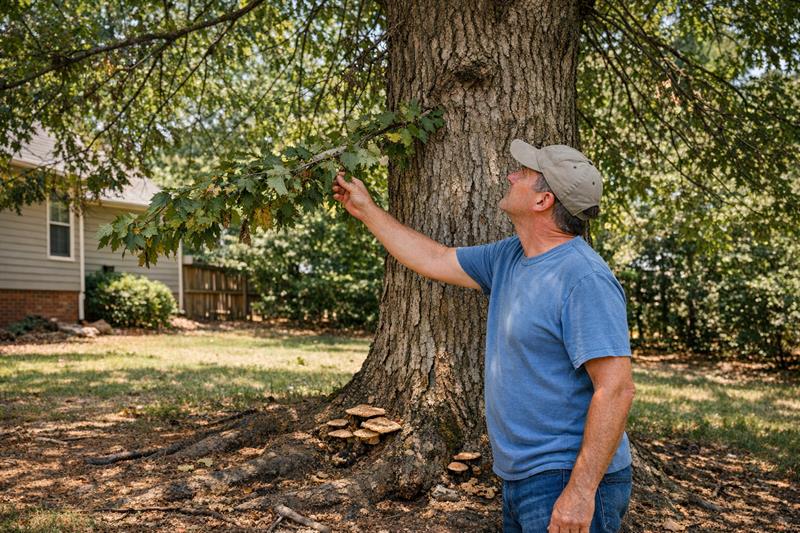
Mushrooms or other fungal growth at the base of the tree or along the trunk are often associated with internal decay.
This can mean the tree is breaking down internally, even if the canopy still appears mostly intact.
Slower or Uneven Growth Patterns
If one side of the tree develops differently or seasonal growth appears delayed, it can signal internal stress. Healthy trees generally grow more evenly.
Uneven growth is often linked to root problems or localized disease, both of which can affect long-term stability.
What Looks Normal (But Often Confuses Homeowners)
Not every change points to disease. The challenge is that early symptoms can resemble normal tree behavior. Misreading these signs can lead to missed problems or unnecessary concern.
Seasonal Leaf Drop vs Disease
Leaf drop in fall or gradual color changes during seasonal transitions are expected. The difference is usually timing and consistency.
If discoloration appears early or affects only part of the tree, it is more likely to signal a problem than a normal seasonal shift.
Natural Bark Shedding vs Damage
Some trees naturally shed bark in predictable patterns. In those cases, the exposed surface should not appear soft, wet, or decayed.
Irregular peeling, cracking, or soft areas suggest something else may be happening below the surface.
Temporary Stress vs Ongoing Decline
Storms and drought can cause short-term stress. Trees sometimes recover once conditions improve.
When symptoms continue or expand over time, the issue is less likely to be temporary. That is often the point when closer attention is needed.
How to Check Your Trees Like a Professional
Many early warning signs can be spotted from the ground. The key is knowing where to focus and what patterns to look for.
Start with the Canopy
Look for thinning sections, uneven color, or areas that appear weaker than the rest. The canopy often reveals some of the first visible changes.
Inspect the Trunk and Bark
Check for cracks, holes, missing bark, or soft spots. These areas can signal damage, decay, or entry points for pests.
Check the Base and Roots
Look for fungal growth, exposed roots, or shifting soil around the base. Root problems often begin here and can affect the entire tree.
When to Inspect
Late winter, early spring, and the period after storms can provide a clear view of structural issues and early symptoms.
For a deeper look at how these issues connect, this guide to common tree diseases explains how different problems develop and what they can look like in the landscape.
When to Take Action vs When to Monitor
The key question is whether the issue appears stable or is getting worse. Small, isolated changes can sometimes be monitored. Patterns that spread usually call for action.
Signs You Can Monitor
- Minor discoloration limited to one section
- Small, isolated dead branches
- Short-term changes after weather events
Signs That Need Immediate Attention
- Multiple symptoms appearing together
- Fungal growth near the base
- Noticeable leaning or exposed roots
- Rapid thinning across the canopy
When a Professional Inspection Is the Safest Option
If the tree is near your home, driveway, or power lines, waiting can increase the risk. Structural issues often progress quietly before they become obvious.
What starts as minor decline can eventually turn into a safety concern. For additional warning signs, this guide on dangerous trees before they fall covers what to watch for.
If you are seeing several of these at once, the problem may be progressing:
- Discoloration across large sections of the tree
- Dead branches increasing over time
- Visible fungus at the base or trunk
- Changes in tree position or stability
At that point, monitoring alone is usually not enough. A closer evaluation helps determine the next step.
How Professional Tree Services Help Catch Problems Early
Early detection is more reliable when the entire tree is evaluated together rather than by one symptom alone. That is where a professional inspection adds clarity.
What an Inspection Actually Looks Like
An inspection typically includes the canopy, overall structure, bark condition, and the visible root area. Each part is checked in relation to the others.
One of the biggest mistakes is focusing only on what is easy to see. In many cases, root stress or internal decay helps explain why symptoms are showing up above ground.
Preventative Care vs Reactive Removal
Preventative care focuses on addressing problems before damage spreads. Once structural issues become advanced, the available options are often more limited.
When removal becomes necessary, preparation matters. This guide on how to prepare your property for tree removal outlines what to expect and how to help the job go smoothly.
One, Two, Tree approaches this process with clear, step-by-step communication so property owners understand what is being checked, what is found, and what the next step may be.
Conclusion
Early signs of tree disease are easy to dismiss because they do not always feel urgent. That is often how small issues turn into larger problems. Changes in leaves, bark, or growth patterns are usually the first sign that something is off.
When those signs are ignored, the problem can continue below the surface. What starts as a manageable issue can eventually lead to structural weakness or removal.
One, Two, Tree helps identify these issues early and explains what is happening in clear terms so decisions are easier to make. If you are noticing changes in your trees, addressing them sooner can help prevent more complex and costly problems later.
Key Takeaways
- Early signs of tree disease usually appear as small, consistent changes
- Leaf discoloration, bark damage, and minor dieback are common indicators
- Multiple symptoms together often signal a progressing issue
- Ignoring early signs can lead to larger structural concerns
- A clear evaluation helps determine the right next step
Frequently Asked Questions
What are the earliest signs of tree disease?
The earliest signs often include leaf discoloration, small dead branches, bark changes, and uneven growth. These changes may begin in one area before becoming more noticeable elsewhere. When multiple symptoms appear together, it usually suggests a developing issue worth checking more closely.
Can a tree recover from disease if caught early?
Some early-stage problems can be managed before they affect the entire tree. Improving growing conditions, pruning affected areas, or addressing contributing stress can sometimes slow progression. A proper inspection helps clarify what condition the tree is in and what options make sense.
How often should trees be inspected for disease?
Trees should be checked at least once a year and after major storms. Seasonal changes can also make early warning signs easier to spot. Regular checks make it easier to catch problems before they spread.
Are fungal growths always a sign of tree disease?
Fungal growth is not always harmful on its own, but when it appears on the trunk, at the base, or near major roots, it is often associated with decay. The location, amount, and recurrence help indicate how serious the issue may be.
When should a tree be removed instead of treated?
Removal is usually considered when the tree becomes structurally unstable or creates a risk for nearby property or people. Severe leaning, widespread decay, or major root damage are common signs that removal may be the better option.
What should I do if I’m unsure about my tree’s condition?
Start by watching for patterns such as spreading discoloration, increasing branch dieback, or changes around the base of the tree. If those changes continue, a professional inspection can help you understand what is happening and what steps are worth considering.