
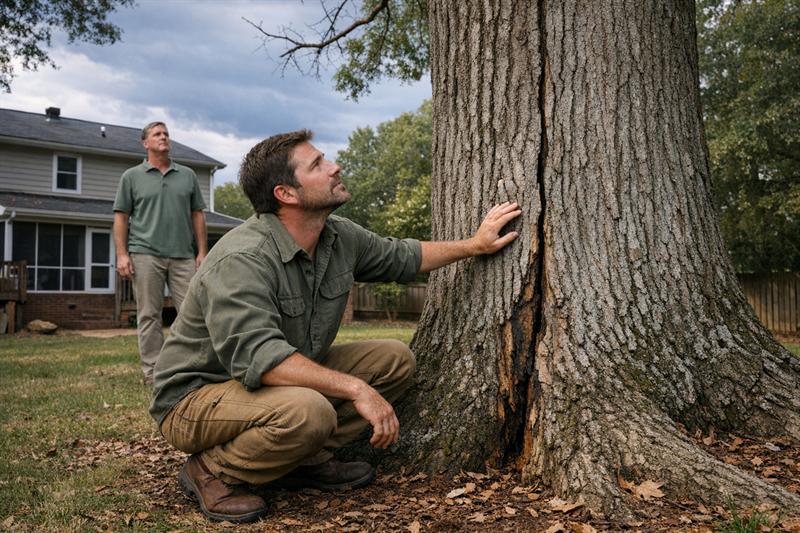
Quick Answer: Tree damage is often tied to hidden structural weaknesses, inconsistent maintenance, and environmental stress that builds over time. Preventing it usually comes down to regular inspections, targeted pruning, and addressing smaller issues before they turn into larger structural problems.
Introduction
Most tree damage does not start with a storm. It usually begins earlier, with smaller issues that go unnoticed and continue to build. A tree can look full and stable right up until a large limb fails or the overall structure starts to give way.
At One, Two, Tree, many service calls happen after damage has already occurred. In many of those cases, there were warning signs beforehand, but they were not identified or addressed early.
Why Tree Damage Happens More Often Than Expected
Tree failure is rarely random. It usually develops through a combination of structural weakness and ongoing stress. What looks healthy on the surface does not always reflect what is happening internally.
Structural Weakness vs Visible Health
Trees can maintain full foliage while developing weak branch attachments or internal decay. These issues are not always visible from the ground.
That is where problems often begin. Weak attachment points and uneven weight distribution create stress that builds over time. When outside pressure increases, those areas are often the first to fail.
Environmental Stress Factors
Wind, saturated soil, and compacted roots all affect stability. Trees growing near homes often face additional limitations, including restricted root space and directional growth toward open areas.
As these pressures combine, the chance of failure increases. For more detail, see what trees fall in storms and why.
Early Warning Signs Your Tree May Be at Risk
Many trees that fail show signs beforehand. The challenge is recognizing what those signs may indicate and acting before they become more serious.
Visible Structural Warning Signs
- A tree that has recently started leaning
- Cracks in the trunk or major limbs
- Large branches that are split or hanging
These can indicate stress within the structure. Left unaddressed, they may progress into larger failures.
Canopy and Growth Red Flags
- Dead branches within an otherwise full canopy
- Uneven weight distribution
- Dense growth that limits airflow
These conditions can show up before storm-related damage. A heavy or unbalanced canopy places more strain on already weak areas.
Root and Ground-Level Indicators
- Exposed or shifting roots
- Soil movement around the base
- Fungal growth near the trunk
Root problems are easy to miss but directly affect stability. In many cases, failure starts at the base because the root system is no longer providing enough support.
For a closer look, review signs your tree has root damage.
The 5 Core Strategies to Prevent Tree Damage
Preventing damage requires consistent, targeted action. These five strategies focus on reducing structural stress and correcting issues early.
1. Strategic Pruning and Canopy Balancing
Removing weak, dead, or crossing branches helps reduce pressure points within the tree. Proper pruning can also improve airflow through the canopy.
Balance is important. Uneven weight distribution is a common contributor to limb failure. Learn more about tree canopy management and weight distribution.
2. Managing Tree Growth Near Structures
Trees growing too close to roofs, driveways, or utility lines can create increasing risk over time. As branches extend outward, they carry more weight and create more leverage.
That is where problems can escalate. Extended limbs are more likely to break during wind or heavy rain.
3. Soil and Root Health Maintenance
Root systems anchor the tree and support nutrient flow. Compacted soil or poor drainage can limit root development and weaken that foundation.
When roots are compromised, the entire tree becomes less stable under stress.
4. Seasonal Inspections and Timing
Routine inspections help identify issues before they become larger structural problems. Timing pruning appropriately can also help reduce unnecessary stress on the tree.
For guidance on timing, see seasonal tree care planning.
5. Storm Preparation Planning
Waiting until after a storm shifts the focus to damage control. Preparing in advance helps lower the likelihood of failure.
This often involves removing high-risk limbs and correcting imbalance before severe weather arrives.
Common Mistakes That Increase Tree Risk
Over-Pruning or Improper Cuts
Removing too much at once can weaken the tree and lead to unstable regrowth. Poor cutting techniques can also create openings that make decay more likely.
This can create long-term structural issues rather than solving the original problem.
Ignoring Early Warning Signs
Minor issues like small cracks or isolated dead branches are easy to dismiss. That is often where problems grow.
What starts small can worsen under pressure, especially during storms.
Waiting Until After Storm Damage
Once damage is visible, the tree has often already been compromised. Work at that stage is usually more complex and disruptive than preventative care.
When Preventative Care Requires Professional Support
High-Risk Situations
Large trees or those near structures and power lines carry higher risk. These situations require the right equipment and a clear plan to manage safely.
Complex Structural Issues
Internal decay, root instability, and heavy limb distribution are not always obvious from the ground, but they can affect overall stability. These cases benefit from an experienced evaluation so the problem is not made worse.
If you are noticing any of the following, it may be time to schedule an evaluation:
- Branches extending over your roof or driveway
- A tree that has started leaning or shifting
- Dead limbs in the upper canopy
- Visible cracks or splitting
These signs can point to structural stress that is better addressed early.
How Proactive Tree Care Reduces Long-Term Costs
Preventative care focuses on smaller, manageable corrections. This helps reduce the likelihood of emergency work and unexpected property damage.
It can also help protect nearby structures and support the long-term health and usability of the tree.
Key Takeaways
- Tree damage usually develops over time, not all at once
- Structural imbalance is a common cause of failure
- Early warning signs are often visible but easy to overlook
- Regular maintenance helps reduce risk and complexity
- Addressing issues early can help avoid larger problems
Conclusion
Tree damage tends to follow a pattern. It starts with smaller structural issues, builds through ongoing stress, and can eventually lead to failure if nothing changes.
When those early signs are ignored, the result is often more complex work, higher cost, and greater risk to surrounding property.
At One, Two, Tree, the focus is on identifying these risks early and correcting them before they escalate. If a tree is showing signs of imbalance, structural stress, or growth too close to your home, the next step is a clear evaluation and a practical plan to address it.
FAQ
What is the best way to prevent tree damage?
Regular inspections combined with targeted pruning are one of the most effective approaches. This helps remove weak points and maintain better balance within the tree. If structural issues are already visible, a professional evaluation can help determine the next step.
How often should trees be inspected for safety?
Many trees benefit from at least one inspection per year, along with additional checks before periods of severe weather. This timing can help catch developing issues early.
Can healthy-looking trees still be dangerous?
Yes. Trees can appear full and stable while developing internal weaknesses. Issues like decay or poor branch structure are not always visible from the outside.
Does pruning reduce storm damage risk?
Proper pruning can reduce excess weight and improve airflow, which may lower stress during storms. Incorrect pruning can have the opposite effect, so the method matters.
What are the most common causes of tree failure?
Structural weakness, root instability, and environmental stress are common contributors. These factors can build over time and increase the chance of failure under pressure.
When should I call a professional tree service?
When a tree is large, close to structures, or showing signs of structural problems. These situations usually require careful evaluation to reduce risk and avoid further damage.