Quick Answer: Soil compaction restricts airflow, water movement, and root growth, which weakens roots and can reduce tree stability over time. When soil becomes too dense, roots cannot expand or function the way they need to, and long-term decline can follow.
A tree can look fine from a distance while slowly declining below ground. Leaves thin out, growth slows, and sometimes the tree starts to lean slightly. There is no storm damage, no obvious disease, and nothing visibly broken. In many cases, soil compaction is part of the problem.
This issue shows up on many residential properties. The problem is not always obvious above ground. It often starts in the root zone, where compacted soil limits what a tree needs to stay healthy and well supported.
What Is Soil Compaction and Why It Matters for Trees
Soil compaction happens when soil particles are pressed tightly together, reducing the air pockets that roots depend on. Healthy soil acts more like a sponge, allowing water and oxygen to move through it. Compacted soil behaves more like packed clay, where much less moves through it.
This is where problems begin. Trees rely on loose, breathable soil to support root function. Once that structure is reduced, the entire system starts to struggle.
How Soil Structure Supports Healthy Roots
Healthy soil contains pore space, which allows air and water to move through it. Tree roots use oxygen from these spaces to function and grow. Without enough oxygen, roots have a harder time taking up water and nutrients and maintaining normal growth.
In normal conditions, roots spread outward through softer soil to help stabilize the tree. In compacted conditions, that spread is limited, which affects both growth and support.
What Happens When Soil Becomes Compacted
When soil is compacted, several important functions are disrupted:
- Airflow drops, reducing oxygen available to roots
- Water sits on the surface or runs off instead of soaking in
- Roots struggle to push through dense soil
- Dense layers can form beneath the surface
This combination puts stress on the root system. Over time, that stress often shows up above ground.
How Soil Compaction Damages Tree Roots
Root systems are usually affected first. Once root function declines, the rest of the tree can begin to show it.
Loss of Oxygen and Root Stress
Roots need oxygen to survive. In compacted soil, that oxygen is no longer available in the right amounts. This creates stress at the root level and reduces the tree’s ability to support healthy growth.
A common pattern is gradual decline with no clear cause. The tree is not failing suddenly, but it is no longer able to sustain normal growth.
Restricted Root Growth and Spread
Dense soil physically limits root expansion. Instead of spreading widely, roots may stay shallower and more confined.
This is where stability concerns can begin. Trees depend on broad root systems for anchoring. When that spread is limited, the tree may become more vulnerable over time. This is especially important when considering how much space tree roots really need to develop properly.
Water Drainage Problems and Root Decline
Compacted soil disrupts normal water flow. Instead of soaking in evenly, water may pool or run off.
- Pooled water can keep roots overly saturated
- Dry periods can hit harder because roots cannot reach moisture as effectively
- Repeated stress cycles can weaken the tree over time
This cycle reduces resilience and makes decline more likely.
Common Causes of Soil Compaction Around Trees
Soil compaction rarely comes from one event. It usually builds over time from repeated pressure.
Construction and Heavy Equipment
Heavy machinery can compress soil quickly and deeply. Even short-term projects can change the structure of the soil around a tree.
This is common after home projects. Equipment is parked near trees, materials are staged nearby, and the soil becomes compacted before the impact is obvious.
Frequent Foot Traffic and Lawn Use
Regular use of the same areas gradually compacts soil. Walking paths, play areas, and pet activity all contribute.
This usually gets worse when the same route is used repeatedly. The soil becomes harder, and roots lose access to air and water.
Parking or Driving Over Root Zones
Parking vehicles near trees is one of the fastest ways to compact soil. Many property owners underestimate how far roots extend.
A common misconception is that roots stay close to the trunk. In reality, they often extend well beyond the canopy, which means areas that seem safe may still be part of the root zone.
Warning Signs of Soil Compaction in Trees
Soil compaction shows up through both tree symptoms and soil conditions. The challenge is that these signs usually develop slowly.
Above-Ground Symptoms
- Thinning canopy
- Smaller or discolored leaves
- Slower seasonal growth
- Branch dieback
These can point to problems below ground. Some of them also overlap with common signs a tree is dangerous, which is why a closer evaluation matters.
Soil and Surface Clues
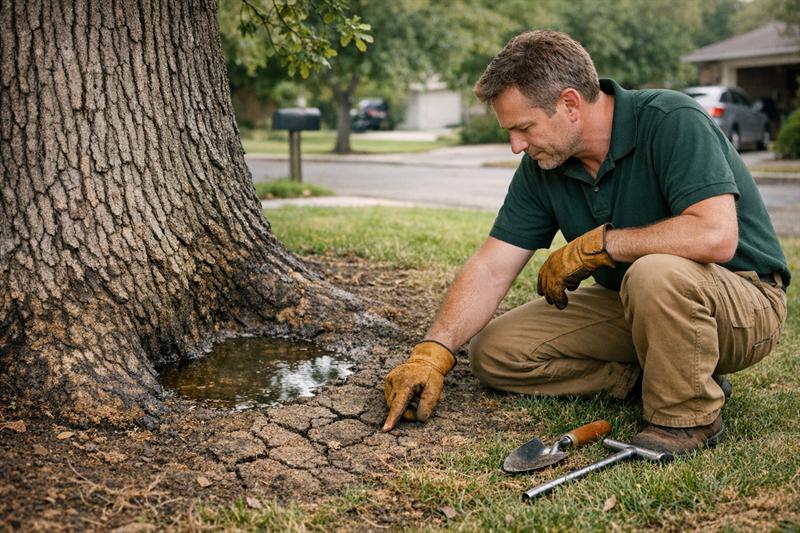
- Hard, dry soil that is difficult to penetrate
- Water pooling or running off quickly
- Sparse grass or exposed roots
- Visible surface compaction
When both soil and tree symptoms are present, root function may already be affected.
Why Compacted Soil Can Lead to Tree Failure
Soil compaction is not just a health issue. It can also affect how well a tree is anchored.
Reduced Stability and Anchorage
Roots that cannot spread properly cannot anchor the tree as effectively. This can lead to weaker structural support over time.
The tree may still look stable from above, but the root system may be underperforming.
Increased Risk During Storms
Storm conditions can expose these weaknesses quickly. Saturated soil combined with a limited root system can increase the chance of failure.
This is often when the issue becomes more obvious, especially if the tree starts leaning. If that is happening, it may help to review why a tree is leaning and what to do next.
If You’re Seeing These Signs, It’s Time to Take Action
If a tree is declining and the ground around it feels hard or compacted, the issue may already be affecting root health and support.
- The canopy is thinning or growth has slowed
- Water pools near the base after rain
- The soil feels solid instead of loose
- The tree shows early signs of leaning or imbalance
At that point, it makes sense to address the issue before decline gets worse or stability becomes a larger concern.
How to Prevent Soil Compaction Around Trees
Prevention is usually easier than trying to correct the problem later.
Protecting the Root Zone
- Avoid driving or parking near trees
- Limit repeated foot traffic in the same areas
- Use mulch to reduce surface pressure
- Identify and protect the full root zone
These steps help maintain soil structure and support long-term tree health.
Smart Landscaping Choices
Planning how the yard is used makes a difference. Walkways, play areas, and high-traffic zones should be placed away from major root zones when possible.
This is easier to manage early, before compaction becomes a larger problem.
What to Do If Soil Compaction Is Already a Problem
Once soil is compacted, the focus shifts from prevention to deciding what may still help.
When Soil Improvement May Help
In some cases, aeration and soil improvement can restore part of the root environment. This tends to work best when the damage is limited and the tree is still structurally sound.
If roots are already restricted, improvement will not fully reverse the problem. It may reduce stress, but it will not rebuild a significantly damaged root system.
When Tree Removal Becomes the Safer Option
If the tree shows signs of instability, removal may become the more practical option. This is especially important when the tree is near structures, driveways, or areas where people spend time.
Waiting can increase the chance of property damage, which is why understanding when removal is the better option than trimming can be helpful.
Key Takeaways
- Soil compaction limits oxygen, water movement, and root growth
- Roots are often affected before visible symptoms appear
- Damage develops slowly and can lead to structural weakness over time
- Common activities like parking and repeated foot traffic are major causes
- Prevention is usually easier than repair
- More advanced cases may require professional evaluation or removal
Conclusion
Soil compaction is a hidden issue that can weaken trees from the ground up. By the time visible symptoms appear, the root system may already be restricted and stability may be affected.
If it is not addressed, the problem can continue to progress. The tree becomes weaker, less stable, and more vulnerable during storms or heavy rain.
One, Two, Tree works with homeowners across Marietta and Atlanta to identify root-zone concerns early and help determine the right next step. In some cases that means improving soil conditions. In others, it means removing a tree that no longer appears stable.
If you are seeing signs of decline or suspect soil compaction, now is a good time to have the tree looked at and decide what needs to happen next.
FAQ
How does soil compaction affect tree roots?
Soil compaction reduces airflow and water movement, which limits root function and growth. Roots rely on oxygen in soil pores, and when those spaces are compressed, the root system begins to struggle. If symptoms are visible, the tree may need a closer evaluation.
Can compacted soil kill a tree?
Yes, prolonged compaction can lead to root decline and eventually severe tree stress. Trees cannot stay healthy long-term without proper root function. In advanced cases, removal may be the safest option.
What are the signs of compacted soil around trees?
Common signs include thinning leaves, slow growth, hard soil, and water pooling. These can indicate that roots are under stress. When several of these show up together, compaction may already be affecting tree health and support.
How do you fix soil compaction around trees?
Fixing compaction may involve aeration, mulching, and reducing pressure on the soil. Results depend on severity. In many cases, a professional evaluation helps determine whether improvement is realistic.
Does walking on soil compact it enough to harm trees?
Repeated foot traffic can compact soil over time and reduce root function. This can contribute to gradual decline. Redirecting traffic early helps lower the risk of long-term damage.
How far do tree roots extend from the trunk?
Tree roots often extend beyond the canopy, and in some cases much farther. Most active roots are in the upper soil layer. Protecting that wider root zone is important for long-term tree health and stability.