
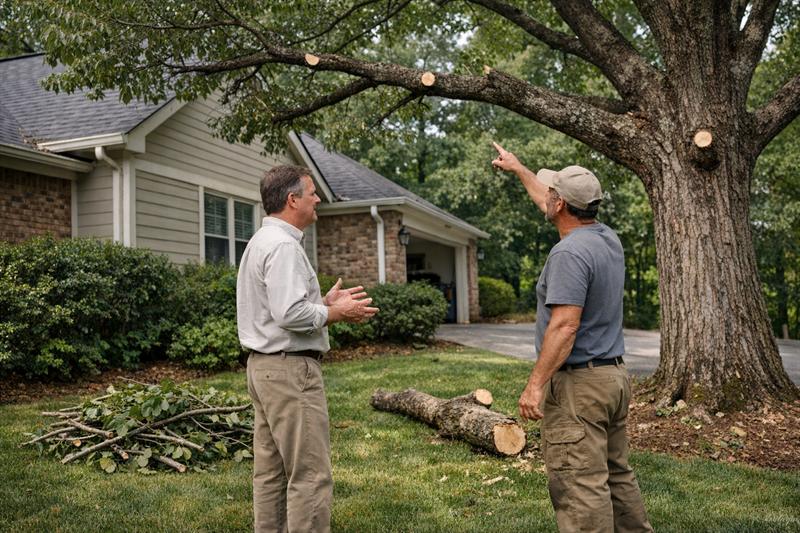
Quick Answer: Many tree problems in Atlanta come down to timing. A seasonal tree care calendar helps you handle pruning, inspections, and risk reduction at the right time, lowering the chance of storm damage and helping prevent small issues from becoming major ones.
Why Tree Care Timing Matters More in Atlanta
Atlanta trees grow quickly and add weight fast. When that growth is not managed at the right time, structural stress can build and become more noticeable during storms.
It is common for a tree to look stable in early spring, then lose limbs during the first strong storm. The weather plays a role, but missed maintenance earlier in the season is often part of the problem.
As branches extend and thicken, weight shifts outward. If that growth is not corrected, the tree can become unbalanced. That imbalance increases the likelihood of breakage during high wind, heavy rain, or saturated soil conditions.
Staying ahead of seasonal timing helps keep tree care more predictable. Falling behind usually leads to reactive decisions under pressure.
How Atlanta’s Climate Affects Tree Growth and Risk
Atlanta’s climate supports a long growing season. Trees spend more time actively growing and less time in dormancy, which can speed up how quickly problems develop.
Heavy rain can soften soil and reduce stability, especially around older root systems. Summer heat adds stress that does not always show on the surface right away. A tree may still look healthy while structural strain develops elsewhere.
One pattern homeowners notice is fast spring growth followed by summer limb failure. Growth can outpace maintenance, leaving the tree carrying more weight than it can support well under pressure.
For a deeper look at these patterns, see how weather in Atlanta affects tree health year-round.
Winter (December–February): Structural Pruning and Inspection
Winter is often the most controlled time to work on tree structure. Growth slows down, and visibility improves without leaves in the way.
This is when structural problems are easier to spot. Weak branch attachments, crossing limbs, and uneven weight distribution become clearer.
Best Trees to Prune in Winter
Many hardwoods and oaks are typically pruned during dormancy. Making adjustments at this stage helps guide how the tree grows once spring begins.
When this window is missed, those same branches keep growing and become heavier. That usually leads to larger cuts later, which can place more stress on the tree.
For timing details, review best times to trim trees for healthy growth.
What to Avoid During Dormancy
Removing too much at once can weaken the tree before the next growth cycle. Balance matters more than volume.
Ignoring visible defects is another common issue. Cracks and poor branch connections rarely improve with time. As the tree grows, those weak points often become more pronounced.
Spring (March–May): Growth Management and Storm Preparation
Spring is when trees expand quickly. New growth adds weight, and weak areas start to show.
This is one of the best times to prepare for storm season. Once frequent storms begin, the work often becomes more urgent and more limited.
Early Growth Risks
Branches often extend faster than they strengthen. That creates leverage points, especially at the outer canopy.
A common situation is limbs stretching over roofs or driveways. They may look stable, but added length increases stress at the connection point.
Pre-Storm Season Priorities
Focus on reducing risk before storm season ramps up.
- Remove dead or weakened limbs
- Increase clearance from structures
- Reduce excess weight in the canopy
Storm preparation is an important part of the yearly care cycle. Learn more about how to protect your trees during storm season.
If you are seeing any of the following, timing may have become a risk issue:
- Branches extending over your roof or near power lines
- Visible cracks or splitting in limbs
- Rapid growth that has not been trimmed in over a year
- Previous storm damage that was not addressed
At that point, the focus often shifts from routine maintenance to risk reduction. Delaying action can increase the chance of failure during storms.
Summer (June–August): Storm Response and Safety Monitoring
Summer is often when risk peaks. Trees are fully leafed out, carrying maximum weight, and storms are more frequent.
This is usually not the time for major structural pruning. It is the time to watch closely and respond when something changes.
Identifying High-Risk Limbs
Look for visible warning signs:
- Cracks along major branches
- Limbs that are starting to sag or shift
- Partial breaks after storms
Sometimes a limb is weakened in one storm and fails in the next. The period between those events is often when timely intervention matters most.
When Removal Becomes Urgent
If a tree near your home shows signs of structural failure, waiting can increase the chance of property damage.
Risk builds when multiple factors combine, such as saturated soil, heavy canopy weight, and existing defects. At that point, trimming may not address the underlying issue.
To better understand these warning signs, see common signs a tree is dangerous before it falls.
Fall (September–November): Preventative Maintenance and Cleanup
Fall is a transition period when growth slows and trees begin preparing for dormancy.
This is a practical time to correct issues that developed over the summer before they carry into the next cycle.
Preparing for Dormancy
Light pruning can help remove damaged or weak growth and set up cleaner structure for winter work.
If this step is skipped, those weaknesses remain and may require more aggressive correction later.
When to Schedule Removals
Fall is often a good time for planned removals. Conditions are usually more stable, and work can be scheduled without the same level of urgency that follows storm damage.
Waiting until a tree becomes an immediate hazard often leads to more complex situations and tighter timelines.
Monthly Tree Care Checklist (Quick Reference)
- January–February: Structural pruning and inspections
- March–April: Monitor early growth and handle light pruning
- May: Complete storm preparation and reduce hazards
- June–August: Monitor storm impacts and respond to damage
- September–October: Clean up and correct developing structural issues
- November: Plan removals and prepare for dormancy
This checklist works as a guide. Trees showing stress or damage may need attention outside this schedule.
Signs Your Tree Care Timeline Needs to Change
Not every tree follows a predictable schedule. Some conditions call for faster attention.
If you notice these signs, the timeline shifts from routine care to active risk management:
- Sudden leaning or visible movement
- Cracking sounds or visible splits
- Dead limbs appearing quickly
- Unresolved storm damage
These are signs that structural stability may be changing. Waiting often allows the problem to progress.
When to Handle It Yourself vs. Call a Professional
Basic tasks like picking up debris or trimming very small branches can often be handled safely.
The risk increases quickly with height, branch weight, and proximity to structures or power lines. This is where many homeowners underestimate the situation.
Another common issue is fixing what is easy to see without addressing the larger structural problem. That can lead to repeat problems or more complicated work later.
For a clear comparison, see professional vs DIY tree service.
Key Takeaways
- Timing affects most tree care outcomes
- Atlanta’s climate can accelerate growth and storm-related risk
- Seasonal planning helps reduce emergency situations
- Structural issues tend to worsen when delayed
- Taking action at the right time helps protect your property
Conclusion
Tree care in Atlanta works on a seasonal cycle. When that cycle is missed, problems can build quietly and become more noticeable when conditions are at their worst.
Unmanaged growth can lead to heavier limbs, weaker connections, and increased pressure on the tree’s structure. Over time, that raises the likelihood of failure, especially during storms.
One, Two, Tree focuses on clear, step-by-step communication so homeowners understand what needs to happen and when. That approach reduces guesswork and helps prevent manageable issues from becoming urgent ones.
If your trees have not been checked recently or are showing signs of stress, getting a clear plan in place now can help you avoid more urgent and costly situations later.
Frequently Asked Questions
What is the best time of year to trim trees in Atlanta?
Late fall through winter is generally one of the best times to trim many trees. Dormant conditions improve visibility and can reduce stress, making structural adjustments easier to manage.
How often should trees be maintained in Georgia?
Most trees benefit from a yearly inspection, with maintenance adjusted based on growth, age, location, and condition. Faster-growing trees or trees exposed to storms may need more frequent attention.
When is tree removal safest in Atlanta?
Fall and winter are often preferred for planned removal. More stable conditions can make scheduling easier and reduce the need for urgent work.
How do I prepare trees for storm season in Atlanta?
Focus on removing weak or extended limbs in early spring when appropriate. Reducing canopy weight and improving clearance can help lower stress during storms.
Can trimming trees at the wrong time cause damage?
Yes. Poor timing can increase stress and affect how a tree responds to the next growth cycle. Seasonal timing helps support better structure and more manageable growth.
What are signs a tree is dangerous or needs removal?
Cracks, leaning, dead limbs, root movement, and visible storm damage are common warning signs. These conditions can point to structural weakness and should be checked promptly.