Quick Answer: The best low maintenance trees in Atlanta are ones that fit the local climate, have a manageable mature size, and are less likely to create problems with roots or storm damage. Trees like crepe myrtle, eastern redbud, and bald cypress are popular choices because they tend to stay more manageable and are better suited to Atlanta conditions over time.
Most tree problems don’t start with a bad tree. They start with a mismatch. A tree that looks easy at planting can eventually outgrow the space, drop limbs, or crowd nearby structures.
That pattern comes up again and again during removals. The tree itself usually is not the issue. The bigger problem is how it was chosen and where it was planted.
Low maintenance is not about doing less work today. It is about avoiding the kind of work that builds year after year.
What “Low Maintenance” Really Means in Atlanta’s Climate
In Atlanta, low maintenance usually means a tree can handle heat, humidity, heavy rain, and dense clay soil without constant pruning or correction. Trees that do well in other regions do not always perform the same way here, and that is where problems often begin.
A common mistake is choosing a tree based mostly on appearance or fast growth. It fills in quickly, then starts to outgrow the space around it. Limbs extend over roofs, roots spread toward hard surfaces, and maintenance increases over time.
Low maintenance trees in this area tend to have:
- Strong branch structure that holds up better in storms
- Root systems that are less likely to cause conflicts near foundations, driveways, and walkways
- Moderate, predictable growth
- Manageable levels of leaf, flower, or seed drop
When those factors are ignored, the workload does not stay low. It turns into repeated trimming, cleanup, and sometimes removal earlier than expected.
Best Low Maintenance Trees for Atlanta Homeowners
Crepe Myrtle
Crepe myrtle handles Atlanta heat well and settles into a fairly predictable growth pattern. It is commonly used because it fits a wide range of yard sizes.
Where it often goes wrong is over-pruning. Heavy cutting can lead to weak regrowth, which increases maintenance instead of reducing it.
Southern Magnolia (Compact Varieties)
Compact magnolia varieties provide structure year-round and generally hold up well in Atlanta landscapes. They work best in yards with enough space for their mature size.
Problems usually start with spacing. When planted too close to a home, the tree eventually has to compete with the structure for space.
Eastern Redbud
Eastern redbud is a native tree that fits well in many residential settings. It stays smaller and typically does not need constant shaping.
Because it is adapted to local conditions, it usually handles seasonal changes with less intervention than less-suited ornamentals.
River Birch
River birch performs well in areas where drainage is a concern. It tolerates moisture conditions that cause other trees to struggle.
It can be a practical option when soil conditions limit other choices. Ignoring drainage is one of the easiest ways for a tree to become high maintenance later.
Japanese Maple (Small Yards)
Japanese maple is a strong fit for smaller yards because it grows slowly and stays compact. That helps keep pruning and space management more predictable.
Placement matters. Too much direct afternoon sun can stress the tree and lead to more ongoing care.
Bald Cypress
Bald cypress is known for handling a wide range of site conditions, including areas with poor drainage. It matures into a durable tree and usually does not require constant correction.
It is one of the more dependable choices for properties where other trees struggle to establish or stay stable.
Trees That Seem Low Maintenance (But Often Cause Problems)
Bradford Pear
Bradford pear grows quickly but develops weak branch attachments. That makes it more likely to split during storms.
Silver Maple
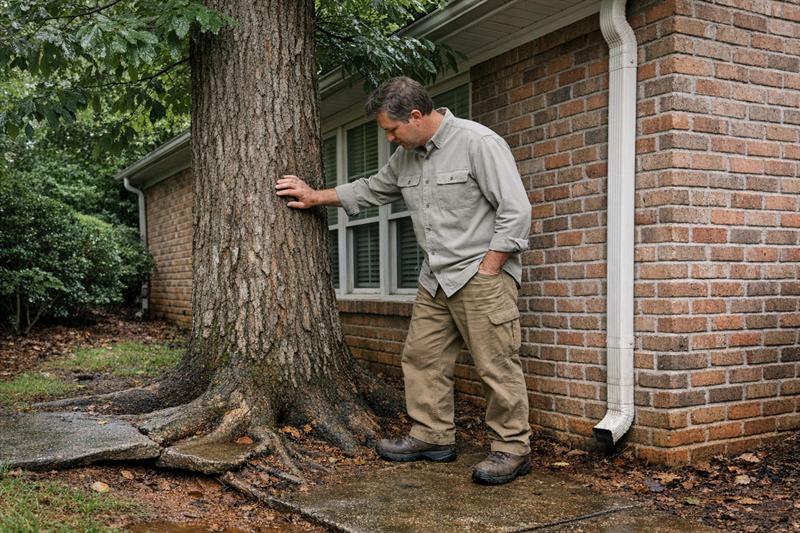
Silver maple grows fast and can create long-term root and structure issues in residential spaces. Over time, roots may interfere with driveways, sidewalks, and other nearby hard surfaces.
If root damage is already a concern, this guide on how tree roots can damage your foundation explains how those problems can develop.
Leyland Cypress
Leyland cypress fills in quickly but can become difficult to manage as it matures. Overcrowding and disease pressure often increase maintenance instead of reducing it.
Many removal situations start this way. Trees planted for quick screening can outgrow their space or become less stable over time. If you are unsure when that shift happens, this guide on when to remove a tree instead of trimming it explains what to watch for.
How to Choose the Right Tree for Your Yard (Not Just the “Best” Tree)
Yard Size and Canopy Spread
The size of the tree at maturity matters more than how it looks when planted. Many problems start when the canopy expands beyond what the yard can reasonably support.
Distance from Home and Structures
Planting too close to a structure increases the chance of future conflicts with limbs, roots, and clearance. This is one of the most common planning mistakes in residential yards.
Soil and Drainage Conditions
Atlanta soil tends to hold water differently than looser, sandier ground. Trees that are not suited to those conditions can decline over time, which affects growth and stability.
Sun Exposure
Each tree has its own light needs. When those are ignored, the tree is more likely to struggle and require extra attention to stay in good shape.
The Hidden Maintenance Costs Most Homeowners Miss
Most tree-related costs build gradually. They usually do not show up right after planting.
Common patterns include:
- Ongoing debris that needs regular cleanup
- Roots affecting nearby surfaces
- Frequent trimming to control size
- Storm damage from weak or overextended limbs
This is where problems often escalate. Homeowners end up managing the symptoms while the underlying issue keeps growing.
If you are already noticing uneven growth or heavy limbs, these signs your tree needs trimming can help you understand what may be changing.
If you are seeing any of the following, the tree is no longer low maintenance:
- Branches extending over your roof or driveway
- Cracks forming in nearby concrete
- Limbs coming down after storms
- Growth that requires constant trimming
At that point, the issue has moved beyond routine upkeep. Corrective pruning or removal may be the more practical next step.
When Low Maintenance Still Requires Professional Support
Even well-chosen trees need occasional attention. The difference is that the work tends to be more predictable and less frequent.
Low maintenance trees still benefit from:
- Periodic inspections
- Targeted structural pruning
- Preparation before storm season
That is often how smaller issues are caught before they turn into larger, more expensive problems.
Storm pressure is a major factor in Atlanta. Trees that look stable can still lose limbs or fail under stress. This guide on protecting your trees during storm season explains how that risk develops and how to reduce it.
Conclusion
Low maintenance trees only stay low maintenance when they are matched to the property and planted in the right place. When they are not, the same pattern tends to follow. Growth becomes harder to control, roots interfere with nearby surfaces, and storm-related problems become more likely.
Once that process starts, it rarely improves on its own. It usually leads to ongoing maintenance and, in some cases, larger corrective work later.
One, Two, Tree focuses on helping homeowners avoid that cycle early. The approach is based on how trees actually perform in Atlanta yards, not just how they look at planting. That includes helping homeowners choose the right trees, evaluate placement, and address risks before they become bigger property issues.
If you are dealing with a tree that is getting harder to manage or planning to plant something new, getting clear guidance early can keep the situation simpler and more manageable long term.
Key Takeaways
- Low maintenance trees need to match Atlanta’s climate and soil conditions
- Fast growth often leads to higher long-term maintenance
- Tree placement has a direct impact on future problems
- Most tree issues develop gradually and become harder to fix over time
- Early evaluation can help prevent larger, more expensive work
How One, Two, Tree Helps Homeowners Avoid Costly Tree Problems
Tree problems rarely start all at once. They usually build from small decisions that seem fine at first.
One, Two, Tree works with homeowners to identify those risks before they turn into larger property or tree-care problems. That includes evaluating existing trees, planning placement, and guiding decisions based on how trees are likely to grow over time.
Many calls come in after something changes. A tree starts leaning, branches get too close to the home, or storm damage reveals a weakness.
Addressing those signs early helps keep the work more controlled and can reduce the chance of urgent problems later.
FAQ
What is the easiest tree to maintain in Atlanta?
Crepe myrtle and eastern redbud are both widely used because they adapt well to local conditions and stay relatively manageable. When planted with proper spacing, they usually require less ongoing work than faster-growing or poorly matched trees.
What trees grow best in Georgia with little maintenance?
Native and climate-adapted trees like redbud, river birch, and bald cypress tend to perform more consistently in Georgia landscapes. Matching the tree to the site is what usually makes the biggest difference.
What trees should not be planted near a house in Atlanta?
Trees with aggressive root habits or weak structure, such as silver maple and Bradford pear, are more likely to create problems near homes. Proper spacing and selection help reduce those risks.
Are fast-growing trees low maintenance?
Not usually. Fast-growing trees often need more pruning and are more likely to develop structure or space problems over time. Slower or more moderate growers are often easier to manage long term.
What is the best tree for a small yard in Atlanta?
Japanese maple is a common choice for smaller yards because it stays compact and grows slowly. That helps keep maintenance more predictable, especially when it is planted in the right light conditions.
Do low maintenance trees still need pruning?
Yes. Even low maintenance trees benefit from occasional pruning to support structure, manage growth, and reduce the chance of future problems.