Quick Answer: Trees are more likely to fall in storms when several risk factors overlap, especially weak roots, saturated soil, structural defects, and heavy or unbalanced canopies. It’s not just the wind. The tree’s condition before the storm plays a major role.
Most homeowners focus on the storm itself. At One, Two, Tree, that’s often where concerns start. But in many cases, the bigger issue is how stable the tree already was before the first strong gust. Trees that fail usually have underlying weaknesses that developed over time.
If you’re trying to figure out what trees fall in storms, the answer comes down to risk. Not just the species, but how the tree is growing, where it’s planted, and what stress it’s already under.
Why Some Trees Fall in Storms While Others Survive
Tree failure is rarely caused by wind alone. In many cases, failure happens when existing weaknesses meet storm stress.
A common pattern is this: the tree looks stable, the storm hits, and then it fails. That usually means the problem was already there, just not obvious from a quick look.
How Risk Factors Add Up
The simplest way to understand storm failure is to look at how problems combine. One issue might not cause failure on its own. Several issues together often do.
For example:
- Shallow roots
- Saturated soil
- Dense or unbalanced canopy
Each one adds stress. Together, they can reduce stability enough that the tree may not hold during strong winds.
Why Healthy-Looking Trees Still Fail
A tree can look full and healthy but still come down during a storm.
In many cases, the issue is hidden:
- Internal decay weakening the trunk
- Root damage from past construction or compacted soil
- Stress from earlier storms that weakened the structure
If you’re unsure what’s happening below the surface, signs your tree has root damage breaks down what to look for.
These problems can build quietly. Then under storm stress, the tree reaches a point where it can no longer support itself.
The Biggest Factors That Make a Tree Likely to Fall
If you want to understand storm risk, these are the conditions that matter most. These are the main things to look at when evaluating stability.
Root System Problems
Roots anchor the tree. When they weaken, stability drops.
This is often where problems begin. Saturated soil reduces grip, especially in Georgia where heavy rain can soften the ground quickly. Trees that seemed stable can begin to shift.
Common root-related risks include:
- Shallow root systems that spread instead of anchoring deeply
- Compacted soil limiting root depth and strength
- Construction damage that cuts or stresses roots
Soil condition is a major factor. How soil compaction affects tree roots explains why restricted root growth often leads to stability problems later.
Tree Species and Growth Rate
Growth rate matters. Faster-growing trees often develop weaker wood than slower-growing species.
This shows up over time. The tree gets large quickly, but the structure doesn’t always keep up. Under storm pressure, that imbalance can become a problem.
Structural Weaknesses
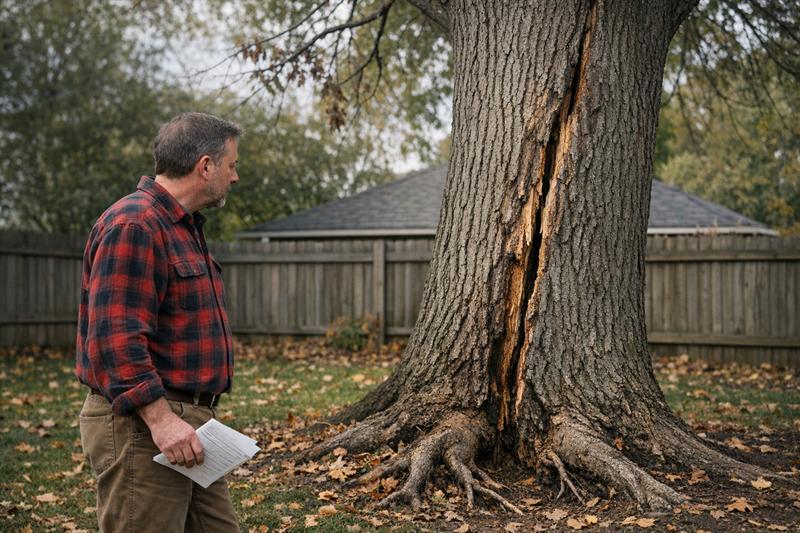
Cracks, splits, and multiple trunks are common structural concerns. These areas typically do not handle stress as well as a sound trunk and branch structure.
A leaning tree is another warning sign. It can point to root movement, poor anchoring, or uneven weight distribution. Why a tree starts leaning often ties directly to these issues.
Once structural weakness develops, storms usually don’t create the problem. They reveal it.
Canopy Imbalance
The canopy acts like a sail in the wind. When it’s too dense or uneven, it increases pressure on the trunk and roots.
Trees with heavy tops and poor shape often take on more force than they can handle, especially during strong wind and rain.
Decay and Internal Damage
Decay reduces strength from the inside. The outside may still look solid.
That is why some trees fail with little visible warning. The internal support may already be compromised.
Environmental Exposure
Where a tree stands changes how it handles wind.
- Open areas expose trees to full wind force
- Spaces between buildings can funnel and intensify wind
- Sloped ground can create uneven support
These conditions increase stress, even for trees that otherwise appear stable.
Which Trees Are Most Likely to Fall in Storms
Some trees show higher failure rates, but the pattern is usually tied to structure and growth habits, not just species alone.
Fast-Growing Trees and Brittleness
Fast-growing trees often develop softer or more brittle wood. That can make them more prone to splitting or breaking in storms.
Trees that fill in quickly are often the same ones that struggle more as they get larger and heavier.
Common Higher-Risk Trees in Georgia
In the Atlanta and Marietta area, certain trees come up regularly in storm damage discussions:
- Water oak
- Bradford pear
- Silver maple
These trees are often associated with faster growth, weaker branch structure, or other traits that can increase failure risk over time.
Trees That Are More Storm-Resistant
Slower-growing trees with deeper root systems tend to hold up better.
They often develop stronger wood and more balanced structures, which can help them handle wind more effectively.
Warning Signs a Tree May Fall Soon
When these signs appear, the risk may already be elevated.
- Sudden or increasing lean
- Cracks in the trunk or major limbs
- Exposed or lifting roots
- Dead or hanging branches
- Fungal growth at the base
- Soil heaving around the tree
These are not minor changes. They can point to structural or root instability that may worsen quickly during storms.
For more detail, common signs a tree is dangerous explains how these issues develop.
How to Reduce the Risk Before the Next Storm
Risk can often be reduced, but the approach matters. Poor pruning or root disturbance can make a tree less stable instead of more stable.
Strategic Pruning
Pruning can reduce canopy weight and improve balance. When done properly, it may lower wind resistance.
Done poorly, it can weaken the tree. Many storm-related problems start with cuts that remove too much canopy or leave the tree poorly structured.
Soil and Root Care
Healthy roots need space, oxygen, and stable soil.
That means managing drainage, avoiding compaction, and protecting the area around the base. When roots are restricted, stability often drops over time.
When Removal Is the Safer Option
When several risk factors are present, removal may be the more practical choice.
This is especially true near homes, driveways, or power lines. At that point, the consequences of failure may outweigh the benefits of keeping the tree.
If You’re Seeing These Signs, Action Is Likely Needed
Some situations go beyond simple observation and call for a closer look.
- The tree is leaning more after heavy rain
- Cracks or splits are getting worse
- Roots are lifting or soil is shifting
- Large branches have already fallen
In these situations, risk can increase quickly and your options may become more limited. A professional evaluation is often the next practical step.
When to Call a Tree Service
If the situation is unclear or several issues are present, a professional assessment can help.
At One, Two, Tree, trees that look stable at a glance sometimes show clear concerns once the roots, structure, and canopy are looked at together.
A proper evaluation usually focuses on:
- Root stability and soil condition
- Structural condition of the trunk and major limbs
- Canopy weight and balance
- Distance to structures and likely impact if the tree fails
This helps remove guesswork and clarify what action makes the most sense.
Conclusion
Trees are more likely to fall in storms when existing weaknesses build up and go unaddressed. Wind is often the trigger, but the condition of the tree plays a major role in the outcome.
Left alone, these issues often progress. What starts as a minor lean or root problem can turn into a major failure during the next strong storm.
At One, Two, Tree, the focus is on identifying these risks early and explaining them clearly so you can make the right call. If a tree on your property is showing warning signs or raising concerns, getting a professional assessment is a practical next step.
Taking that step early can help prevent damage that is much harder to deal with later.
Key Takeaways
- Trees usually fall because several risk factors combine, not just because of wind
- Root condition and soil stability are major drivers of failure
- Fast-growing trees often develop structural limitations over time
- Visible warning signs usually point to elevated risk
- Early evaluation can help reduce the chance of sudden damage
Frequently Asked Questions
What trees are most likely to fall in storms?
Fast-growing trees with weaker wood and shallow roots are generally more likely to fail in storms. Species like Bradford pear and silver maple are commonly associated with structural issues over time. If these trees are near your home, an evaluation can help clarify the level of risk.
Can a healthy tree still fall during a storm?
Yes. Trees can appear healthy while still having internal decay or root damage. These hidden issues reduce stability and increase the chance of failure under storm stress. A closer inspection is often needed to spot those risks.
How can you tell if a tree is dangerous?
Leaning, cracks, exposed roots, and dead branches are common warning signs. These can indicate structural or root problems that tend to worsen during storms. When several signs appear together, the level of concern is usually higher.
Do fast-growing trees fall more easily?
In many cases, yes. Faster growth is often linked to weaker wood and less stable structure. Over time, that can increase the likelihood of failure during storms.
Should I remove a tree before it falls?
If a tree shows multiple risk factors, removal may be the safer option, especially near structures. An assessment can help determine whether removal makes sense or whether other steps may reduce the risk.
Does trimming a tree reduce storm risk?
Yes, when done correctly. Trimming can reduce canopy weight and improve balance, which may lower wind resistance. Poor trimming practices can weaken the tree, so the method matters.