
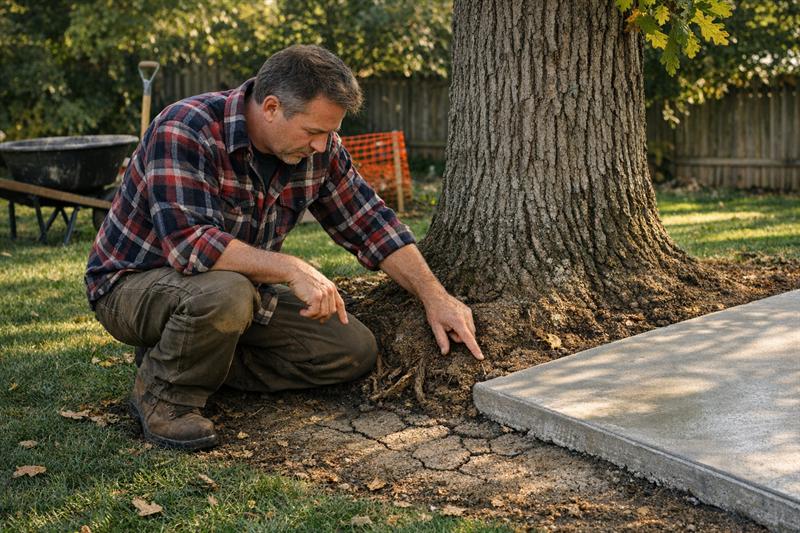
Quick Answer: Construction damage to trees usually starts underground, where root systems are compacted, cut, or deprived of oxygen. That can lead to decline, reduced stability, and, in some cases, failure over time. Much of this damage is preventable, but once symptoms appear, the tree is already under stress and usually needs a professional evaluation.
A common situation looks like this: a new driveway, patio, or addition is completed, and everything seems fine. Then months later, the tree starts thinning, leaning, or dropping limbs. Nothing appears to have struck the tree, so the decline feels confusing.
In many cases, the damage did not happen above ground. It happened where most people never look: in the root zone.
Why Trees Are More Vulnerable During Construction Than They Appear
Trees can look strong and unaffected during construction, but their stability depends heavily on conditions below the surface. When those conditions change, the tree can begin to decline even if nothing looks damaged at first.
The Hidden Role of Root Systems
Most of a tree’s critical support system is underground. Roots often extend well beyond the canopy, supplying water, oxygen, and nutrients while helping anchor the tree.
- Roots rely on loose, oxygen-rich soil
- They often extend far beyond the trunk into active work zones
- Even small disturbances can reduce root function
This is where many projects go wrong. Root zones are treated as empty space, when they are actually one of the most sensitive parts of the tree. This is why how much space tree roots really need becomes a practical concern during any build.
Why Damage Often Shows Up Months Later
Construction damage rarely shows up right away. A common pattern is delayed decline: the tree continues to function, then gradually shows stress.
Over time, canopies may thin, branches may die back, and the tree may become less stable. By the time symptoms appear, the root system has often already been affected.
The Most Common Ways Construction Damages Trees
- Soil compaction from heavy equipment
- Root cutting during excavation
- Grade and drainage changes
- Physical damage to the trunk and canopy
Soil Compaction from Heavy Equipment
This is one of the most common causes of construction damage. Heavy machinery compresses the soil, reducing the air pockets roots depend on.
As oxygen levels drop, roots function less effectively and the tree begins to decline. A deeper explanation is covered in how soil compaction affects tree roots, growth, and stability.
Repeated equipment traffic near trees can cause cumulative damage that only becomes visible later.
Root Cutting During Excavation and Trenching
Excavation often cuts through roots that contribute to both stability and resource uptake. This is common when installing utilities or digging foundations.
Partial root loss may not show immediate symptoms, but it can reduce support and place the tree under stress. That is when leaning or failure becomes more likely, especially during high winds or saturated soil conditions.
Grade Changes and Drainage Disruption
Changing soil levels around a tree affects how water and oxygen move through the root zone. Adding soil can limit oxygen, while removing soil can expose roots and dry them out.
These changes create long-term stress that many trees struggle to adapt to.
Physical Trunk and Canopy Damage
Equipment can wound bark, break branches, or scrape the trunk. While this damage is visible, it often happens alongside root disruption.
Open wounds can also create entry points for decay, which may weaken the tree over time.
If you are seeing any of the following after construction, the tree is likely already under stress:
- Thinning canopy or smaller leaves
- Soil that feels hard and compacted near the base
- A new lean or noticeable shift in position
- Dead branches appearing within one growing season
At that point, the issue has likely moved past prevention and into evaluation.
Landscaping Mistakes That Harm Tree Health
Damage does not always stop when construction ends. Landscaping decisions can make existing stress worse, especially when root systems have already been affected.
Over-Mulching and Improper Planting
Excess mulch can hold moisture against the base of the tree and reduce airflow around the trunk flare. That creates conditions that may contribute to decay.
Additional plants nearby can also compete for water and nutrients, increasing stress on the tree.
Installing Hardscapes Too Close to Trees
Driveways, patios, and walkways can restrict root growth and limit the soil space available to the tree. Over time, that can affect growth and reduce resilience.
This is often where longer-term stability and health issues begin, particularly in mature trees.
Irrigation Changes
Post-project watering changes are often overlooked. Too much water reduces oxygen in the soil, while too little can dry roots out.
These swings create inconsistent conditions that trees often struggle to adapt to.
Warning Signs of Construction Damage to Trees
Early Indicators
- Leaf discoloration or wilting
- Smaller-than-normal leaves
- Thinning canopy
- Hard or cracked soil near the base
Delayed Symptoms (6–24 Months Later)
- Dead or falling branches
- Visible leaning or shifting
- Gradual or sudden decline without another obvious cause
If the cause is unclear, this guide on signs your tree has root damage can help connect these symptoms to root-related issues.
Trees that appear stable can become hazardous once structural roots are compromised.
How to Protect Trees Before and During Construction
- Establish a Tree Protection Zone (TPZ)
Define a boundary around the tree, often around the drip line. Keep equipment, materials, and repeated traffic out of this area. - Plan Around Root Systems
Adjust layouts to avoid major roots whenever possible. This helps reduce cutting and long-term stress. - Coordinate Between Contractors and Tree Professionals
When protection plans are unclear, damage becomes much more likely. Clear communication and jobsite follow-through help prevent avoidable problems.
In practice, trees are often damaged not by one major mistake, but by a series of small decisions made without a clear plan from the start.
When to Call a Professional Tree Service
There is a point where waiting increases the chance of further decline or safety issues. If a tree shows signs of stress after construction, it should be assessed.
- Canopy thinning or dead branches appear
- The tree begins leaning or shifting
- Roots are exposed or soil is heavily compacted
- Excavation occurred close to the base
These signs can point to structural or root-related problems. A proper evaluation helps determine whether the tree is likely to recover, needs monitoring, or has become a safety concern.
For commercial properties, these issues can also affect site safety and maintenance planning. A structured process, clear communication, and ongoing updates help keep the response organized.
Conclusion
Construction damage to trees usually begins underground, develops gradually, and often becomes visible only after the tree has already been weakened.
If it is not addressed, the situation can progress into structural instability, falling limbs, or full failure. What starts as a hidden issue can become a serious property and safety concern.
This pattern is common after driveways, patios, additions, utility work, and regrading. Trees that appear fine right after a project may begin to decline because the root system was affected during the work.
The most practical next step is to have the tree evaluated before the damage progresses. One, Two, Tree provides clear assessments, direct communication, and a defined plan so you know where the tree stands and what comes next.
Key Takeaways
- Most construction damage affects roots, not just visible parts of the tree
- Soil compaction and root cutting are two of the most common causes
- Symptoms often appear well after construction is complete
- Landscaping choices can worsen existing damage
- Early evaluation can help reduce risk and guide next steps
How One, Two, Tree Approaches Tree Protection and Assessment
Tree damage during construction is rarely caused by one decision. It usually builds from small, uncoordinated actions over time.
At One, Two, Tree, the focus is on clarity from the start. Protection zones are defined, expectations are communicated clearly, and updates are provided throughout the project.
This approach addresses one of the most common causes of preventable damage: lack of coordination. When everyone understands the plan, avoidable damage is less likely.
When trees are already affected, the focus shifts to evaluation. Stability, condition, and overall risk are reviewed so the next step is clear.
FAQ
Can construction kill a tree without cutting it down?
Direct answer: Yes, construction can seriously damage a tree without removing it.
Proof: Root loss, soil compaction, and drainage changes can disrupt how the tree takes in water and oxygen, leading to gradual decline.
Next step: If a tree starts declining after nearby work, have it evaluated before conditions worsen.
How far do tree roots extend during construction?
Direct answer: Tree roots often extend well beyond the canopy.
Proof: The critical root area commonly reaches at least the drip line and may extend farther depending on the species, soil, and growing conditions.
Next step: Understanding root spread before construction helps prevent unnecessary damage.
What is the most common cause of construction damage to trees?
Direct answer: Soil compaction and root disturbance are among the most common causes.
Proof: Heavy equipment compresses soil, while excavation cuts important roots. Both can affect tree health and stability.
Next step: Defining equipment paths and protected zones early helps reduce this risk.
How can trees be protected during construction?
Direct answer: Trees are best protected by limiting disturbance around their root systems.
Proof: Keeping equipment and materials outside a defined protection zone helps prevent the most common types of damage.
Next step: Set these boundaries before work begins so they are more likely to be followed on site.
How long does it take for a tree to show damage after construction?
Direct answer: Damage often shows up months later and sometimes even longer.
Proof: Trees often decline gradually, with thinning canopies and dead branches appearing over time rather than immediately after the work.
Next step: Monitor nearby trees after construction instead of assuming they were unaffected.
Should an arborist be involved before construction starts?
Direct answer: Yes, early involvement can help prevent damage.
Proof: Planning around root systems can reduce cutting, compaction, and long-term stress.
Next step: Address likely problem areas before construction begins instead of reacting after damage appears.