
Quick Answer: To prepare for tree removal, clear the work area, provide full access for equipment, secure people and pets, and move anything that could be damaged. Most problems during tree removal come from poor site preparation, which can lead to delays, added risk, or preventable property damage.
Why Preparation Matters Before Tree Removal
Tree removal is a controlled process, not just cutting a tree down. It involves planned drop zones, heavy equipment, and coordinated crew movement. When the property is not ready, the job becomes slower, tighter, and harder to manage.
Many homeowners assume the crew will handle every part of the setup. In practice, blocked access, cluttered yards, or unclear boundaries can slow the job down and increase the chance of avoidable damage.
- Falling limbs require clear landing zones
- Equipment needs stable, open access paths
- Crews need space and visibility to work safely
If you want a full breakdown of how removal works, this safe tree removal guide explains the process step by step.
Safety Risks and Property Protection
- Falling branches can damage roofs, fences, and vehicles
- Debris can spread farther than expected
- Equipment movement can affect driveways and landscaping
When the area is clear, crews have better control over where debris and equipment go. When it is not, nearby structures and belongings are more exposed.
Avoiding Delays and Rescheduling
Crews sometimes arrive and cannot reach the tree because of parked cars, locked gates, or tight access points. The job either slows down or has to be rescheduled.
Preparation keeps the work moving. Without it, even a straightforward removal can turn into a longer, more complicated job.
What to Expect Before the Crew Arrives
Before any cutting starts, the job is planned. Crews review the site, define the drop zone, and map out how equipment will move through the property.
With One, Two, Tree, this step is communicated clearly so there are fewer surprises before work begins.
Site Inspection and Planning
The tree, surrounding structures, and ground conditions are all reviewed. This is where decisions are made about the safest and most practical way to remove the tree.
Issues such as weak limbs, nearby power lines, or uneven ground are usually identified during planning. Addressing them early helps the removal go more smoothly.
Equipment and Access Requirements
- Bucket trucks and cranes require overhead clearance
- Chippers and trucks need driveway or street access
- Ground crews need clear paths around the tree
If access is limited, the job becomes slower and more complex. This is one of the clearest ways preparation affects how smoothly the work goes.
Tree Removal Preparation Checklist for Homeowners
Following this checklist helps prevent the most common issues before they start.
- Clear the work area completely
- Move all vehicles away from the site
- Open gates and confirm access points are wide enough
- Secure pets and notify everyone in the home
- Inform neighbors if the tree is near property lines
Clear the Work Area
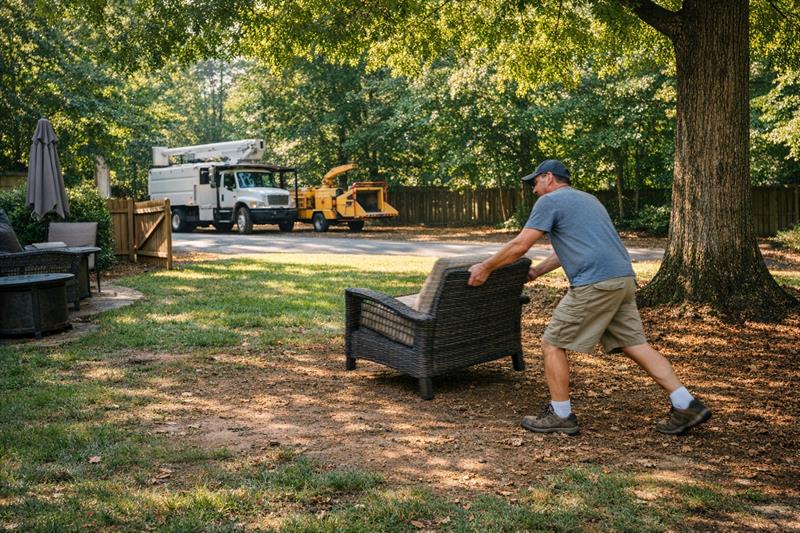
Remove furniture, grills, decorations, and anything else near the tree. Debris does not always fall straight down, and items left nearby are often the first things damaged.
Move Vehicles and Outdoor Equipment
Vehicles left in driveways or near the street can block equipment and limit safe movement. This is a common reason jobs slow down on arrival.
Provide Access to the Property
Unlocked gates and clear entry points allow equipment to move in safely. Restricted access can slow the job and limit safe positioning.
Secure Pets and Inform Household Members
Tree removal is loud and active. Pets can panic, and people moving through the area create unnecessary risk. Keeping everyone clear is part of a safe setup.
Notify Neighbors When Necessary
If the tree is near a property line, letting neighbors know ahead of time helps avoid confusion. This is especially important when branches extend over shared areas.
If any of the following apply, the site may need extra coordination before work begins:
- Limited driveway or street access
- Items still sitting under or around the tree
- Unclear property lines or neighbor concerns
- No plan for pets or household movement
These are the situations where delays and complications tend to show up quickly. A clear plan before the crew arrives makes the job easier to manage.
Do You Need Permits or HOA Approval?
Some tree removals require permits or HOA approval, including in parts of Marietta and Atlanta. Requirements vary based on tree size, species, and location.
Skipping this step can lead to delays or added complications after the job is already scheduled.
Local Considerations in Georgia
Local rules are not the same everywhere. Some trees are protected, and removal may require approval before any work begins. Checking early helps avoid last-minute issues.
When Tree Services Help Handle Permits
Experienced providers can often help homeowners understand the process and required next steps. That reduces guesswork and helps keep the project moving forward.
How to Protect Your Home and Landscape
Tree removal affects everything around it. The goal is to limit that impact as much as possible.
This is where preparation and professional planning work together. When both are handled well, the likelihood of damage is much lower.
Identifying Risk Zones
- Rooflines and gutters
- Fences and property boundaries
- Driveways and walkways
- Utility lines and nearby structures
- Landscaping features like gardens or irrigation
If these areas are not considered early, they become the most likely points of damage.
What Professionals Typically Safeguard
Crews use controlled cutting and rigging to guide how sections of the tree come down. In tighter or more complex spaces, equipment like cranes may also be used, as outlined in this tree removal crane guide.
Common Mistakes to Avoid Before Tree Removal
- Leaving items in the work zone
- Blocking access points
- Ignoring permit requirements
- Not communicating with neighbors
- Assuming preparation does not matter
Small oversights can turn into real problems once the job starts. Most are easy to avoid with basic preparation and clear communication.
How Professional Tree Services Simplify Preparation
The difference between a stressful job and a smooth one often comes down to communication.
One, Two, Tree focuses on clear, step-by-step guidance before the job starts. Homeowners know what to expect, what needs to be done, and how the process will move forward.
Communication Before the Job
You should have clear instructions before the crew arrives. When expectations are unclear, simple mistakes happen. Clear communication helps prevent that.
Real-Time Updates During the Project
Updates during the job help you stay informed without needing to manage the work yourself. This keeps the process clear from start to finish.
Key Takeaways
- Preparation directly affects safety and efficiency
- Many delays come from blocked access or unclear expectations
- Clearing the area helps prevent common property damage
- Clear communication keeps the process on track
Conclusion
Tree removal problems rarely start with the cutting itself. More often, they start with poor preparation. That can lead to delays, added risk, and damage that could have been avoided.
When the property is ready, the job is more controlled and predictable. When it is not, the process becomes more complicated and harder to manage.
One, Two, Tree helps prevent these problems by outlining what needs to happen before the job begins and keeping communication clear throughout. If you are planning a removal or are not sure how to prepare, getting clear direction early is the most practical next step.
To better understand when removal is the right decision, review when to remove a tree instead of trimming it.
FAQ
Do I need to be home during tree removal?
No, but being available can help. Crews can usually proceed if access and instructions are clear, but questions can come up. Confirm expectations in advance so nothing important is missed.
How much space is needed for tree removal equipment?
It depends on the size of the tree and the equipment being used. Most jobs require open access and overhead clearance. Larger removals usually need more working space.
Will tree removal damage my lawn or driveway?
It can, especially if access is tight or the site is not prepared. Heavy equipment and debris can affect surfaces. Clearing the area and planning ahead helps reduce that risk.
Should I talk to my neighbors before removing a tree?
Yes, especially if the tree is near a property line. Branches, equipment, and debris can affect nearby areas. A quick conversation ahead of time can help prevent issues.
What happens if I don’t prepare my property?
The job may slow down or get delayed. Crews may not be able to work as efficiently, and the chance of avoidable problems goes up. Preparation helps the job move forward smoothly.
Can tree removal companies help with permits?
Many can help you understand local requirements or point you in the right direction. It is best to ask about this during the estimate so the project can be planned correctly.