Introduction
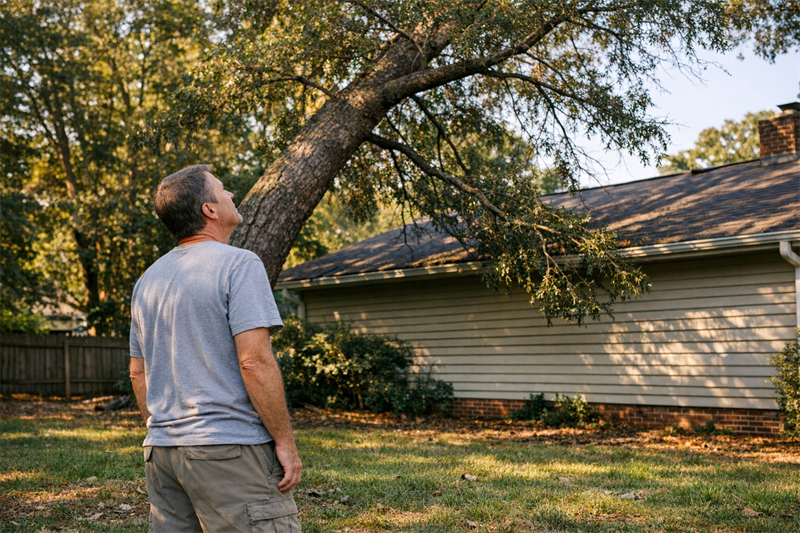
It usually starts with something small. A branch looks off. The tree leans a little more than it used to. Maybe it’s growing too close to the house or dropping limbs after a storm. The challenge is figuring out what that actually means.
Most homeowners are balancing two concerns: avoiding unnecessary removal while not waiting too long if a tree is becoming unsafe. The decision is not really about appearance alone. It is about whether it still makes sense to keep the tree where it is.
This is where tree removal versus tree trimming becomes a practical decision. Some trees need routine maintenance. Others reach a point where trimming no longer addresses the real problem.
Tree Removal vs. Tree Trimming: What’s the Difference?
Tree trimming and tree removal solve different problems, even though they are often grouped together.
Trimming focuses on maintaining the tree. It can improve structure, manage overgrowth, and remove weak limbs. Removal is used when a tree no longer makes sense to keep because of its condition, stability, or location.
- Tree trimming: Helps manage growth, maintain structure, and reduce minor risks
- Tree removal: Used when a tree is unstable, declining, or positioned too close to structures to remain safely
In many cases, trimming is the right first step. Ongoing maintenance can reduce long-term issues, especially when done consistently, as outlined in the importance of regular tree trimming.
The key is recognizing when maintenance is no longer enough.
The Key Question: Is the Tree a Risk or Just Overgrown?
The most useful way to make this decision is to focus on risk rather than appearance. In general, trees tend to fall into three practical categories:
- Maintain: Healthy trees that are overgrown but structurally sound
- Monitor: Trees showing early signs of stress or minor structural concerns
- Remove: Trees with clear instability, decay, or high-risk positioning
Trees are often left alone until the problem becomes obvious. In reality, risk usually builds gradually. By the time visible damage is widespread, the decision may already be leaning toward removal.
When Tree Trimming Is the Right Choice
Healthy but Overgrown Trees
If a tree has a full canopy, a stable trunk, and no clear signs of decline, trimming is usually the right approach. Overgrowth can block light, crowd nearby plants, or affect how the yard functions, but those are often manageable issues.
This comes up frequently with mature trees that were planted years ago and have simply outgrown the space around them.
Branches Near Roofs or Power Lines
Branches extending over roofs or toward power lines can sometimes be handled with targeted trimming. The goal is to reduce contact risk without removing a healthy tree.
This type of work needs to be done carefully. Poor cuts can weaken the tree or lead to uneven growth. For a closer look at safe handling, see how to safely trim trees near power lines.
Preventive Maintenance
Regular trimming is often used to stay ahead of larger problems.
- Reduces the chance of heavy limbs failing during storms
- Helps maintain balanced growth
- Keeps branches from extending too close to structures
In many cases, consistent trimming is what helps keep a tree from becoming a removal decision later.
When Tree Removal Is Necessary
Dead or Dying Trees
A tree that is no longer producing new growth or has widespread brittle branches is usually in decline. As the structure weakens, the chance of failure increases.
This is one of the clearer situations where removal is often the practical next step.
Structural Instability (Leaning, Cracks, Root Damage)
Structural issues are one of the clearest indicators that a tree may not be safe to keep.
- Leaning toward a home, driveway, or frequently used area
- Cracks or splits in the trunk
- Roots lifting or shifting the surrounding soil
- An uneven or heavily weighted canopy
These conditions often point to deeper instability that trimming alone will not correct.
Disease or Pest Infestation
Some diseases and infestations can be managed early, but once they affect the tree’s structure, recovery becomes less likely. At that stage, removal may be the more practical way to prevent ongoing problems on the property.
This often becomes clearer during a closer evaluation, where internal damage is more apparent than surface symptoms.
Storm Damage
Storms can change a tree’s condition quickly. A tree may remain standing but still have internal stress or damage that affects its stability.
Split trunks, large missing limbs, or sudden leaning are all signs that the structure may no longer be reliable. Situations like this often require timely action, which is why response planning is covered in the importance of emergency tree services.
Gray Area: When It Could Go Either Way
Some trees fall into a middle category where the right decision depends on how conditions develop.
- Partial storm damage without full structural failure
- Early-stage disease
- Slight leaning without visible root movement
In these cases, surface appearance can be misleading. A tree may seem manageable but still have underlying weaknesses that need a closer look.
Why Waiting Too Long Can Be Risky
- Structural issues tend to worsen rather than improve on their own
- Delays can make removal more complex
- Storms can expose existing weaknesses quickly
- Falling limbs or trees can damage structures or create safety concerns
Small warning signs are easy to put off until weather or time forces a decision. By then, the options are often more limited.
How Professionals Evaluate Tree Removal vs. Trimming
A proper evaluation looks beyond what is immediately visible. It focuses on how the tree is holding up structurally and where the main risks are.
- Canopy density and overall health
- Trunk condition, including cracks or decay
- Root stability and soil movement
- Position relative to structures and high-use areas
This process helps determine whether trimming is likely to reduce risk or whether removal is the more practical option. In some cases, what looks like a minor issue turns out to involve deeper structural concerns.
What to Expect From a Tree Service Evaluation
- A clear explanation of the tree’s current condition
- A recommendation based on visible risk factors and site conditions
- A step-by-step outline of what comes next
- Clear communication during the work
This level of clarity makes it easier to move forward without second-guessing the decision.
Conclusion
The decision between tree removal and tree trimming comes down to whether the tree still makes sense to keep. Some trees need maintenance. Others reach a point where keeping them creates more risk than value.
What makes this difficult is that the most important issues are not always obvious from a distance. A tree that looks manageable can still have structural problems that change the recommendation.
If there is uncertainty, getting a clear assessment is the most practical next step. One, Two, Tree focuses on walking through that process step by step so the reasoning behind trimming or removal is clear. That approach helps homeowners avoid unnecessary work while addressing risks before they turn into larger problems.
Key Takeaways
- Tree trimming is used for maintenance and managing growth
- Tree removal is used when structure or safety is a concern
- The decision should be based on risk, not appearance alone
- Some trees need monitoring before a clear decision can be made
- Early evaluation can help prevent more complicated situations
How One, Two, Tree Approaches This Decision
One, Two, Tree approaches each situation by focusing on what actually matters: structure, stability, and location. The goal is to give a clear recommendation based on how the tree is likely to hold up, not just how it looks.
What stands out in this process is the level of communication. Instead of giving a quick recommendation without context, the reasoning is explained step by step so you understand why trimming may be enough or why removal is the better option. During the work, updates are provided so you know what is happening.
This is especially useful in situations where the right choice is not immediately obvious.
FAQs
Can a tree be saved instead of removed?
Yes, if the structure is sound and the damage is limited. Trees with stable roots and healthy trunks can often be managed with trimming. An evaluation helps confirm whether that approach makes sense.
How do I know if my tree is dangerous?
A tree may be dangerous if it shows signs of instability, such as leaning, trunk damage, or root movement. Dead branches and visible cracks are also warning signs. A closer evaluation can help determine the level of concern.
Is tree trimming cheaper than removal?
Trimming is usually less complex and often costs less than removal. Removal typically involves more labor, equipment, and cleanup. However, delaying removal when it is clearly needed can increase the overall cost and difficulty of the job.
Can trimming fix a leaning tree?
Trimming does not usually correct a lean caused by root or structural issues. In those cases, the underlying problem remains. A tree service evaluation can help determine whether the tree can be managed or should be removed.
What happens if I don’t remove a dead tree?
Dead trees tend to become more brittle and unstable over time. This increases the chance of falling limbs or total failure. Removing the tree can reduce that risk.
Should I get a professional inspection before deciding?
Yes, especially if there are visible changes or uncertainty. A proper evaluation looks at structure, roots, and positioning to determine the safest and most practical option.
If you want a clear answer based on your specific situation, One, Two, Tree can assess your property and recommend the right path forward with clear communication from start to finish.