Introduction
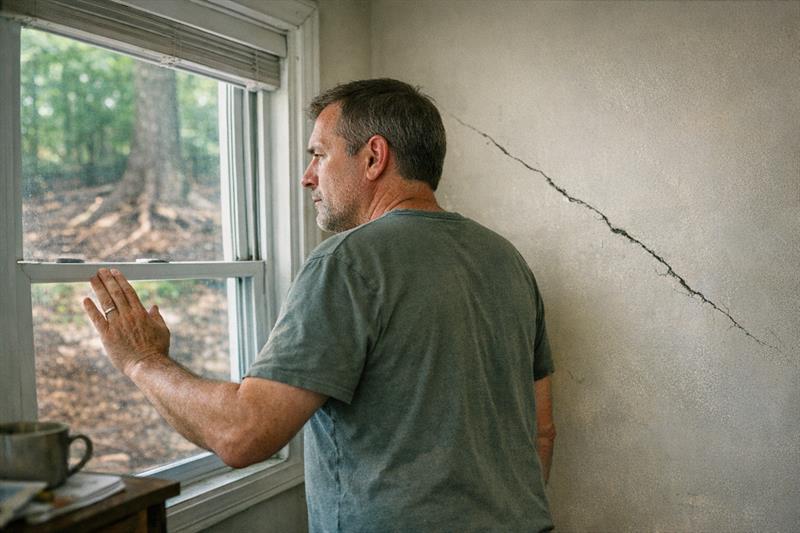
You notice a crack along the wall. Then another near the floor. Maybe a door starts sticking, or the driveway looks slightly uneven.
So what changed?
For many homeowners, attention turns to the trees nearby. Are the roots causing damage, or is this normal settling? The answer is not always clear, and that uncertainty is what brings most people here.
Here’s the part that often gets misunderstood. Tree roots rarely crack a foundation through direct pressure alone. The issue usually develops below the surface, where changing moisture levels cause the soil to shift until the effects show up inside your home.
Once that connection is clear, the next step becomes easier to navigate.
How Tree Roots Actually Affect Your Foundation
Tree roots are not attacking your home. They are following moisture.
And that detail matters.
In many cases, what looks like root damage is really soil movement caused by changing moisture levels around the foundation. This can be more noticeable in areas with dense clay soil, including many properties across Marietta and Atlanta.
Soil Movement vs Direct Root Pressure
Roots grow toward water, which may collect beneath or around your foundation.
- Dry soil can shrink and pull away from the foundation
- Wet soil can expand and place pressure against it
- Repeated cycles may lead to gradual shifting over time
So the damage is usually not from roots forcing their way through concrete. It is more often tied to the ground moving underneath or alongside the structure.
This pattern can become more pronounced when large trees sit close to a home and draw moisture during dry stretches.
Why Georgia Soil Conditions Increase Risk
Soil conditions in Georgia can make these effects more noticeable.
Clay-heavy soil expands when wet and contracts when dry. That movement may seem minor at first, but repeated cycles can create stress beneath a foundation over time.
When tree roots contribute to uneven moisture levels, the impact may become easier to spot. Cracks widen. Surfaces shift. Small changes become harder to ignore.
For more context on how soil influences tree growth and stability, this guide on soil quality for tree health explains how underground conditions shape what happens above ground.
Warning Signs Tree Roots May Be Damaging Your Property
Root-related problems rarely start all at once. They develop gradually, and early signs are easy to miss.
But they do tend to follow patterns.
And once you know what to look for, those patterns become easier to recognize.
Foundation and Structural Signs
- Cracks in interior or exterior walls
- Uneven or sloping floors
- Doors and windows that stick or shift out of alignment
These signs can point to movement beneath the structure, though other factors may also be involved.
Outdoor and Landscaping Clues
- Roots visible near the foundation
- Lifted sidewalks or driveways
- Soil pulling away from the base of the home
In some cases, these outdoor changes show up before interior damage becomes obvious.
If the tree itself also looks unstable or unhealthy, it may help to review common signs a tree is dangerous to understand whether the concern goes beyond the roots.
Plumbing and Drain Issues
- Slow or backing drains
- Recurring pipe blockages
- Unexpected wet areas around the property
Roots can enter small openings in underground pipes, which may lead to ongoing drainage issues that seem unrelated at first.
Which Trees Are Most Likely to Cause Problems
Not all trees create the same level of risk.
Some stay compact. Others spread aggressively, both above and below ground.
That difference matters more than most people expect.
High-Risk Tree Types in Georgia
Fast-growing trees often need more water and may develop broader root systems.
A common issue is large canopy trees planted too close to a structure. Over time, their roots can extend well beyond the visible footprint of the tree and begin interacting with nearby foundations, driveways, or pipes.
Distance Guidelines From Your Home
- Small trees: generally lower risk when planted closer to structures
- Medium trees: usually need moderate spacing
- Large trees: often need 15 to 20 feet or more
The general idea is simple. Larger trees typically need more space.
But distance alone does not determine risk. Soil conditions, drainage, and tree type all influence how roots behave.
What To Do If You Suspect Root Damage
It is easy to assume removal is the only solution.
But that is not always the case.
A more effective approach starts with understanding what is actually happening before deciding how to respond.
Step 1: Assess the Severity
Look at how the issue is changing over time.
Small, stable cracks may be cosmetic. Larger or widening cracks can point to ongoing movement that deserves closer attention.
Step 2: Get a Professional Evaluation
This is where guesswork gets replaced with clarity.
An experienced tree service can evaluate the tree and the surrounding site conditions to help determine whether roots are likely contributing to the issue or if something else may be involved.
In many cases, what looks like root damage may be tied to drainage problems or uneven soil conditions instead.
Step 3: Choose the Right Solution
Not every situation calls for removal.
In many cases, targeted solutions can reduce risk while keeping the tree in place.
If removal becomes necessary, understanding how tree removal protects your property can help clarify when that step makes sense.
Solutions for Tree Root Problems
There is no one-size-fits-all solution.
The right approach depends on the severity of the issue and how the tree interacts with the surrounding property.
Root Pruning
Root pruning can help reduce the impact of specific roots when the issue is localized.
But it needs to be done carefully. Removing too much can affect the health or stability of the tree.
Root Barriers
Root barriers are used to guide growth away from foundations, driveways, or underground utilities.
They are often considered when a tree is worth preserving but needs more defined boundaries.
Tree Removal (When Necessary)
In some situations, removal becomes the most practical option.
This usually applies when the tree is causing repeated problems, sits too close to critical structures, or cannot be managed effectively with less invasive options.
The key is making that decision based on the conditions of the site, not assumption.
How Professional Tree Services Reduce Risk
The difference between a short-term fix and a lasting solution is often the process behind it.
A structured approach typically includes:
- A careful evaluation of the tree and surrounding area
- A clear explanation of what may be happening and why
- A step-by-step plan before any work begins
- Consistent updates throughout the process
This level of clarity matters. Property concerns are rarely just about the tree. They are about protecting everything around it.
Clear communication at each step helps remove uncertainty from the process.
Key Takeaways
- Tree roots typically affect foundations through soil movement, not direct pressure alone
- Clay soil can increase expansion and contraction around the foundation
- Early warning signs are often visible before larger problems develop
- Not all trees near a home require removal
- A site-specific evaluation is the most reliable way to choose the right solution
Conclusion
Foundation concerns are rarely straightforward. The signs are visible, but the cause is not always obvious.
And that is where decisions become difficult.
Soil movement, moisture changes, and root growth can work together in ways that are easy to misread. Waiting too long can allow the problem to worsen. Acting too quickly can lead to the wrong fix.
This is why a clear evaluation matters.
For homeowners in Marietta and Atlanta facing these issues, One, Two, Tree offers a practical next step. The team focuses on identifying likely contributing factors, explaining the situation clearly, and outlining the most appropriate path forward based on the conditions of your property.
It is a measured approach. And in situations like this, that is what helps protect both your home and your investment.
Frequently Asked Questions
Can tree roots really damage a house foundation?
Yes, but usually indirectly. Roots can change soil moisture, which may lead to expansion and shrinkage beneath the foundation. That movement can contribute to cracks or shifting. A professional evaluation can help determine whether roots are part of the problem.
How close is too close for a tree to a house?
Large trees within 10 to 20 feet may carry more risk, depending on species, soil, and drainage conditions. Root systems often extend as far as the canopy or beyond. If a tree is close to your home, an on-site assessment can help determine whether action is needed.
What are the first signs of root damage to a foundation?
Common early signs include cracks in walls, sticking doors, and uneven floors. These changes are often linked to shifting soil beneath the structure. Catching them early can make the next steps easier to manage.
Will cutting tree roots stop foundation damage?
It can help in some cases, but not all. Improper root cutting may affect the health or stability of the tree and may not address the underlying cause of the movement. A professional evaluation helps determine whether pruning is appropriate.
Do all large trees cause foundation problems?
No. Risk depends on the tree species, soil conditions, drainage, and distance from the structure. Some trees have less aggressive root systems. Each situation should be evaluated on its own.
Should I remove a tree that’s close to my house?
Not necessarily. Many trees can be managed without removal. If there are signs of concern, an evaluation can help determine whether pruning, root management, or removal is the most appropriate step.